

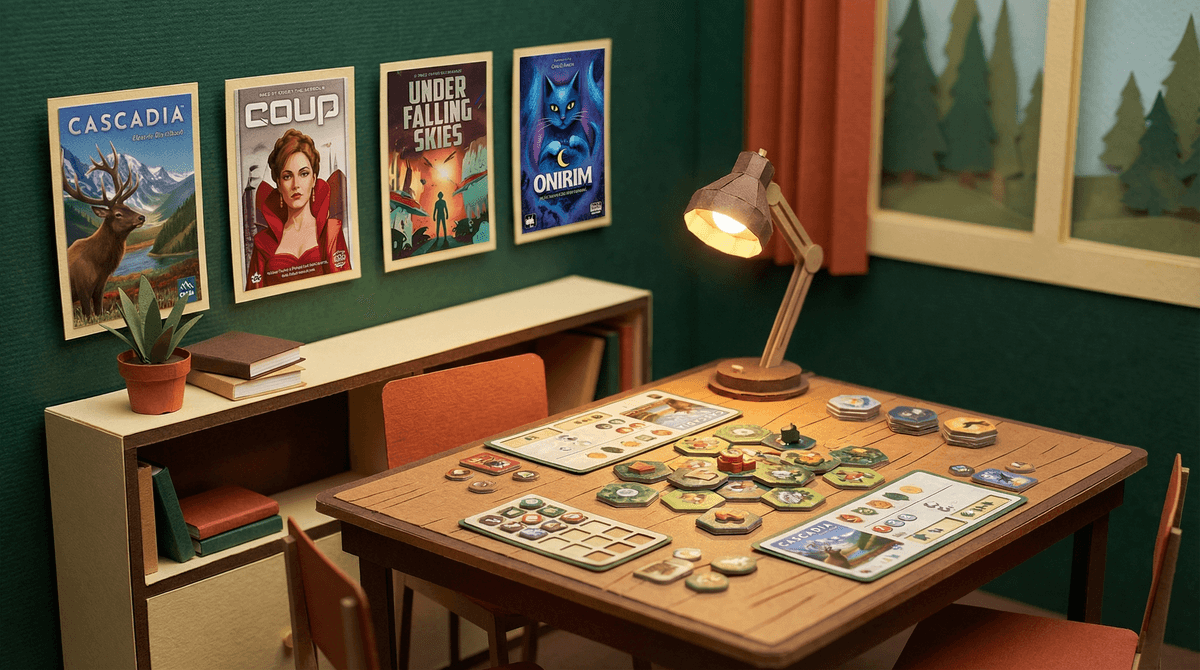
Single player board games are exactly what they sound like: board games designed to be played solo. No need to wrangle siblings, schedule playdates, or beg a parent to play "just one more round." These games come with built-in AI opponents, puzzle-like challenges, or campaign modes that let kids play entirely on their own.
We're not talking about playing Monopoly against yourself (though honestly, who hasn't tried that out of boredom). Modern solo board games are specifically designed for one player, with mechanics that create genuine challenge and engagement. Think Onirim, where you're trying to escape a dream labyrinth, or Cascadia, where you're building wildlife habitats through strategic tile placement.
Screenwise Parents
See allAnd here's the thing that makes these particularly interesting for parents navigating screen time: these games offer many of the same dopamine hits as video games (problem-solving, progression, achievement) without the infinite scroll, the microtransactions, or the blue light before bed.
Let's be honest: suggesting board games as a screen alternative usually gets the same reception as suggesting carrot sticks when they want Takis. But solo board games hit differently because they solve a real problem for kids.
They don't require social coordination. Your 10-year-old doesn't need to convince anyone else to play. They can start a game at 4pm on a Wednesday, play for 20 minutes, and pick it up again after dinner. No scheduling, no negotiating with a sibling who's "too busy" (read: on Roblox).
They offer actual challenge and progression. Games like Sprawlopolis or Friday get harder as you improve, creating that same "just one more try" feeling that keeps kids glued to Geometry Dash. Except here, they're manipulating cards and tiles, not staring at a screen.
They're legitimately cool now. The tabletop gaming renaissance means these aren't your grandma's solitaire cards. The art is gorgeous, the mechanics are clever, and honestly? Kids see YouTubers and streamers talking about board games. It's not the uncool suggestion it might have been a decade ago.
The Strategy Skills Are Real
Solo board games build executive function skills in ways that feel completely invisible to kids. They're managing resources, planning multiple turns ahead, adapting strategies when plans fail, and learning to lose gracefully (because these games will absolutely kick your butt sometimes).
Mage Knight (ages 14+) requires tracking dozens of variables and planning complex action sequences. One Deck Dungeon (ages 10+) teaches probability and risk assessment. Even simpler games like Palm Island (ages 8+) require pattern recognition and forward planning.
These aren't just "fun activities." They're building the same strategic thinking skills that Minecraft builds, but in a format that has a natural end point.
Age Ranges Actually Matter
Unlike video games where a determined 8-year-old can brute-force their way through a teen-rated game, board game complexity is pretty fixed. An 8-year-old genuinely cannot play a game designed for 14+ without significant frustration.
Ages 6-8: Look for games with simple rules and quick play times. Bandido (cooperative but playable solo) and Railroad Ink work well. Play time: 10-15 minutes.
Ages 9-12: This is the sweet spot for solo gaming. Sprawlopolis, Under Falling Skies, and Coffee Roaster offer real challenge without overwhelming complexity. Play time: 20-30 minutes.
Ages 13+: Teens can handle the heavy hitters. Spirit Island, Mage Knight, and Gloomhaven: Jaws of the Lion offer campaign-style play that can span weeks. Play time: 45+ minutes.
The Cost Reality
Here's the uncomfortable truth: good solo board games cost $15-60. That's more than a month of Roblox Premium. But unlike Robux, you're buying something that doesn't evaporate, doesn't require WiFi, and doesn't come with a marketplace designed to extract more money from your kid.
Start with smaller, cheaper games like Sprawlopolis ($15) or Friday ($20) before committing to a $50 game your kid might not click with.
They're Not Magic Screen Replacements
Let's be clear: your kid who plays 4 hours of Fortnite daily is not going to suddenly choose board games over screens. That's not how this works.
But for kids who are already receptive to screen limits, or who are looking for something to do during device-free times, solo board games can be genuinely appealing. They work especially well:
- During screen-free hours (morning before school, evening before bed)
- On long car rides (many solo games are small and portable)
- As a "bridge activity" when transitioning off screens
- For kids who actually like strategic thinking but need a break from digital overwhelm
Start with their interests. If they love Pokémon, try games with creature collection or evolution mechanics. Into Minecraft? Resource management games like Cascadia or Sprawlopolis hit similar notes.
Play it with them first. Yes, these are solo games, but learning a new game alone is tough. Spend 30 minutes teaching them the rules and playing alongside them. Then they can take it from there.
Don't force it. If you buy a solo board game and your kid tries it once and never touches it again, that's data. Not every kid will vibe with this format, and that's okay. But you won't know until you try.
Use it strategically. Frame it as "here's something you can do during screen-free time" rather than "we're replacing screens with this." One feels like offering an option, the other feels like punishment.
Solo board games won't solve your screen time struggles. They're not going to make your kid suddenly prefer cardboard over Fortnite. But for intentional parents looking for legitimate alternatives that build real skills and offer actual engagement, they're worth exploring.
The best part? Unlike screens, these games have natural endpoints. A round of Under Falling Skies takes 20 minutes, and then it's done. No autoplay, no "next episode," no infinite scroll. Just a game with a beginning, middle, and end.
In a digital world designed to never let your kid stop, that might be the most valuable feature of all.
- Check out our guide to screen-free activities kids actually enjoy for more alternatives
- Learn about building executive function through games

- Browse age-appropriate options at your local game store (they'll let you demo games before buying)