

Short Story Collections for Middle Grade Readers: A Parent's Guide
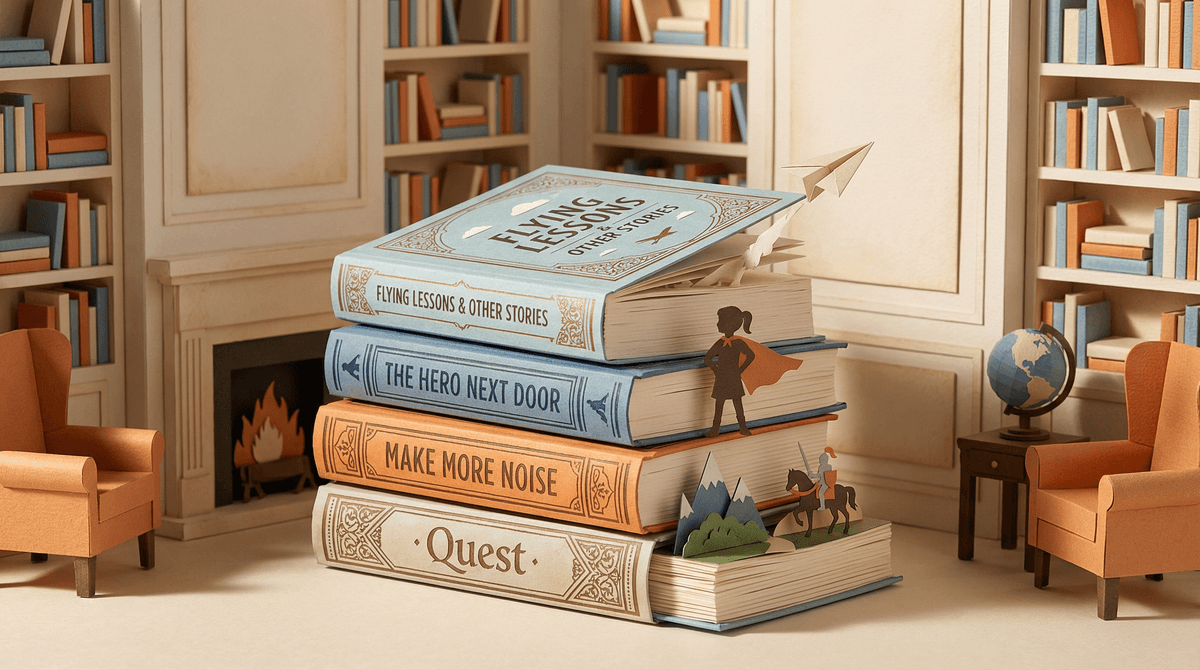
TL;DR: Short story anthologies are secretly brilliant for middle-grade readers (ages 8-12). They're perfect for reluctant readers who feel intimidated by 300-page novels, great for bedtime when you need something satisfying but quick, and they expose kids to way more diverse voices and writing styles than sticking with one author. Here are the standout collections worth grabbing:
- Make More Noise – Activism and everyday bravery
- The Hero Next Door – Ordinary kindness as heroism
- Flying Lessons & Other Stories – Finding your voice
- Quest – Adventure tales across genres
- Been There, Done That: School Dazed – Real school memories turned fiction
Here's what makes anthologies such a smart pick: every story is self-contained. If your kid doesn't vibe with one story, they can skip to the next without feeling like they "failed" at reading. That psychological win matters, especially for kids who've been burned by starting books they never finish.
Plus, because each story is written by a different author, kids get exposed to wildly different voices, perspectives, and writing styles in one sitting. It's like a literary sampler platter. One story might be lyrical and contemplative, the next laugh-out-loud funny, the next a fantasy quest. That variety keeps things fresh and helps kids figure out what kinds of stories they actually like—without committing to an entire novel.
The modern collections below also lean heavily into diverse, own-voices authors, which means kids get to see themselves reflected on the page AND discover perspectives different from their own. It's representation without feeling like homework.
This anthology celebrates the 100th anniversary of women's suffrage with stories about activism, identity, and everyday bravery from a wide range of cultural backgrounds. The tone is upbeat—these aren't heavy historical lectures—and the stories are short enough for independent readers while still offering discussion points about gender equality and social change.
Why it works: The activism angle feels relevant right now, and the stories show that "making noise" doesn't always mean marching in the streets. Sometimes it's speaking up in class, standing up to a friend, or questioning something that doesn't feel right. It's empowering without being preachy.
Best for: Ages 9-12, especially kids who are starting to notice unfairness in the world and want to understand how change happens.
Edited by Olugbemisola Rhuday-Perkovich, this collection features thirteen acclaimed writers—including R.J. Palacio (yes, the Wonder author), Hena Khan, and Linda Sue Park—showing how ordinary acts of kindness can be heroic. The stories are deliberately diverse in setting and character, and they tackle themes like empathy, community, and what it really means to be brave.
Why it works: In a media landscape obsessed with superheroes and epic battles, this collection redefines heroism as something accessible. The kid who shares their lunch, the one who includes the new student, the sibling who stands up for their brother—these are the heroes here. It's a great conversation starter about how small actions matter .
.
Best for: Ages 8-12, particularly if you're looking for stories that emphasize moral courage and community over individual glory.
Edited by Ellen Oh, this collection features ten well-known authors including Kwame Alexander and Jacqueline Woodson. The stories tackle first crushes, family dynamics, finding your voice, and navigating identity. It's praised for its lyrical prose and for encouraging readers to "celebrate the uniqueness and universality in all of us."
Why it works: The writing quality here is top-notch—these are authors who know how to craft a sentence. The themes are relatable (middle school crushes, sibling rivalry, feeling like an outsider) but handled with nuance. Some stories will make your kid laugh, others might make them tear up a little. That emotional range is valuable.
Best for: Ages 9-12, especially kids who are starting to think more deeply about identity, friendship, and what makes them "them."
Edited by Daniel Hahn, this themed collection offers adventure-type tales ranging from fantasy quests to real-world mysteries, each written by a different author. The variety keeps readers engaged, and the editor's notes provide useful context for teachers or parents who want to extend the conversation.
Why it works: If your kid is into fantasy games like Zelda or adventure shows, this anthology scratches that same itch in book form. The quest framework is universally appealing, and because the stories span different genres (some magical, some realistic), there's something for every kind of reader.
Best for: Ages 8-12, particularly kids who claim they "only like fantasy" or who need a bridge between graphic novels and traditional chapter books.
Recommended by the New York Public Library, this anthology features eighteen authors turning real school memories into fiction. The stories range from humorous mishaps to subtle magical twists, and because each one is rooted in relatable school experiences, it's especially useful for sparking conversations about peer pressure, honesty, and resilience.
Why it works: School is the universal middle-grade experience. These stories capture the awkwardness, the social landmines, the small victories, and the embarrassing moments in a way that feels authentic. The fact that they're based on real memories (even if fictionalized) gives them an extra layer of "oh my god, that happened to someone else too?!" relatability.
Best for: Ages 8-12, especially at the start of a new school year or if your kid is navigating tricky social dynamics.
All of these collections are tagged for ages 8-12 (sometimes listed as 8+ or 9-12 depending on the publisher). That said, reading age and maturity level aren't the same thing. Some stories in these anthologies touch on challenging themes:
- Make More Noise includes stories about historical injustice and activism that might require context.
- Flying Lessons has a story that deals with subtle grief and family loss.
- The Hero Next Door explores themes like immigration, disability, and economic hardship.
None of this is graphic or inappropriate, but it's worth skimming the table of contents or reading a story yourself first if your kid is on the younger or more sensitive side. Most collections include brief content notes or summaries that help you gauge what's coming.
These aren't just "easy readers." The writing quality in modern middle-grade anthologies is genuinely impressive. You're getting award-winning authors at the top of their game, writing stories that are accessible but not dumbed down.
They're perfect for reluctant readers. If your kid struggles to finish novels, anthologies remove the pressure. Each story is 10-20 pages max. Finished one? Cool, that's a win. Want to read another? Great. Don't? Also fine. It's low-stakes reading that builds confidence.
They work beautifully for family read-alouds. You can knock out one story before bed, then talk about it the next day. Or read a story together and then let your kid read the next one independently. The short format makes it easy to fit into busy schedules.
They're diverse by design. Modern anthologies prioritize own-voices authors and representation. You'll see characters of different races, religions, abilities, family structures, and socioeconomic backgrounds. This isn't tokenism—it's intentional, thoughtful storytelling that reflects the actual world kids live in.
If you're trying to build your middle-grader's reading habit, short story collections are a secret weapon. They're less intimidating than novels, more sophisticated than early readers, and they expose kids to a wider range of voices and styles than sticking with one series. Plus, they're great for sparking conversations about empathy, identity, and what it means to be brave in everyday life.
All five of these collections are widely available in paperback, ebook, and library formats. Start with whichever theme resonates most with your kid—activism, heroism, adventure, school life, or identity—and see where it takes you. Worst case? They read one story and move on. Best case? They discover a new favorite author and start seeking out more of their work.
And hey, if books still aren't landing, you might explore audiobooks for middle-grade readers or podcasts that tell stories. The goal is to find something that clicks, not to force a specific format.