

Here's the thing about kids and scary stuff: they're weirdly drawn to it. That little thrill of being scared in a safe environment? It's actually developmentally healthy. It helps them practice courage, learn to manage anxiety, and feel accomplished when they make it through something that seemed intimidating.
But there's a massive difference between "ooh, spooky!" and "I can't sleep for three weeks and now I'm terrified of the bathroom at night."
Scary games (but not too scary) are games that deliver just enough spookiness to feel exciting without crossing into genuinely traumatizing territory. We're talking atmospheric tension, mild jump scares, cartoonish monsters, and mystery-solving—not gore, existential dread, or relentless psychological horror.
Think Scooby-Doo vibes, not The Ring.
Kids are naturally curious about things that feel a little dangerous or forbidden. Scary games let them explore that curiosity in a controlled way—they can pause, turn it off, or look away if it gets too intense (unlike a movie that just keeps rolling).
There's also a social component. Being able to say "I played Luigi's Mansion and beat King Boo!" is a badge of honor in elementary and middle school. It's a way to feel brave and capable.
And honestly? Sometimes kids just want to feel something other than the emotional flatline of watching someone else play Minecraft on YouTube for the 47th hour this week.
Ages 6-8: Spooky-Lite
At this age, kids are still figuring out what's real and what's pretend. Even cartoonish scares can feel pretty intense. Look for games with:
- Cute or silly "scary" characters
- Bright colors and humor mixed with spooky themes
- No real danger or consequences (like losing progress)
- Clear "good guy wins" narratives
Good picks:
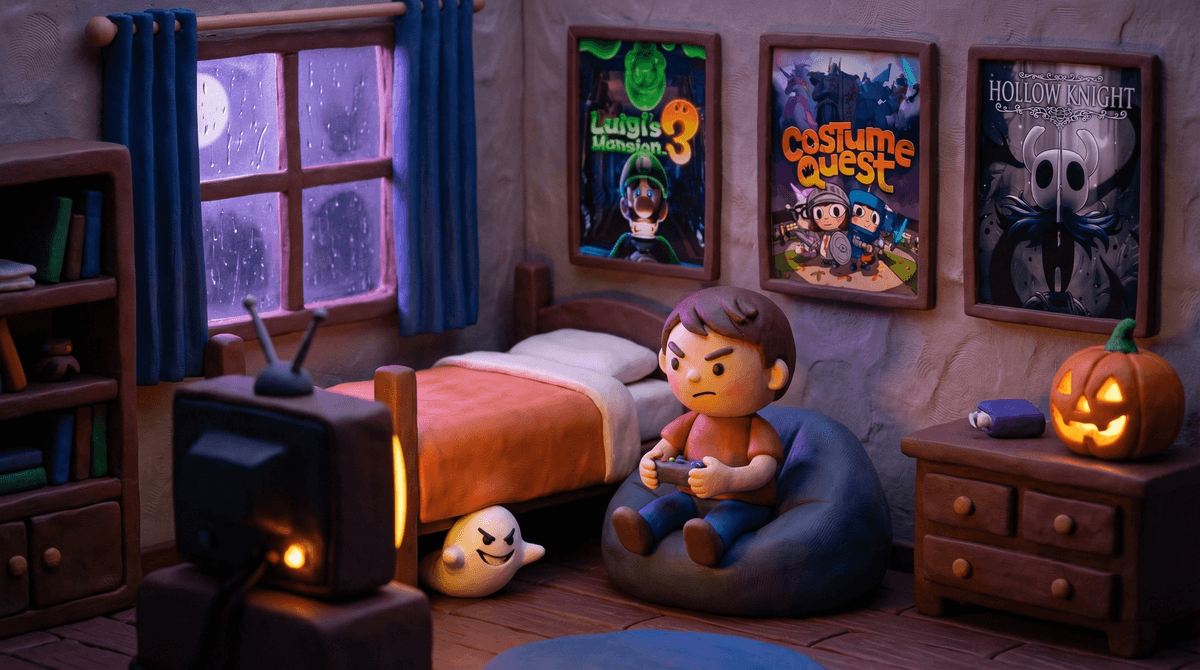
- Luigi's Mansion 3 – Luigi is scared of everything, which makes it relatable and funny. The ghosts are more mischievous than menacing.
- Costume Quest – Halloween-themed, turn-based RPG where kids trick-or-treat and battle monsters. It's adorable.
- Snipperclips – Okay, not scary at all, but great for this age if your kid is too scared for the others. Sometimes you need a bridge game.
Ages 9-11: Mild Tension Territory
This is the age where kids start wanting to prove they can handle "big kid" stuff. They can tolerate more suspense, darker aesthetics, and mild jump scares—but still need clear boundaries between fantasy and reality.
Good picks:
- Little Nightmares – Atmospheric and creepy, but not gory. You play a small character in a big, unsettling world. Some kids find this too intense, so watch a trailer together first.
- Minecraft (with monsters on) – Yes, really. Survival mode with Creepers and Endermen can be genuinely spooky, especially in caves. But kids control the difficulty and can always switch to Creative mode.
- Goosebumps: The Game – Based on the R.L. Stine books. Point-and-click adventure with puzzles and scares that match the tone of the series.
Ages 12+: Real Scares (But Still Age-Appropriate)
Tweens and teens often want the full horror experience—they're watching scary movies at sleepovers and reading creepypasta online. The goal here isn't to shield them from all scares, but to help them choose games that are thrilling without being gratuitously violent or psychologically damaging.
Good picks:
- Phasmophobia – Ghost-hunting game that's genuinely scary but relies on atmosphere and tension rather than gore. Best played with friends (and ideally with a parent nearby for the first few rounds).
- Five Nights at Freddy's – The OG jump-scare game. It's scary, but the scares are predictable once you learn the patterns. The FNAF lore is absolutely bananas
 , by the way—your kid will want to explain it to you for 45 minutes.
 - Hollow Knight – Dark, atmospheric, and challenging, but not horror. More melancholy than scary, with beautiful art and tight gameplay.
Watch them play (at least at first)
You don't need to helicopter over every gaming session, but sitting with your kid the first time they play a new scary game is huge. You'll get a sense of whether it's too much, and your presence makes them feel safer. Plus, it's actually pretty fun to experience it together.
Talk about the "scary" vs. "disturbing" distinction
Scary is temporary adrenaline. Disturbing is something that sticks with you in an unpleasant way. Help your kid learn the difference. If they're having nightmares, intrusive thoughts, or seem genuinely distressed (not just "that was intense!"), the game is too much.
Let them opt out without shame
If your kid starts a scary game and decides it's too much, that's not failure—that's self-awareness. Don't push them to "toughen up." There's no prize for forcing yourself through media that makes you miserable.
Check the rating, but don't stop there
ESRB ratings are a starting point, not gospel. A game rated E10+ might be too scary for your sensitive 11-year-old, while your fearless 8-year-old might handle a T-rated game just fine. Read parent reviews and watch gameplay footage.
Be aware of online play
Games like Phasmophobia are way more fun (and way scarier) with voice chat. That also means your kid might be playing with strangers. Get guide to voice chat safety settings or have them play with friends only.
Scary games aren't inherently bad—in fact, they can be a healthy way for kids to practice bravery and emotional regulation. The key is finding the right level of spooky for your specific kid at their specific age.
Start mild, check in often, and don't be afraid to pull the plug if something's too intense. And if your kid ends up loving scary games? That's okay too. Just maybe keep a nightlight handy.
- Not sure if a specific game is too scary? See age-appropriateness guidance for your child's age and sensitivity level.
- Want more game recommendations? Check out our cozy games guide for the opposite end of the spectrum, or explore alternatives to popular scary games.
- Dealing with nightmares after a scary game? Here's how to help your kid process scary media.