

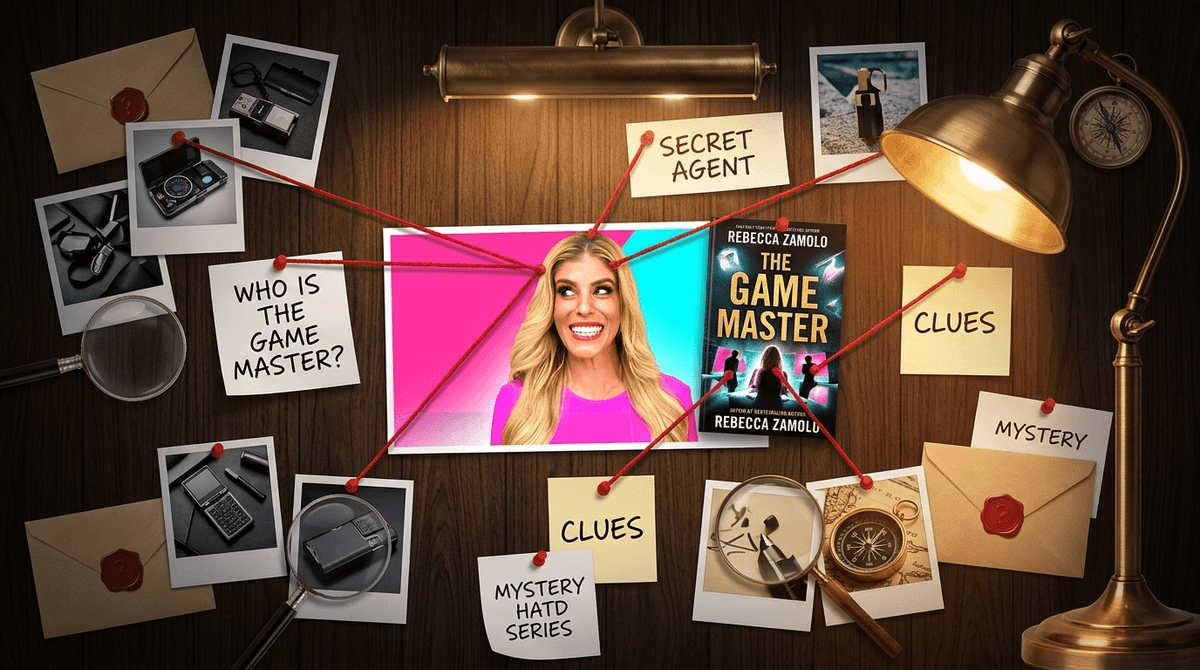
The Game Master Mystery: Decoding Rebecca Zamolo
Rebecca Zamolo is mostly fine for kids 8 and up — but "mostly fine" is doing a lot of heavy lifting there, and if your younger kid is deep in her content, there are a few things worth knowing before you just let it run.
TL;DR: Rebecca Zamolo is a YouTube creator known for elaborate scripted mystery challenges and the long-running "Game Master" storyline. Her content is high-energy, highly produced, and genuinely compelling to kids ages 6-13. The concerns parents flag most are the repetitive dopamine-loop format, some mildly scary "spy" and "secret agent" imagery, and a production style that blurs the line between real life and performance in ways younger kids may not clock. She's not dangerous content — but she's also not exactly enriching. Check out her channel here and read on for the full breakdown.
Rebecca Zamolo is a YouTube creator (and now also active on TikTok) who built her audience around the "Game Master Network" — an ongoing fictional mystery where she and her husband Matt Slays are being surveilled, tested, and challenged by a mysterious masked figure called the Game Master. Think: escape room meets reality TV meets spy thriller, all shot in their house, all played completely straight.
Her main channel has tens of millions of subscribers, and she's been one of the more consistently popular "family-adjacent" YouTube creators since around 2018. The Game Master arc eventually evolved into spin-off channels, merchandise, a kids' book series, and a whole extended universe of collaborator channels.
The format is: something mysterious happens → Rebecca reacts dramatically → challenge or puzzle must be solved → cliffhanger ending that makes the next video feel mandatory. Repeat, forever.
The Game Master storyline is genuinely clever from a kid-engagement standpoint. It's serialized — each video ends on a hook, so kids feel like they have to watch the next one to find out what happens. It's participatory — Rebecca frequently asks viewers to "comment below" with theories, which makes kids feel like they're part of the mystery. And it's aspirational — her house looks fun, her life looks fun, and the challenges involve things like secret rooms, spy gadgets, and treasure hunts.
For kids roughly 6-11, this hits a very specific sweet spot: old enough to follow a storyline, young enough to not be cynical about whether any of it is real.
The production quality is also legitimately high. This isn't a kid filming themselves in a bedroom — there are camera crews, editing teams, costumes, and set design. It looks like a show, which lends it credibility in a kid's mind.
Here's where some parents are raising flags, and honestly, not without reason.
The Game Master content is engineered for compulsive watching in a way that's worth naming clearly. The cliffhanger-every-video structure isn't storytelling — it's a retention loop. Each video is designed to make the next video feel urgent. That's not the same as a good serialized story. A good serialized story has pacing, character development, and payoff. The Game Master arc has... more Game Master arc.
Over time, the storyline became so convoluted and self-referential that even dedicated fans lose track of what's actually happening. The "mystery" is less a coherent narrative and more a vehicle for the next challenge video. Which is fine! But it's worth knowing that your kid isn't following a story so much as they're on a content treadmill.
The "brainrot" label that some parents use is a bit dramatic — this isn't the most egregious example of low-quality kid content out there — but the concern underneath it is legitimate: this content is optimized for watch time, not for anything your kid takes away from it.
For context from our Screenwise community data: kids in the 6-12 range are averaging 4 hours of screen time on weekdays and 5 hours on weekends. About 42% of kids are watching YouTube solo (no parent in the room), and only 20% are using YouTube Kids as the filtered alternative. That means a significant chunk of kids are finding creators like Rebecca Zamolo completely on their own, with no guardrails on what they watch next.
This is the thing most worth paying attention to if you have a kid under 8 watching Rebecca Zamolo.
The Game Master content is fictional. Rebecca and Matt know it's fictional. Most older kids figure that out pretty quickly. But the content is presented as real — Rebecca reacts with genuine-seeming fear, they "call the police" on camera, they act like their house is actually being broken into. For a 5 or 6-year-old, this can be genuinely confusing or even scary.
There's a whole genre of YouTube content that does this — FGTeeV, Chad Wild Clay, and others operate in a similar space — and the through-line is that the line between "this is a fun video" and "this is actually happening to this family" is intentionally blurred because it drives engagement. Younger kids aren't developmentally equipped to navigate that ambiguity.
If your kid is under 7 and watching this content, it's worth a quick "you know this is pretend, right?" conversation. Not to ruin the fun, but just to ground them.
The merchandise and ecosystem are aggressive. The Game Master Network has its own merch line, there are spin-off channels with their own storylines, and there's a book series (Game Master book series) that extends the universe into print. This is a franchise, not just a YouTube channel. Your kid will eventually want the stuff.
The content is not age-rated. YouTube has no meaningful age ratings system. Rebecca's content skews toward kids but is not produced for kids in any regulated sense — it's not on YouTube Kids, it's on regular YouTube, which means autoplay will take your kid wherever the algorithm wants after the video ends.
Co-watching changes the experience. Even 15 minutes of watching together gives you the vocabulary to have a real conversation about it. Here's how to talk to kids about YouTube content if you want a starting point.
The scary imagery is mild but present. Masked figures, "intruders," hidden cameras, secret agents — none of it is graphic, but it's a consistent theme. Most kids 8+ handle it fine. Sensitive younger kids may not.
If your kid is into Rebecca Zamolo, these are actually good jumping-off points for some genuinely interesting conversations:
- "Do you think any of that is real?" — Great for media literacy. Let them reason through it.
- "Why do you think every video ends on a cliffhanger?" — Introduces the concept of content being designed to keep you watching.
- "If you could design a mystery challenge, what would it be?" — Redirects the energy toward creativity. Plenty of kids have started their own YouTube channels or made their own "escape room" setups inspired by this content.
- "What do you think the Game Master actually wants?" — You'll get surprisingly elaborate answers, and it's a window into how your kid is processing serialized storytelling.
If your kid is interested in the puzzle/mystery/challenge angle, there's genuinely great content that scratches the same itch with more substance: Escape Room in a Box is a real-world version of exactly this kind of challenge, and Monument Valley hits the puzzle-mystery vibe in a genuinely beautiful game format.
Q: Is Rebecca Zamolo appropriate for a 6-year-old?
Technically the content isn't graphic or inappropriate, but the "is this real?" ambiguity around the Game Master storyline can genuinely confuse or scare kids under 7. If your 6-year-old is watching, co-watch a few videos and make sure they understand it's all pretend — then it's mostly fine.
Q: What is the Game Master Network and is it safe?
The Game Master Network is Rebecca Zamolo's fictional ongoing mystery storyline, now expanded into spin-off channels and merchandise. It's safe in the sense that there's no explicit content, but it's regular YouTube (not YouTube Kids), so autoplay can take kids to unrelated content after videos end. Set up YouTube parental controls to manage what plays next.
Q: Why do kids think the Game Master is real?
Because the content is deliberately produced to look real — Rebecca reacts as if events are actually happening to her, the "mysteries" are presented without a "this is fiction" disclaimer, and the serialized format makes it feel like an ongoing real-life situation. Most kids 9+ figure out it's scripted; younger kids often don't.
Q: Is Rebecca Zamolo on YouTube Kids?
No — Rebecca Zamolo's content is on regular YouTube, not the filtered YouTube Kids platform. This matters because it means there are no content guardrails and autoplay is fully active. Our community data shows only about 20% of families are using YouTube Kids, meaning most kids are accessing regular YouTube where this content lives.
Q: Are there better alternatives to Rebecca Zamolo for kids who like mysteries and challenges?
Yes — if your kid loves the puzzle and mystery angle, Gravity Falls is a genuinely excellent mystery series with real storytelling payoff. For the challenge/game format, Escape Room in a Box takes it offline in a great way. Find more mystery content for kids on Screenwise.
Rebecca Zamolo isn't a crisis. If your kid is watching her, you don't need to panic or stage an intervention. But she's also not a creator you can just fully autopilot — the content is engineered for compulsive watching, the Game Master fiction is presented in a way that can confuse younger kids, and the ecosystem is designed to pull kids deeper (more channels, merch, books) in ways that are worth being clear-eyed about.
For kids 8 and up who understand it's entertainment: mostly fine, monitor the watch time.
For kids under 7: co-watch, have the "this is pretend" conversation, and maybe set some episode limits.
And if your kid's Rebecca Zamolo phase turns into a genuine love of mysteries and puzzles? That's actually a great instinct worth nurturing — just with better content. Explore mystery books and shows for kids or Find mystery and puzzle content for kids who like Rebecca Zamolo.