

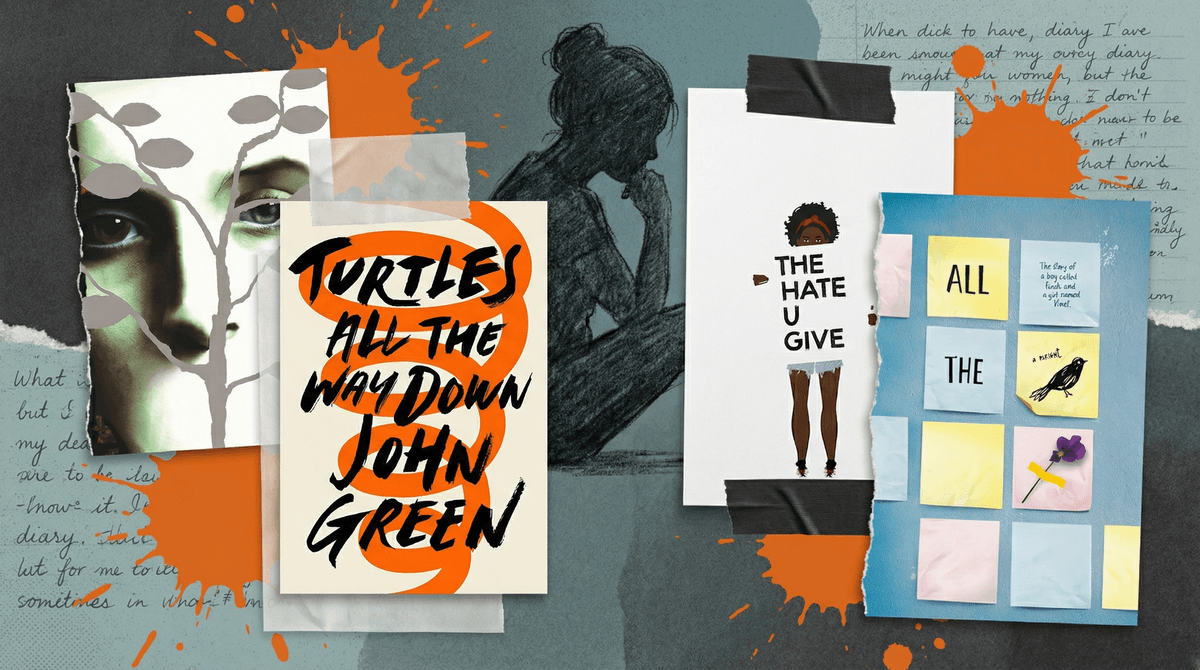
Realistic fiction for teens (often called contemporary YA) is exactly what it sounds like: stories set in the real world, dealing with real problems that actual teenagers face. We're talking books about mental health, identity, family dysfunction, first love, grief, social anxiety, racism, sexuality, poverty, abuse, and everything in between.
Unlike fantasy or sci-fi where dragons can metaphorically represent your problems, realistic fiction puts the hard stuff right there on the page. Think The Hate U Give dealing with police violence, Speak tackling sexual assault, or All the Bright Places exploring teen suicide and mental illness.
These aren't the sanitized "problem novels" from decades past where everything wraps up neatly. Modern realistic YA goes there — and it doesn't always promise a happy ending.
Here's the thing: teenagers are living through some genuinely hard stuff. According to recent data, nearly 1 in 3 teen girls seriously considered suicide in 2021. LGBTQ+ teens face even higher rates of mental health struggles. Teens of color navigate racism and microaggressions daily. And that's before we even get into the universal teenage experiences of feeling invisible, misunderstood, or completely alone.
Realistic fiction does something powerful: it tells teens they're not alone.
When a 14-year-old reads Turtles All the Way Down and sees their own intrusive thoughts reflected in Aza's OCD, or when a queer teen finds themselves in Red, White & Royal Blue, it's validating in a way that well-meaning adult advice often isn't.
These books also provide a safe space to explore difficult topics before (or while) experiencing them firsthand. Reading about grief, first relationships, or navigating family conflict gives teens a framework and vocabulary for their own experiences.
And honestly? Sometimes teens just want to read about characters who feel as messy and complicated as they do.
These books can be intense. We're talking about content that includes sexual assault, suicide, self-harm, eating disorders, drug use, and graphic violence. Some parents find out their 13-year-old is reading a book with explicit sex scenes and panic. Fair reaction!
But here's what's important to understand:
The "tough topics" are the point. These books aren't gratuitous (well, most aren't). They're addressing real issues that teens either face themselves or encounter in their peer groups. The sexual assault scene in Speak isn't there for shock value — it's the entire story, and it's helped countless teens process their own trauma or understand a friend's experience.
Reading about something ≠ endorsing it. A book that includes underage drinking isn't promoting underage drinking. It's reflecting reality. The best realistic fiction actually shows consequences and complexity rather than glamorizing risky behavior.
Age and maturity matter more than grade level. A mature 13-year-old might be ready for The Perks of Being a Wallflower, while a sheltered 16-year-old might find it overwhelming. You know your kid best.
Ages 12-14 (Middle School): Start with books that tackle one or two issues without overwhelming intensity. Wonder (bullying, disability), Ghost (trauma, poverty), or The Crossover (family, identity) are solid entry points. These books deal with real problems but maintain some emotional boundaries.
Ages 14-16 (Early High School): This is when realistic fiction can get heavier. Books like Eleanor & Park, The Hate U Give, or I'll Give You the Sun explore complex themes but with hope threaded through. Expect some sexual content, strong language, and difficult situations — but usually with responsible framing.
Ages 16-18 (Late High School): At this point, most teens can handle the full spectrum of contemporary YA. A Little Life (technically adult fiction but widely read by older teens) is absolutely devastating. We Are Okay explores grief and queer identity with beautiful restraint. These books don't pull punches and may not offer tidy resolutions.
The absolute best thing about realistic fiction? It creates natural conversation openings.
Instead of asking "Are kids at school doing drugs?" (answer: "I don't know, Mom"), you can ask "What did you think about how the book handled the addiction storyline?" Much less awkward, much more likely to lead to actual dialogue.
Some conversation starters:
- "That part where [character] dealt with [situation] was intense. Did it feel realistic to you?"
- "Have you ever felt like [character] when they [experience]?"
- "What would you have done differently?"
Don't interrogate. If your teen is reading The Perks of Being a Wallflower, that doesn't mean they're struggling with the same issues as Charlie. Sometimes a book is just a book.
But stay available. Let them know you're open to talking about anything that comes up in their reading. Sometimes "That book sounds heavy, I'm here if you want to talk about it" is enough.
"These books are too dark!"
Maybe! But consider: teens are already encountering these topics through social media, news, their peer groups, and their own lives. Would you rather they process it through a thoughtfully written book with nuance and consequences, or through TikTok?
"What about trigger warnings?"
This is tricky. Some teens find warnings helpful; others feel they're spoilers or condescending. Common Sense Media provides detailed content breakdowns without spoilers. Many book communities on Reddit or Goodreads also flag potentially triggering content.
"Are these books making my teen depressed?"
There's no evidence that reading about difficult topics causes mental health issues. In fact, bibliotherapy (using books to process emotions) is a recognized therapeutic tool. That said, if your teen seems to be spiraling or exclusively reading extremely dark content, that might be worth a gentle check-in — not about the books, but about how they're doing generally.
Realistic fiction for teens isn't about protecting kids from hard truths — it's about giving them tools to navigate those truths with empathy, understanding, and maybe a little less loneliness.
These books aren't perfect. Some are genuinely too intense for certain ages. Some handle topics clumsily. And yes, some include content you might not want your 13-year-old encountering yet. That's why staying involved matters.
But when a book helps a teen feel seen, gives them language for their experiences, or opens a door to a conversation you didn't know how to start? That's powerful stuff.
Read what your teen is reading. Or at least read summaries and reviews. You can't have informed conversations about books you know nothing about.
Check out alternatives to realistic fiction if you want books that explore tough topics through fantasy or sci-fi instead.
Ask your teen for recommendations. Seriously. Let them be the expert and share what they're loving. It's a great role reversal.
Trust your kid (mostly). If they're choosing to read challenging books, that shows curiosity and emotional intelligence. Guide when needed, but don't panic.
And remember: a teen who's reading anything in 2026 is already doing something right. Even if that something involves crying over a book about teenagers with cancer.