

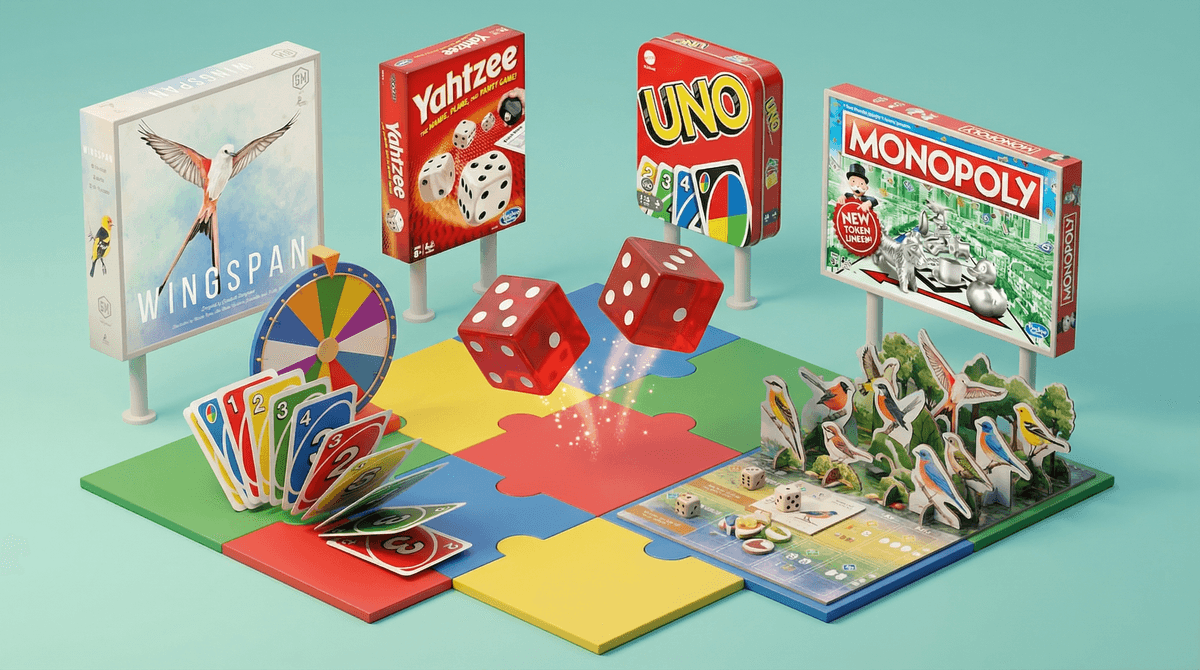
Probability games are basically any game where chance plays a role—dice games, card games, spinners, coin flips, and yes, even digital versions of all of the above. They're games where kids learn (sometimes without even realizing it) about odds, likelihood, risk assessment, and statistical thinking. Think Monopoly, Uno, Yahtzee—games you probably already own.
The magic here is that probability isn't abstract when you're playing. When your 8-year-old is deciding whether to hit or stand in a simplified blackjack game, they're doing real-time risk analysis. When they're calculating whether they should trade that Boardwalk property in Monopoly, they're thinking about likelihood and outcomes. This is math that actually matters to them in the moment.
Here's the thing: probability literacy is a life skill. We're constantly making decisions based on likelihood—should I bring an umbrella? Is this investment worth it? Should I click on this sketchy link? Kids who understand probability develop better critical thinking skills and are less likely to fall for manipulative tactics later (looking at you, loot boxes and gacha mechanics in mobile games).
Plus, probability games are one of those rare sweet spots where learning happens naturally through play. No worksheets, no "okay now let's learn about fractions," just genuine engagement with mathematical concepts because they're trying to win.
Ages 5-7:
- Chutes and Ladders - Pure luck with a spinner, perfect for understanding that sometimes you just roll badly
- Hi Ho! Cherry-O - Spinner-based counting game that introduces the concept of chance
- Simple dice games - Even just rolling two dice and adding them up teaches that 7 comes up way more often than 2 or 12
Ages 8-12:
- Yahtzee - The probability classic. Kids quickly learn which combinations are worth going for and which are pipe dreams
- Farkle - Press-your-luck dice game that teaches risk management
- Exploding Kittens - Card game with strategic probability (when should you defuse? when should you pass?)
- Clue - Deductive reasoning based on eliminating possibilities
- Catan - Dice rolls determine resources, teaching kids about probability distribution (that 6 and 8 are much better spots than 2 and 12)
Ages 13+:
- Poker - Honestly, teaching teens poker (for chips, not money) is phenomenal for probability literacy. They learn pot odds, implied odds, and risk assessment
- Wingspan - Dice-based engine builder that rewards understanding probability
- Ticket to Ride - Card probability and route planning
DragonBox Numbers (Ages 4-8) - Beautifully designed app that teaches number sense and early probability concepts through play
Prodigy Math (Ages 6-14) - Free math game that incorporates probability problems into RPG-style gameplay. Yes, it has some monetization elements, but the core game teaches legitimate math concepts.
Minecraft (Ages 8+) - Hear me out: Minecraft's crafting, enchanting, and mob spawning systems are all probability-based. Kids who get into the mechanics start understanding drop rates and RNG (random number generation).
Pokémon games (Ages 7+) - Catch rates, critical hits, status effects—all probability. Competitive Pokémon players become probability wizards.
Loot boxes and gacha mechanics: Many mobile games use probability in manipulative ways. Games like Genshin Impact or Roblox games with "mystery boxes" are teaching probability, sure—but they're also teaching gambling mechanics. If your kid is playing these, have explicit conversations about how these systems are designed to make you spend money .
.
The gambler's fallacy: Kids (and adults!) often think that if something hasn't happened in a while, it's "due." Use probability games as teaching moments—each dice roll is independent, the dice don't remember what happened last time.
Make it conversational: "What do you think your chances are of drawing that card?" "Which number combination comes up most often when you roll two dice?"
Let them discover patterns: After a few rounds of Yahtzee, ask "Which combinations do you think are hardest to get?" Let them figure it out through experience.
Connect to real life: "The weather says 30% chance of rain—what does that actually mean? If we had 10 days like today, how many would it rain?"
Play together: This isn't about drilling math facts. Play the games, have fun, and let the learning happen naturally.
Probability games are one of those rare parenting wins where fun and learning genuinely overlap. A family game night with Catan or Exploding Kittens is teaching your kids statistical thinking, risk assessment, and decision-making under uncertainty—and they just think they're trying to beat you.
The key is variety. Mix analog and digital, mix pure luck with strategic probability, and most importantly, play with them. The conversations that happen during gameplay—"Should I risk it?" "What are the odds?"—those are where the real learning happens.
And honestly? In a world where kids will eventually encounter everything from sports betting apps to investment decisions to evaluating whether that TikTok health claim is legit, understanding probability is genuinely protective. Start with dice and cards now, build that intuition early.
This week: Dig out Monopoly or Uno from your game closet. Play a round and just notice when probability comes up naturally.
This month: Try one new probability game from the age-appropriate list above. Exploding Kittens is like $20 and plays in 15 minutes—easy win.
Ongoing: When your kid encounters probability in their digital games (drop rates, loot boxes, random events), use it as a teaching moment rather than just saying "that's gambling." Help them understand the mechanics so they can make informed choices.