

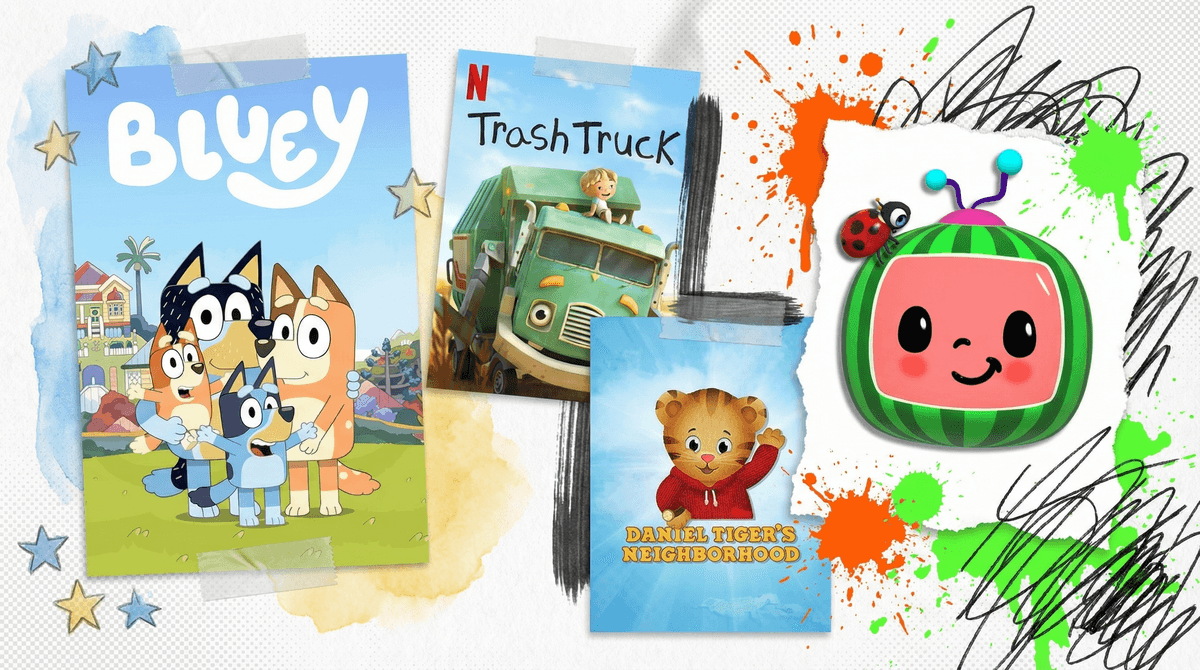
Preschool TV shows are programs designed for kids roughly ages 2-5, though honestly, the age ranges are all over the place. Some shows claim they're for "babies to preschoolers" (looking at you, Cocomelon), while others are clearly aimed at the older end of the spectrum.
The good ones balance education with entertainment, teaching everything from letters and numbers to emotional regulation and problem-solving. The not-so-good ones are basically visual noise machines that keep your kid quiet for 22 minutes while you unload the dishwasher. (No judgment on which one you need on any given Tuesday.)
The preschool TV landscape has exploded in the streaming era. Netflix, Disney+, Apple TV+, PBS Kids, and YouTube all have extensive libraries. This is both amazing (so many options!) and overwhelming (way too many options).
Here's the thing: not all screen time is created equal.
A preschooler watching Bluey is having a fundamentally different experience than a preschooler watching unboxing videos on YouTube. One teaches empathy, creative play, and emotional intelligence through genuinely clever storytelling. The other is... well, it's someone opening toys.
Research consistently shows that quality educational content can actually benefit young kids, especially when it's co-viewed with a parent who talks about what's happening. Shows that encourage interaction, model positive behavior, and have actual narrative structure are light-years better than passive, overstimulating content.
The American Academy of Pediatrics recommends limiting screen time to 1 hour per day of "high-quality programming" for kids ages 2-5. Notice they said "high-quality" — that distinction matters.
The Gold Standard
Bluey (Ages 2-6, Disney+)
This Australian show about a Blue Heeler puppy family is legitimately good television. Not just "good for a kids' show" — actually good. Parents love it because it models creative, engaged parenting. Kids love it because it's funny and the games are imaginative. Every episode is 7 minutes, which is perfect for attention spans and for you saying "just one more" without losing an hour.
Daniel Tiger's Neighborhood (Ages 2-5, PBS Kids)
If you need help teaching your kid about feelings, routines, or basically any social-emotional concept, Daniel Tiger has a song for it. Yes, those songs will live in your head rent-free forever. Yes, it's worth it when your kid sings "When you feel so mad that you want to roar, take a deep breath and count to four" instead of throwing a block at their sibling.
Sesame Street (Ages 2-5, HBO Max/PBS Kids)
Still holds up after 50+ years. The newer episodes are shorter and faster-paced than the classic format, but they're still teaching literacy, numeracy, and kindness. Bonus: The celebrity appearances mean you might actually enjoy watching too.
Solid Choices
Elinor Wonders Why (Ages 3-6, PBS Kids)
Science and nature exploration with a curious bunny. Teaches the scientific method and observation skills without being preachy. Genuinely calming to watch.
Puffin Rock (Ages 2-5, Netflix)
Irish animated show narrated by Chris O'Dowd. Gentle, sweet, and actually teaches kids about nature and problem-solving. The pacing is slow in a good way — not overstimulating.
Trash Truck (Ages 3-6, Netflix)
A boy and his best friend (who is a trash truck) have adventures. It's weird but charming, and it models friendship and curiosity really well.
Cocomelon
Look, I get it. Cocomelon is like toddler hypnosis. The bright colors, the constant scene changes, the repetitive songs — it works. But that's kind of the problem. The pacing is so fast and stimulating that many parents (and some experts) worry it's training kids to need that level of stimulation. Some kids get legitimately addicted to it and tantrum when it's turned off. If your kid is already watching it and doing fine, you're probably okay. But if you're starting fresh, maybe try literally anything else first.
Blippi
Blippi is... a lot. The original creator has a pretty questionable past (Google it if you want to ruin your day), and the show itself is just a guy in an orange bow tie yelling about excavators. Some kids love it, but it's not really teaching much beyond basic vocabulary. The newer episodes with a different actor are slightly less chaotic, but still not what I'd call quality content.
YouTube Kids rabbit holes
Even with YouTube Kids, the algorithm can quickly take your kid from a legitimate educational video to weird toy unboxing videos to... who knows what. If you're going to use YouTube, curate specific channels and watch with them.
Ages 2-3: Look for shows with simple plots, clear lessons, and slower pacing. Daniel Tiger, Bluey, and Puffin Rock are perfect. Episodes under 10 minutes are ideal.
Ages 4-5: They can handle slightly more complex narratives and humor. Bluey, Sesame Street, and Elinor Wonders Why work great. You can also introduce early elementary content like Wild Kratts if they're interested.
Co-viewing is the secret weapon. Watching with your kid and talking about what's happening dramatically increases the educational value. Ask questions: "Why do you think Daniel Tiger feels sad?" "What would you do if you were Bluey?"
The "just one more episode" negotiation is real. Bluey's 7-minute episodes are way easier to manage than 22-minute shows. Consider that when choosing what to start.
Not all PBS is created equal. PBS Kids has some absolute gems (Daniel Tiger, Elinor Wonders Why) and some shows that are just... fine. Curious George is cute but George literally never faces consequences for his chaos, which can be frustrating.
Streaming services vary in quality. PBS Kids (free app) and Disney+ have the most consistently high-quality preschool content. Netflix is hit or miss. Amazon Prime has some good stuff buried under a lot of mediocre content.
Your kid's obsession will rotate. They'll watch the same episode of Bluey 47 times, then suddenly never want to see it again. This is normal. Roll with it.
The best preschool TV shows teach something (letters, numbers, emotions, science), model positive behavior, and don't overstimulate with rapid cuts and flashing colors. Bluey and Daniel Tiger are the gold standard. Sesame Street is a classic for good reason. Cocomelon and Blippi are probably not doing any harm in moderation, but they're also not doing much good.
Watch with your kid when you can, talk about what you're seeing, and don't beat yourself up when you need 20 minutes to make dinner and Bluey is the only thing standing between you and total chaos.
- Set up a PBS Kids app account (it's free) and explore their library
- Try the "one episode, then we're done" rule with shorter shows like Bluey
- Create a "approved shows" list on your streaming services so kids can't wander into random content
- Learn more about screen time guidelines for different ages
