

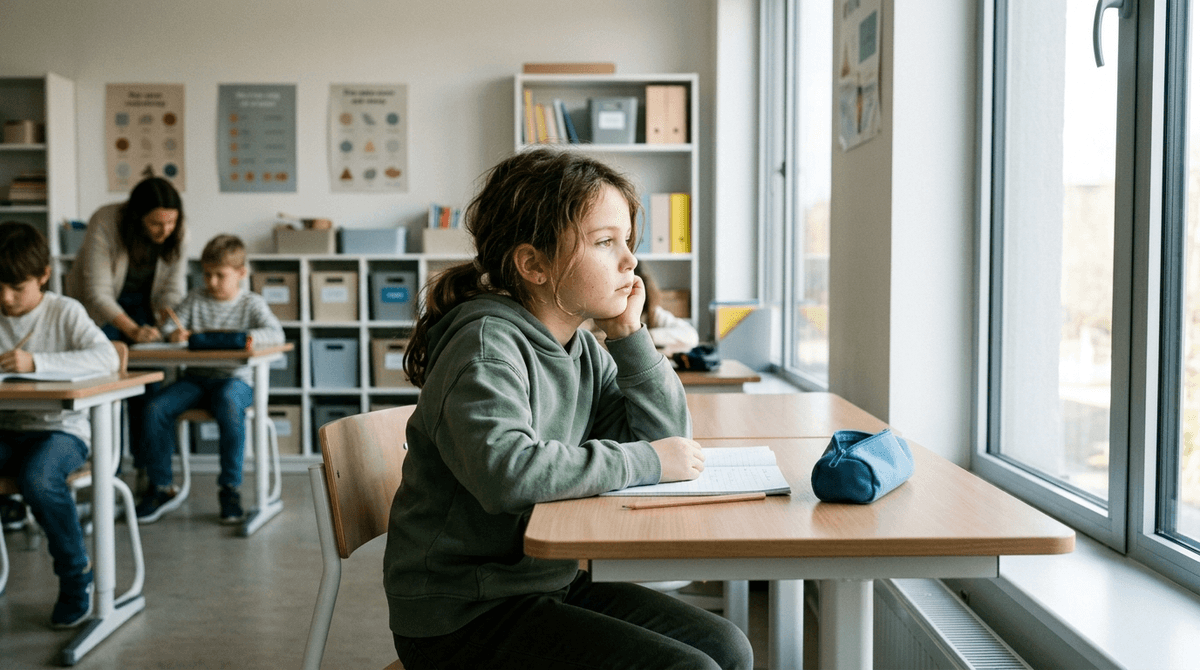

Preschool teachers see a clear line between media that turns children into active creators and passive videos used to keep them quiet. How kids use screens at home directly shapes their attention spans, emotional control, and physical play in the classroom.
Preschool educators value digital media when children use it actively to create, document, or solve problems, but warn that passive screen time—especially when used as an emotional soothing tool—correlates with shorter attention spans and classroom irritability.
What happens on screens at home does not stay at home. Teachers report that children who consume heavy amounts of passive video content show higher impulsivity, struggle with emotional regulation, and replicate viral video trends during preschool play instead of engaging in imaginative social games.
If you rely on tablet time to keep your child calm during stressful moments, preschool staff are seeing the downstream effects in daily classroom dynamics.
Many early childhood centers lack official digital guidelines and technical infrastructure, leaving teachers to navigate technology integration on their own—often using personal devices and mobile data. Researchers wanted to understand how frontline educators evaluate the developmental impacts of digital media when structured policy is absent.
Educators draw a sharp distinction between tools that stimulate creative thinking and videos that induce passive trance states.
- Active vs. passive: Taking photos, recording audio stories, and collaborative digital problem-solving build skills; watching endless video streams erodes focus.
- Play replication: Children regularly act out TikTok trends and YouTube clips during physical free play, replacing spontaneous imaginative play with rehearsed digital scripts.
- Parental age gap: Teachers observed that older parents tend to set firmer media boundaries and monitor content more closely than younger parents.
- Institutional gaps: Teachers frequently rely on personal laptops and phone hotspots to introduce interactive media because their schools lack basic digital infrastructure.
Using screens as a quick emotional pacifier creates a baseline expectation in young brains that distress should be instantly muted by visual stimulation. When these children arrive in a classroom where screens are not constantly available to soothe frustration, their capacity to self-regulate under routine social stress falls flat.
This research relied on focus group conversations with 20 female preschool educators in a single county in Croatia. The findings reflect teacher observations and professional opinions rather than direct objective measurements of children's brain development or long-term behavior.
- If your child relies on a phone or tablet to calm down during meltdowns, replace screen-soothing with hands-on sensory tools or quiet audio stories to build real self-regulation skills.
- If you notice your preschooler repeating YouTube phrases or viral dances during playtime, pivot their screen time toward creation apps where they take photos or record voice clips instead of watching passive video feeds.
- If you are unsure how technology is handled during school hours, ask your child's teacher whether their classroom has clear digital guidelines or if tech use relies on individual teacher discretion.
- If you want to set clearer household tech boundaries, establish consistent time limits and content rules regardless of how busy the routine gets, as teachers report clear boundaries directly improve classroom focus.
Shift your home tech strategy from passive consumption to active creation. Treat digital devices as tools for exploring the real world rather than pacifiers for keeping the peace.
Jurić J, Krstulović LP, Blažević I (2026). The Role of Digital Media in Early Childhood Education and Care: A Qualitative Analysis of Educators' Perceptions. Behavioral sciences (Basel, Switzerland). doi:10.3390/bs16060970 — pubmed.ncbi.nlm.nih.gov