

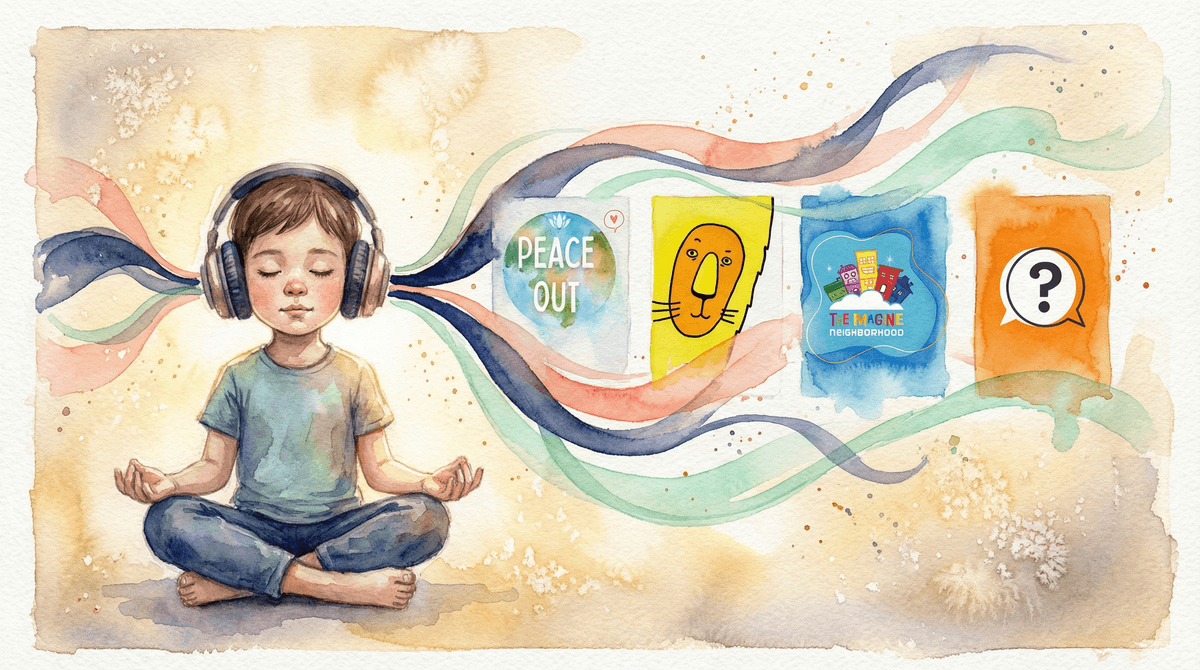
Feelings podcasts are audio shows designed to help kids understand, name, and navigate their emotions. Think of them as emotional intelligence boot camp, but way more fun than that sounds. These podcasts use stories, conversations, expert advice, and kid-friendly language to teach children about everything from everyday frustration to big, scary feelings like grief or anxiety.
Unlike a lot of kids' content that's just... noise (looking at you, Ryan's World), feelings podcasts actually give kids tools they can use. They're teaching emotional vocabulary—the difference between "mad" and "disappointed," between "worried" and "scared"—which is genuinely powerful stuff. When kids can name what they're feeling, they can start to manage it.
The format works surprisingly well for this topic. Audio is intimate in a way video isn't. Kids can listen while drawing, before bed, or during car rides, and they're not getting visually overstimulated while processing some pretty heavy concepts.
Here's the thing: we're raising kids in a world that's really good at teaching them what to think, but not great at teaching them how to feel. School teaches math and reading (mostly), but emotional regulation? Conflict resolution? How to sit with discomfort without immediately reaching for a screen? That's on us.
And let's be honest—a lot of us parents didn't get great emotional education either. We're figuring this out as we go, probably with the help of a therapist and some Instagram infographics. So having a podcast that can articulate "here's what anger feels like in your body, and here's what you can do about it" is actually a huge help.
The research backs this up. Kids with stronger emotional intelligence do better academically, have healthier relationships, and are more resilient when life gets hard (which, spoiler alert: it will). They're also less likely to turn to unhealthy coping mechanisms—including problematic screen use—when they're struggling.
Plus, in our current moment where kids are dealing with climate anxiety, social media comparison, and whatever fresh hell the news cycle is serving up, giving them emotional tools isn't optional. It's essential.
Tumble Leaf isn't technically a podcast (it's on Amazon Prime), but Circle Round from WBUR adapts folktales from around the world, and many episodes deal with emotional themes like jealousy, fear, and kindness. Ages 4-10. The stories are beautifully produced and always end with a conversation about the lesson.
But Why: A Podcast for Curious Kids from Vermont Public Radio occasionally tackles feelings-related questions that kids submit. It's not exclusively about emotions, but when they do address them, they bring in actual experts and take kids' questions seriously. Ages 5-12.
Peace Out is specifically designed for bedtime and focuses on relaxation and emotional regulation. Each episode is a guided meditation/story hybrid that helps kids wind down and process their day. If you have an anxious kid who struggles with sleep, this one's gold. Ages 5-10.
Brains On! is primarily a science podcast, but they've done excellent episodes on how emotions work in the brain, why we cry, and how feelings affect our bodies. It's educational without being preachy. Ages 6-12.
The Imagine Neighborhood has episodes specifically about feelings, friendship conflicts, and social-emotional learning. It's interactive—kids are encouraged to participate—and the production quality is solid. Ages 4-8.
Ages 4-6: At this age, kids are just starting to build emotional vocabulary beyond "happy," "sad," and "mad." Look for podcasts with simple language, clear examples, and shorter episodes (10-15 minutes max). Peace Out and Circle Round work well here.
Ages 7-10: This is prime time for feelings podcasts. Kids are dealing with more complex social situations, academic pressure, and the beginning of social comparison. They can handle longer episodes and more nuanced discussions about emotions like embarrassment, disappointment, and empathy.
Ages 11+: Tweens and early teens might roll their eyes at anything labeled "feelings podcast," but they're also dealing with some of the most intense emotions of their lives. Look for content that treats them like young adults—podcasts that discuss mental health, stress management, and relationship skills without being condescending. But Why still works here, or you might transition to podcasts like Terrible, Thanks for Asking for older teens (with parental preview).
This isn't a replacement for therapy. If your kid is really struggling—persistent anxiety, depression, behavioral issues—a podcast isn't going to fix that. These are tools for building emotional literacy in generally healthy kids, not treatment for mental health conditions.
Listen together when you can. The real magic happens in the conversation afterward. "That character was really angry—have you ever felt like that?" or "What do you think you'd do in that situation?" These discussions are where the learning sticks.
Model it yourself. If you're listening to a podcast about managing frustration and then losing your mind in traffic five minutes later, your kid notices. Talk about your own feelings. "I'm feeling really overwhelmed right now, so I'm going to take some deep breaths" is incredibly powerful modeling.
Watch for avoidance. Some kids will want to listen to feelings podcasts on repeat because they're anxious and looking for reassurance. That's different from learning. If your kid is obsessively seeking content about anxiety or fear, that might be a sign they need more support.
Feelings podcasts are one of those rare pieces of kids' content that actually deliver on their promise. They're not just entertaining—they're teaching skills that will serve your kid for life. In a media landscape full of garbage, this is the good stuff.
Start with one episode and see how your kid responds. Maybe it becomes part of your bedtime routine, or your carpool playlist, or something they listen to independently when they need to decompress. However it fits into your family, it's worth trying.
Because raising emotionally intelligent humans in 2026? That's the real work. And we'll take all the help we can get.
Try one episode this week. Pick a podcast from the list above, listen to one episode together, and see what your kid thinks. Don't force it—if they hate it, try a different one.
Check out our guide to audio content for kids for more recommendations beyond feelings-focused podcasts.
Build a feelings vocabulary at home. Use a feelings wheel or chart to help your kid identify emotions beyond the basics. Learn more about teaching emotional vocabulary .
.
Balance it with connection. Podcasts are great, but nothing beats actual conversation with you. Make time for feelings check-ins that aren't just "how was your day?" Try "What was something that frustrated you today?" or "When did you feel proud of yourself?"