

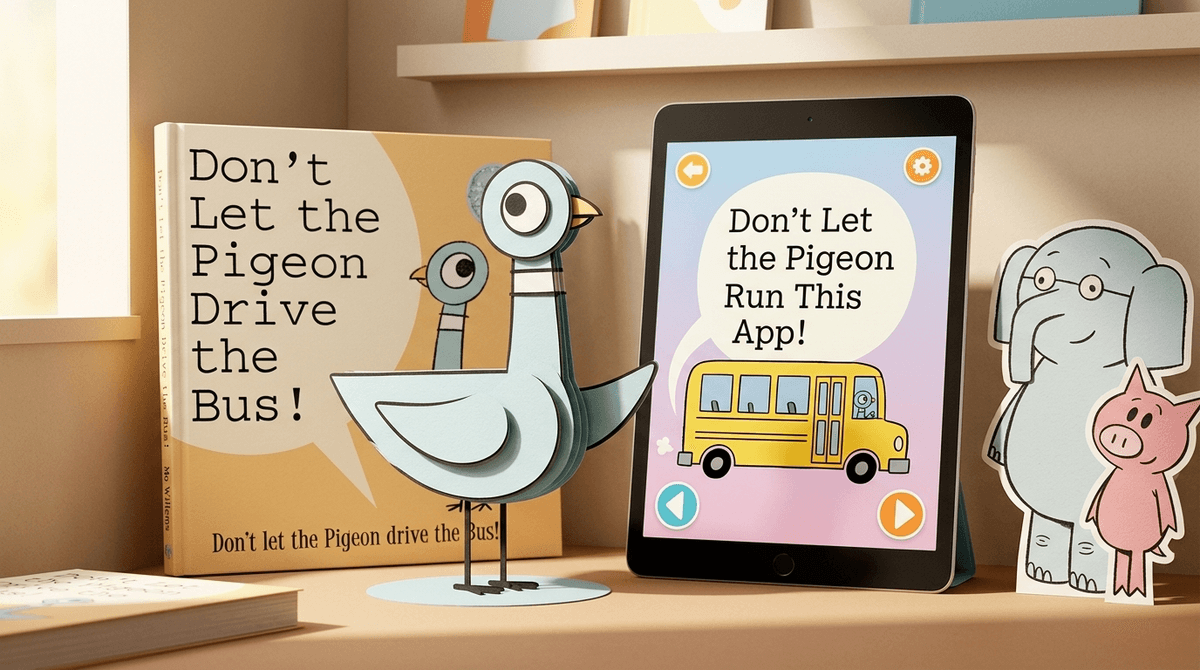
TL;DR: Mo Willems’ Pigeon series is the ultimate "starter kit" for teaching toddlers and preschoolers about boundaries, consent, and the word "No"—skills they desperately need before they ever touch an iPad. If you’re looking for high-quality, interactive content that isn't brain rot, start with the Don't Let the Pigeon Drive the Bus! book and the Don't Let the Pigeon Run This App!.
We’ve all been there. You’re at the grocery store, or maybe just trying to drink a coffee that hasn't gone cold yet, and your three-year-old starts the "Negotiation." You know the one. It starts with a polite request for a snack and ends with a full-blown legal defense for why they should be allowed to watch "just one more" Skibidi Toilet video on YouTube.
Enter the Pigeon.
If you haven't met Mo Willems’ iconic, bug-eyed, slightly manic bird yet, you’re missing out on the best parenting ally in the library. The Pigeon is essentially a toddler in bird form. He’s pushy, he’s irrational, he’s a master of the guilt trip, and he desperately wants to do things he’s absolutely not qualified to do—like drive a bus or stay up past his bedtime.
But here’s why we’re talking about a picture book series in a digital wellness guide: The Pigeon series is a masterclass in interactive media that actually prepares kids for the digital world.
In Don't Let the Pigeon Drive the Bus!, the bus driver leaves the reader in charge with one simple instruction: "Don't let the pigeon drive the bus."
For the rest of the book, the Pigeon pleads, bribes, and throws a tantrum. The child reading the book has to look that bird in the eye and say "No."
This is huge. In a world where YouTube Kids and Roblox are designed by literal geniuses to keep kids clicking "Yes" (Yes to another video, yes to a $4.99 skin, yes to one more level), the Pigeon gives kids a safe, hilarious space to practice being the one in control.

When it comes to "first apps," most of what’s marketed to toddlers is, frankly, garbage. It’s flashy, it’s loud, and it has the nutritional value of a gas station cupcake. But Mo Willems actually put some thought into this one.
The Don't Let the Pigeon Run This App! isn't just a digital version of the book. It’s a "create-your-own-story" engine. It asks the child for input—"What should the Pigeon want to do?" "Give me a silly word"—and then incorporates those choices into a fully voiced story.
Why it’s Screenwise-approved:
- Active vs. Passive: Most apps for this age range are "lean-back" experiences where the kid just taps things to see them wiggle. This app requires "lean-forward" thinking.
- No Microtransactions: There are no "Pigeon Bucks" to buy. No "Ohio" memes popping up. Just a bird and a bus.
- Creativity over Consumption: It teaches the basics of storytelling and cause-and-effect.
If your kid is vibing with the Pigeon, you can branch out into the rest of the Willems catalog. This is the "pre-gaming" phase of digital literacy. You’re building their taste for high-quality content so that when they eventually find MrBeast in five years, they at least have a baseline for what good storytelling looks like.
While the Pigeon is about boundaries, Elephant & Piggie is about emotional intelligence. Gerald (the elephant) is an overthinker; Piggie is an optimist. These books are basically a "how-to" guide for navigating friendships—skills that are vital when they eventually start playing Minecraft with friends.
A classic about communication. If your toddler has ever had a meltdown because they can't explain what they want, Knuffle Bunny will feel like a documentary. It’s great for building empathy, which—let's be real—is in short supply on the internet.
During the pandemic, Mo Willems did a series called "Lunch Doodles." It’s still on YouTube, and it is the absolute gold standard for YouTube for kids. It’s calm, it’s instructional, and it encourages kids to put the screen down and pick up a crayon.
Check out our list of the best "non-toxic" YouTube channels for kids
Ages 2-4: The Paper Phase Stick to the physical books. Let them shout "NO!" at the Pigeon. Let them point at the drawings. The tactile experience of turning a page is still superior for brain development at this age.
Ages 4-6: The Interactive Phase This is the sweet spot for the Don't Let the Pigeon Run This App!. Use it as a co-play activity. Sit with them, help them think of the "silly words," and talk about why the Pigeon is being so dramatic.
Ages 6+: The Creator Phase Once they’ve mastered the Pigeon's world, they might be ready for something like Scratch Jr or Khan Academy Kids. They’ve learned that they can be the "driver" of the story, not just a passenger.
The next time your kid is begging for a new game or a specific YouTube channel, apply the "Pigeon Test."
- Is this content asking me to say "No" or just "More"? (Good content challenges the viewer; "brain rot" just numbs them.)
- Is there a clear boundary? (The bus driver sets a rule. Does the app have clear stopping points, or is it an infinite scroll?)
- Is it respecting the audience? (Mo Willems never talks down to kids. He knows they’re smart, capable, and slightly chaotic. Does the media you’re putting in front of them feel the same way?)
If the app or show feels more like a slot machine than a conversation with a pushy bird, it might be time to steer the bus in a different direction.
The Pigeon series isn't just a set of funny books; it’s a foundational tool for digital wellness. By teaching our kids that they have the power to say "No" to a persistent, charismatic, and slightly unhinged character, we’re giving them the muscles they’ll need to navigate an internet that is constantly trying to get them to drive the bus.
So, go ahead. Get the books. Get the app. But for the love of all things holy, don't let the pigeon drive the bus.
Next Steps: