

Look, we're all trying to reduce screen time, right? But here's the thing: not all visual storytelling is created equal. Picture books with stunning illustrations are like the antidote to the endless scroll—they're visual experiences that actually slow kids down, make them look closely, and spark conversations that go way beyond "what happens next?"
These aren't your average bedtime books with serviceable drawings. We're talking about picture books where the art is so good it stops you mid-page. Books where a four-year-old will point at a tiny detail you missed. Books where the illustrations do as much storytelling as the words—sometimes more.
And honestly? In a world where kids are getting bombarded with fast-cut videos and algorithm-optimized content designed to hijack their attention, sitting with a beautifully illustrated book is basically a masterclass in visual literacy. They're learning to read images, notice details, understand perspective, interpret emotion through color and composition. It's the kind of deep looking that TikTok will never teach them.
Here's what I've noticed: kids who spend a lot of time with screens often struggle with patience around slower media. A picture book with incredible art is the perfect bridge. It's still visual (so it meets them where they are), but it requires them to pause, absorb, and engage differently than passive watching.
Visual literacy is a real skill, and it's one that's increasingly important. Understanding how images convey meaning, how color creates mood, how perspective shapes story—these are the building blocks of media literacy. When your kid can look at an illustration and say "the shadows make it feel scary" or "everything is blue because she's sad," they're developing critical thinking skills that transfer directly to understanding how media manipulates emotion.
Plus, let's be real: beautiful books create moments. The kind where you're both looking at the same page, pointing at details, making up backstories for background characters. That's connection. That's the good stuff.
Here are some picture books where the art genuinely elevates the entire experience:
The Day the Crayons Quit - Oliver Jeffers' illustrations are deceptively simple but absolutely perfect. The way he captures personality through color and line work? Chef's kiss.
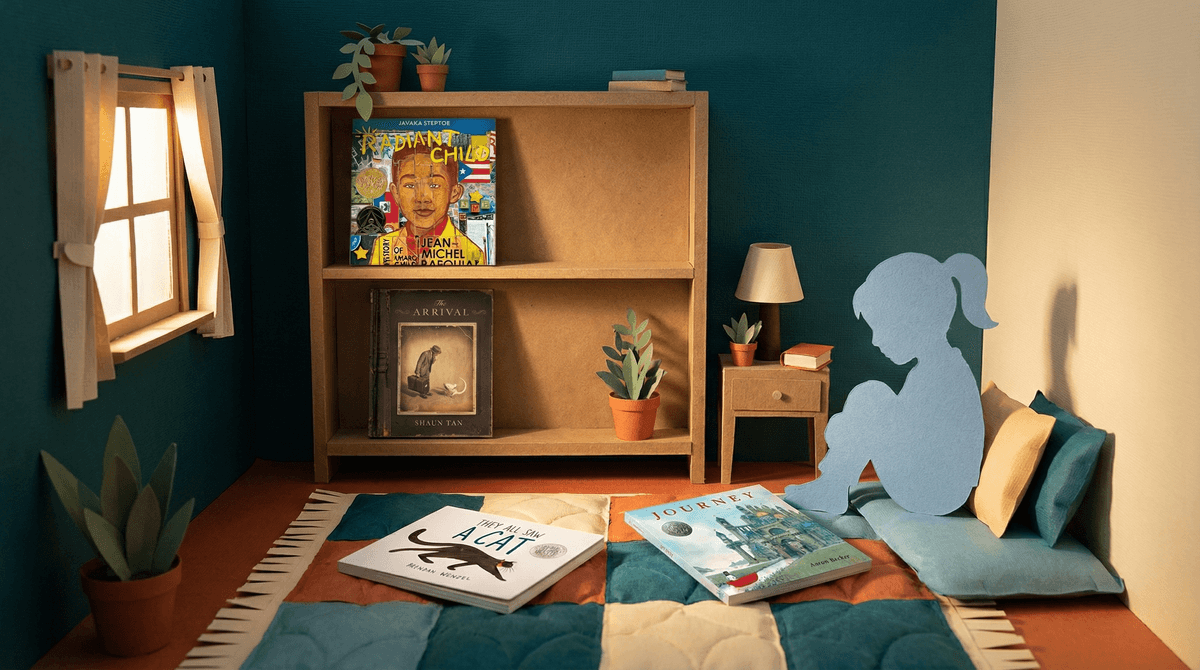
Journey by Aaron Becker - This is a wordless book, which means the art does ALL the heavy lifting. The watercolor illustrations are intricate and dreamy, and kids will spot new details on every re-read. Ages 4-8 will be mesmerized.
The Girl Who Drank the Moon - Wait, this is a chapter book, but the illustrations by Yuko Shimizu are so stunning they deserve a mention. For kids 8-12 who are transitioning away from picture books but still love art.
Where the Wild Things Are - Maurice Sendak's classic. The illustrations literally grow as Max's imagination expands, eventually taking over the entire page. It's visual storytelling at its finest.
The Arrival by Shaun Tan - Another wordless book, but this one is more like a graphic novel. The sepia-toned illustrations tell an immigrant story with such emotional depth that adults will get choked up. Ages 8+, but even younger kids will be captivated by the images.
Radiant Child: The Story of Young Artist Jean-Michel Basquiat - Javaka Steptoe's collage illustrations mirror Basquiat's own artistic style. It's a biography, but it's also an art experience. Ages 5-10.
They All Saw a Cat by Brendan Wenzel - Each page shows the same cat from a different animal's perspective, and the art style completely changes each time. It's a brilliant lesson in point of view. Ages 3-7.
Not to get too art-school here, but there are specific things that make picture book illustrations stand out:
Detail and layering - Books where you notice something new on the tenth read. Kids love feeling like they "discovered" something.
Emotional resonance - Art that makes you feel something. Color palettes that match the mood, facial expressions that convey complex emotions, compositions that create tension or joy.
Technical skill - Whether it's watercolor, collage, digital art, or mixed media, you can tell when an illustrator is a master of their craft.
Visual storytelling - The best picture books have illustrations that add information the text doesn't explicitly state. Background details, visual jokes, foreshadowing through imagery.
Ages 2-4: Look for books with bold colors, clear compositions, and engaging characters. They're building visual vocabulary and learning to connect images with concepts. The Very Hungry Caterpillar is a classic for a reason—Eric Carle's collage style is distinctive and mesmerizing.
Ages 5-7: This is when kids can handle more complex illustrations with multiple storylines happening on the same page. Wordless books are perfect for this age—they build narrative skills and confidence.
Ages 8-12: Graphic novels and illustrated chapter books become huge. The art is more sophisticated, and kids at this age can appreciate artistic style and technique. Amulet series by Kazu Kibuishi is a great example.
In a world where kids are consuming hundreds of images per hour through screens, picture books with incredible art are a radical act of slow media. They teach patience, observation, and visual literacy. They create shared moments. They prove that not all visual content is designed to hijack attention—some of it is designed to inspire wonder.
The best part? Unlike screen time, nobody ever feels guilty about "too much" picture book time. Build a collection. Visit the library. Let your kids get lost in the illustrations. It's one of the easiest, most joyful ways to create screen-free time that actually feels special.
Start a picture book rotation at bedtime or during that witching hour before dinner when everyone's fried. Let kids choose based on the cover art—it's a legitimate selection criteria. And if you want to go deeper, ask questions like "What do you notice?" or "How do you think the character is feeling based on the colors?"
You're not just reading a book. You're teaching them how to really see.