

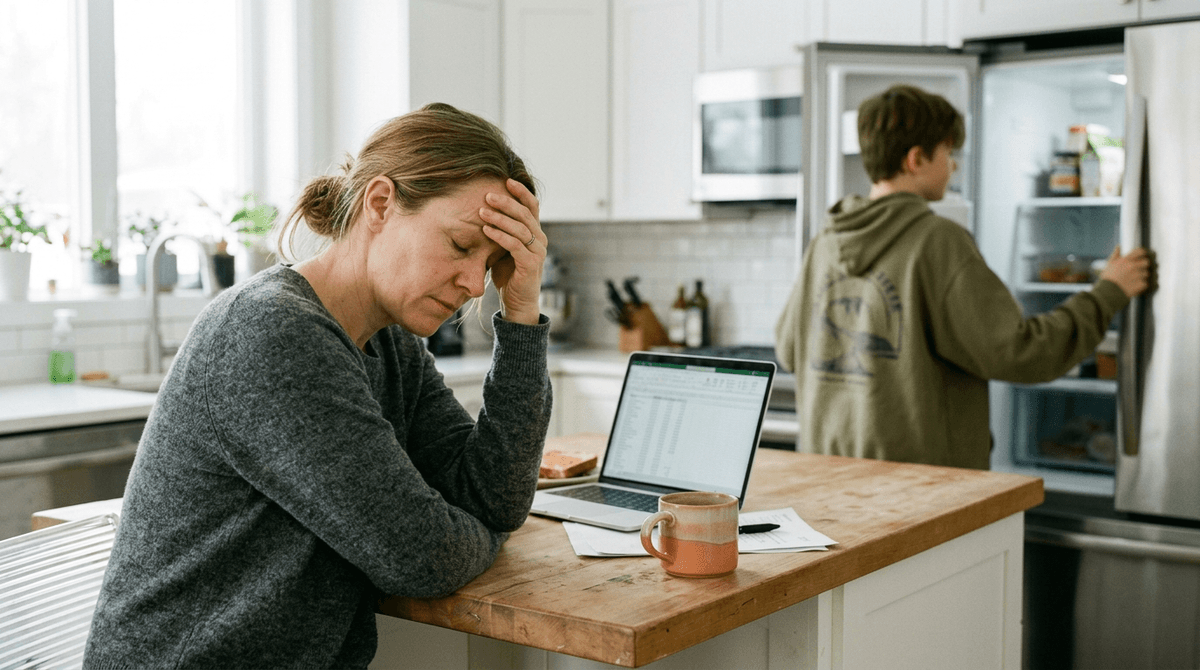

Parents carrying chronic stress are nearly three times as likely to raise children with obesity—and cutting screen time or policing snacks won't fix it. The link persists even when children eat the exact same diet and log the same hours on screens as their peers.
Chronic caregiver stress triples the risk of childhood obesity, operating entirely outside traditional culprits like junk food, screen habits, and missed sleep.
When pediatricians or parents worry about a child's weight, the standard reaction is to police the child's environment: restrict tablets, swap snacks, or schedule more sports.
This study upends that playbook. A parent's mental load correlates directly with a child's metabolic health—even in households where diet and screen habits look textbook. If your family wellness strategy only scrutinizes what your child consumes and how long they stare at a display, you are ignoring the largest variable in the room: your own nervous system.
Pediatric guidelines have spent decades treating family stress as background noise while obsessing over calories and step counts. Researchers evaluated this cohort to determine whether caregiver mental strain directly registers on children's bodies in cultures with traditionally strong baseline diets.
- Children of high-stress parents faced 2.76 times higher odds of obesity. In the high-stress parent group, 4.0% of kids had obesity, compared to 1.6% in low-stress homes.
- Fitness dropped as parental stress climbed. Children of stressed caregivers showed lower cardiorespiratory endurance and were less likely to meet 60 minutes of daily exercise (77.8% vs. 82.7%).
- Diet, sleep, and screen time did not explain the difference. Stressed households showed no meaningful drop in Mediterranean diet adherence, sleep duration, or recreational screen use compared to low-stress households.
- Measurements tracked stress directly. Higher parental stress correlated with elevated waist-to-height ratios and higher BMI z-scores across the board.
The cultural narrative says stressed parents simply give up: they order pizza, park their kids in front of tablets, and let bedtime slide. This data rejects that excuse. Families under heavy stress maintained standard diet compliance and screen limits just as well as relaxed families did.
That means parental stress affects children through hidden physiological and emotional pathways. Chronic household tension can elevate a child's baseline cortisol, altering metabolism and fat storage directly. It can also create an unspoken home climate that dampens spontaneous, energetic play without ever showing up on a diet log.
This was an observational snapshot, not a multi-year controlled experiment. Researchers identified an association; they cannot prove that parental stress directly caused their child's weight gain.
The study also had high attrition. Researchers excluded more than 60% of the initial 3,802 participants due to incomplete survey data, which could skew the sample toward specific demographics. Finally, researchers evaluated only the primary caregiver rather than both parents, and lifestyle habits relied on children's self-reports.
- If you feel chronically overwhelmed and burned out at home… …invest your limited energy into offloading your own schedule or seeking support rather than policing your child's daily menu.
- If a doctor raises concerns about your child's weight or stamina… …audit household stress levels, arguments, and emotional safety before arbitrarily slashing recreational screen time that already falls within normal bounds.
- If you want to improve your child's physical fitness… …model stress recovery and de-escalation, because children internalize household strain in ways that directly undercut their endurance and daily activity.
Managing your own stress is preventative healthcare for your child, not a luxury. Stop agonizing over minor slip-ups in screen limits or meal plans; lowering the emotional temperature in your home does more for your child's physical health than enforcing another strict rule.
García S, Ródenas-Munar M, Cereijo L et al. (2026). Parental Perceived Stress and Its Association With Childhood Obesity in Spain: The PASOS Study. Preventing chronic disease. doi:10.5888/pcd23.260028 — pubmed.ncbi.nlm.nih.gov