

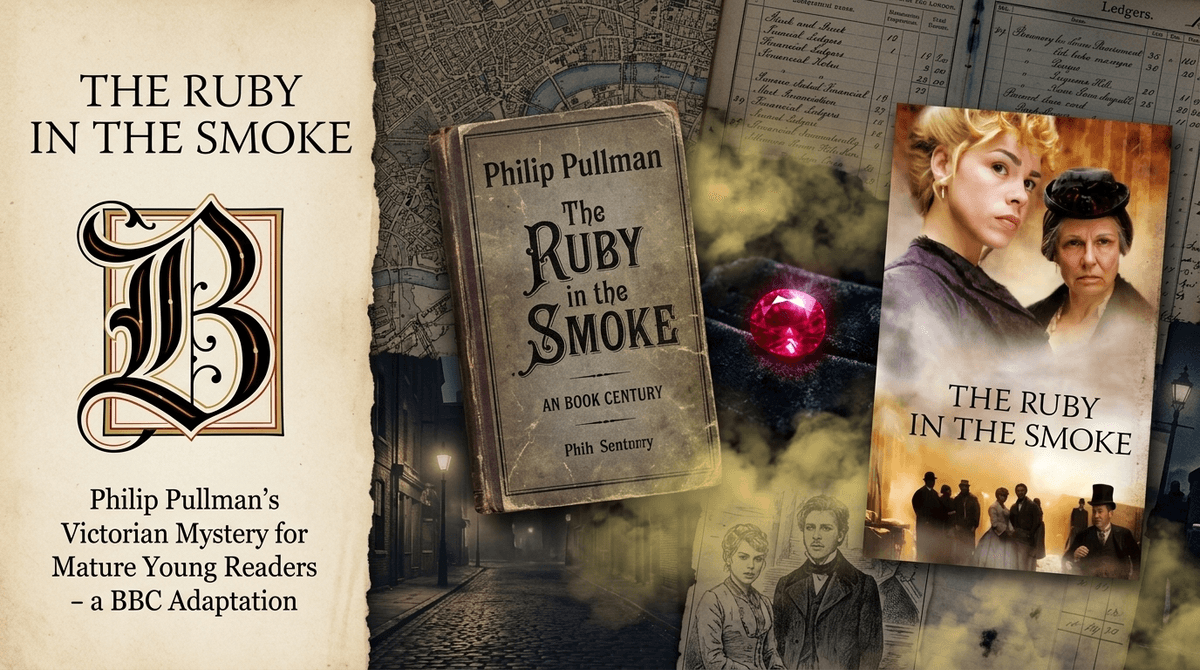
The Ruby in the Smoke is Victorian noir that actually respects its audience's intelligence, which is a polite way of saying it’s dark, gritty, and doesn't pull its punches regarding the uglier sides of 19th-century London. If your kid is ready to move past sanitized historical fiction and wants a protagonist who is financially literate, handy with a pistol, and navigating a world of opium dens and corporate conspiracies, this is the gold standard.
TL;DR: The Ruby in the Smoke is a gripping, atmospheric mystery that introduces Sally Lockhart, a refreshingly competent 16-year-old lead who tackles the opium trade and murder in 1872 London. It’s perfect for readers aged 12+ who want a more mature "detective" vibe than Enola Holmes but aren't quite ready for the full existential dread of Philip Pullman’s later work, His Dark Materials.
Most Victorian-era fiction for teens falls into two camps: the "ballrooms and bonnets" romance or the "plucky orphan in the workhouse" Dickens-lite. The Ruby in the Smoke ignores both. Sally Lockhart is sixteen, recently orphaned, and possesses a "thorough knowledge of bookkeeping, a deep understanding of the stock market, and a steady aim with a pistol."
She isn't waiting for a guardian to save her; she’s busy trying to figure out why her father’s shipping firm collapsed and who is trying to kill her. For parents looking for a female lead who is defined by her competence and agency rather than her romantic interests, Sally is the blueprint. She’s serious, slightly prickly, and incredibly capable—a nice antidote to the "chosen one" tropes that dominate modern YA.
Let’s talk about the "dark" factor. Pullman doesn't use Victorian London as a cute backdrop; he uses it as a character. This means the book deals directly with:
- The Opium Trade: This isn't a vague "drugs are bad" subplot. It’s the engine of the mystery. The book depicts addiction, the squalor of opium dens, and the historical reality of how the British Empire profited from the trade.
- Violence: There is murder, and it’s not always off-page. The villain, Mrs. Holland, is genuinely menacing—a cold, calculating woman who runs a boarding house for sailors and has zero qualms about disposing of anyone in her way.
- Poverty: The book highlights the massive wealth gap of the era. It shows the "Seven Blessings" (a group of thugs) and the desperate lives of the London poor without being patronizing.
It’s intense, but it’s "useful" intensity. It provides a massive amount of historical context that most history books gloss over. If your kid is already into Sherlock Holmes, they’ve seen this world before, but Pullman adds a layer of social realism that makes the stakes feel much higher.
We’ve seen a lot of "girl detective" reboots lately, but many of them feel like modern characters wearing Victorian costumes. Sally Lockhart feels authentic to her time while still being a rebel. She has to navigate a world that thinks she’s a helpless child, and she does it by being smarter and more prepared than the adults around her.
If your kid is a "reluctant reader" because they find teen fiction too "fluffy," give them this. The pacing is relentless, the mystery is genuinely complex, and Pullman’s prose is lean and sharp. It’s a great bridge between middle-grade series like A Series of Unfortunate Events and more adult-leaning historical thrillers.
If the book feels like a heavy lift, there is a very solid BBC adaptation from the mid-2000s. The Ruby in the Smoke (the movie) stars Billie Piper and a young Matt Smith. It captures the atmosphere perfectly and is a great way to "on-board" a kid into the series. That said, the book’s internal monologue and the details of Sally’s financial maneuvers are worth the read.
This isn't just a "read and forget" book. It’s a gateway to a lot of bigger conversations if your kid is interested:
- The Business of Empire: Ask them what they think about the East India Company after reading this. The book does a great job of showing how "respectable" businesses were often built on pretty horrific foundations.
- The Art of Photography: One of the main characters, Frederick Garland, is a photographer. This was a cutting-edge, messy, chemical-heavy tech at the time. It’s a cool look at the "Silicon Valley" of the 1870s.
- Financial Literacy: Sally’s knowledge of the stock market is her superpower. It’s a rare book that makes "understanding a ledger" feel as cool as "winning a sword fight."
The biggest friction point for some families won't be the violence—it’ll be the historical language and the grimness of the setting. It’s a "moody" book. If your kid is currently in a phase where they only want upbeat, "everything turns out fine" stories, maybe hold off. But if they’re starting to ask questions about how the world actually works (and how it used to work), The Ruby in the Smoke is a fantastic entry point.
Q: What age is The Ruby in the Smoke appropriate for? The sweet spot is 12 and up. While there’s nothing sexually explicit, the themes of opium addiction, child poverty, and the cold-blooded nature of the murders make it a better fit for middle schoolers and up rather than the Percy Jackson crowd.
Q: Is it better than Enola Holmes? "Better" is subjective, but it is certainly darker and more grounded. If Enola Holmes is a pop-rock anthem, The Ruby in the Smoke is a cello concerto. It’s less about "fun" and more about "tension."
Q: Are there content warnings for The Ruby in the Smoke? The main things to look out for are the depictions of opium dens (which are quite visceral), the death of a parent (off-page but central), and some period-typical attitudes toward class and race, though Pullman is generally using these to critique the era rather than endorse it.
Q: Do you need to read the whole Sally Lockhart series? You don't have to, but you’ll probably want to. The first book stands alone as a mystery, but the character development across the four books—including The Shadow in the North and The Tiger in the Well—is some of Pullman’s best work.
The Ruby in the Smoke is a high-quality, high-stakes mystery that doesn't talk down to its readers. It’s a perfect pick for a kid who wants something "real" and isn't afraid of a little Victorian fog and filth.
- If they loved the gritty Victorian vibe, check out The Lie Tree by Frances Hardinge.
- For more strong leads in historical settings, browse our best books for kids list.
- If your middle schooler is looking for their next big series, see our digital guide for middle school.
- Find Victorian noir recommendations
