

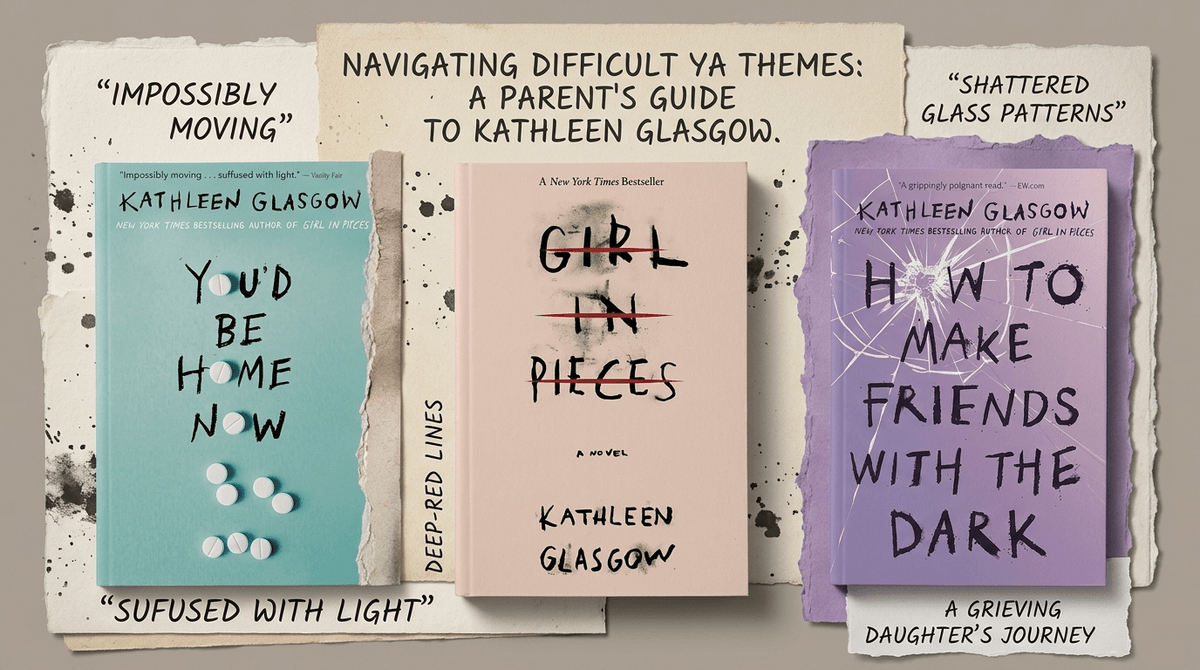
Girl in Pieces is a raw, unflinching look at self-harm and trauma that has become a permanent fixture on teen reading lists because it refuses to look away from the things adults usually try to polish over. It’s a heavy, visceral survival story that doesn't offer easy answers, making it a "lifeline book" for some and a high-intensity read for others.
TL;DR: Girl in Pieces by Kathleen Glasgow is a gritty YA novel about 17-year-old Charlie Davis navigating recovery from self-harm, homelessness, and grief. It’s a viral hit on social media because of its radical honesty, but parents should know it contains graphic descriptions of cutting and trauma. It’s best suited for older teens (14+) who can handle intense themes; for more curated picks for this age group, check out our digital guide for high school.
Kathleen Glasgow’s debut novel isn't a "fun" read, but it is a deeply necessary one for the right audience. The story follows Charlie Davis, a girl who has lost her father to suicide, her best friend to a different kind of tragedy, and her home to the streets. When we meet her, she’s in a treatment center, literally silent, having been "broken" into pieces.
The book is written in sparse, poetic fragments that mirror Charlie’s internal state. It’s beautiful, but it’s sharp. This isn't a book that uses trauma as a plot device; it’s a book about the slow, agonizing, non-linear process of putting yourself back together. It resonates because it treats teen pain with a level of respect and gravity that most media avoids.
If you’ve seen this book on social media, you’ve probably seen it associated with "the sad girl aesthetic"—think moody filters and quotes about pain. But dismiss Girl in Pieces as just another "sad book" and you’ll miss why it actually sticks.
Teens are drawn to this because it’s authentic. We live in a culture that often tells kids to "look on the bright side" or "just be positive," which can feel like gaslighting to a kid dealing with genuine depression or a chaotic home life. Charlie’s journey is messy. She makes bad choices, she relapses, and she meets people who aren't always good for her. Glasgow captures the specific loneliness of being a "difficult" kid in a world that prefers easy ones.
This is the part where we stop being vague. Girl in Pieces earns its reputation for intensity. If your teen is reading this, here is the territory they are walking through:
- Self-Harm: The descriptions of cutting are graphic. It’s not just mentioned; the mechanics, the physical sensation, and the scars are central to the narrative.
- Addiction: The book explores drug and alcohol use, particularly in the "marginalized artist" scene Charlie enters later in the book.
- Trauma and Abuse: There are references to sexual assault, physical abuse, and the grinding reality of homelessness.
- Suicide: The shadow of suicide hangs over the book, both in Charlie’s family history and her own thoughts.
While that list looks like a "do not enter" sign to some, for many teens, seeing these things acknowledged in print makes them feel less alone. The book doesn't glorify the behavior—it shows the exhaustion and the cost of it.
If your teen finished Girl in Pieces and is looking for more books that don't talk down to them, here are a few directions to go.
The "Deep Dive into Recovery" Category
- You'd Be Home Now by Kathleen Glasgow: If they liked the author’s voice, this is the logical next step. It deals with the aftermath of a fatal car accident and the impact of the opioid crisis on a "perfect" family.
- How to Make Friends with the Dark by Kathleen Glasgow: Another Glasgow heavy-hitter, this one focuses on "complicated grief" after the sudden death of a mother.
The "Finding Your Voice" Category
- Speak by Laurie Halse Anderson: This is the gold standard for YA novels about trauma. Like Charlie, the protagonist Melinda becomes nearly silent after a traumatic event. It’s a masterclass in internal monologue.
- The Way I Used to Be by Amber Smith: This follows a girl through four years of high school as she navigates the fallout of an assault. It hits many of the same emotional beats as Girl in Pieces.
The "Palate Cleanser" (Because Everyone Needs a Break)
- A Short Hike: If the emotional weight of these books starts to feel like too much, suggest this game. It’s a tiny, beautiful open-world experience about a bird hiking up a mountain. It deals with anxiety and family expectations but in a way that feels like a warm hug. It’s the ultimate "low-stress explorer" from our best games for kids list.
If your teen is reading Girl in Pieces, they are engaging with some of the hardest parts of the human experience. This isn't the time for a lecture; it's a time for curiosity.
Don't ask: "Is this book giving you bad ideas?" Do ask: "Charlie’s journey is pretty brutal—what do you think of how she handles her 'relapses'? Does it feel realistic to you?"
The goal is to validate that they are reading something sophisticated and "adult." If they feel like you’re judging the book, they’ll stop talking about it. If they feel like you’re interested in the art of it, they might actually tell you what they’re thinking.
Q: Is Girl in Pieces appropriate for a 13-year-old? It depends on the 13-year-old, but generally, this book is aimed at ages 14 and up. The descriptions of self-harm are very detailed and could be overwhelming for younger readers who haven't encountered these themes before. If they are already reading heavy YA, they might be fine, but be prepared for some intense conversations.
Q: Does Girl in Pieces trigger self-harm? For some readers, yes. The book includes graphic descriptions of the act and the urges. Kathleen Glasgow includes an author's note at the end with resources, but if a teen is currently struggling with self-harm, this book might be too "close to the bone." For others, it acts as a deterrent by showing how miserable the cycle actually is.
Q: Why is Girl in Pieces so popular on TikTok? It fits perfectly into the "BookTok" ecosystem of emotional, "wreck-your-life" reads. It has a high "emotional payoff"—meaning it makes people cry—and the writing is very quotable for social media posts.
Q: Is there a movie version of Girl in Pieces? As of May 2026, there is no official movie, though it has been in various stages of development. Most of what you see on YouTube or TikTok are "fan casts" or fake trailers made by readers.
Girl in Pieces is a heavy lift, but it’s one of the most honest books in the YA canon. It doesn't treat teens like children, and in return, they give it their full attention. If your kid is in, let them be in—just keep the door open for the heavy conversations that are bound to follow.
- Browse our best books for kids list for more age-appropriate titles.
- See our digital guide for high school for more on navigating teen media.
- Get more recommendations
