

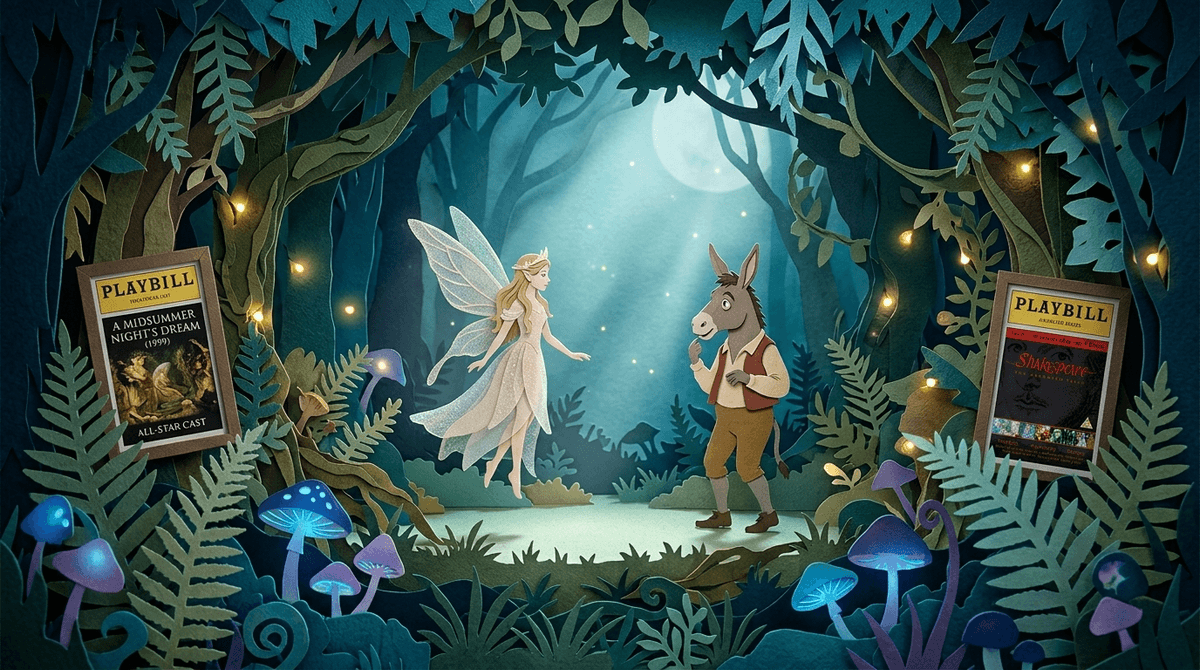
A Midsummer Night’s Dream is the ultimate Shakespearean gateway drug because it doesn't take itself too seriously. It’s a chaotic, magical sitcom where the stakes are low, the physical comedy is high, and the plot—four teenagers getting lost in the woods and falling in love with the wrong people because of fairy dust—is something every kid who has ever dealt with a playground crush can inherently understand.
TL;DR
A Midsummer Night's Dream is the most accessible entry point to Shakespeare because it prioritizes magic and slapstick over heavy tragedy. Skip the dry textbooks and start with the 1999 movie version for a lush, star-studded intro, or the Shakespeare’s Animated Tales version for younger kids who just want the plot. It’s a masterclass in "it’s not that deep" storytelling that proves the Bard could actually be funny.
The biggest hurdle for any kid (and most adults) is the language. If you hand an 11-year-old a paperback copy of the play and tell them to have fun, they’re going to hate it. Shakespeare was meant to be seen, not read. The language barrier dissolves the second you see a grown man with a donkey head (Bottom) trying to be romantic with a fairy queen (Titania).
The trick is to treat the play like a comedy special, not a history lesson. If your kid is confused by the "thees" and "thous," remind them that the characters are essentially just "shipping" each other in the woods and getting the pairings wrong. Once they realize the plot is basically a messy group chat, the 400-year-old vocabulary becomes a lot less intimidating.
This is the one with Kevin Kline, Michelle Pfeiffer, and Stanley Tucci. It’s set in 19th-century Tuscany, everyone is on bicycles, and the production value is high enough to keep kids from checking out. It leans hard into the "mechanicals"—the group of amateur actors—which provides the best comic relief. It’s a great "family movie night" pick because it feels like a real movie, not a filmed stage production.
If you have younger kids or a reluctant reader who just needs the 25-minute version to understand what’s happening, this is the gold standard. The animation styles vary by episode, but the Midsummer one uses a beautiful, slightly trippy stop-motion/painted style that captures the dreamlike vibe perfectly. It keeps the original language but trims the fat so the story moves at a clip.
For the purists who want to see how it was actually done, this filmed stage version is surprisingly high-energy. It’s loud, it’s bawdy, and the actors interact with the audience. It’s the best way to show kids that Shakespeare wasn't "fancy"—it was the pop culture of its day, meant for a rowdy crowd.
Okay, this is technically a Hamlet book, but Ryan North (of Dinosaur Comics fame) also did a version of Midsummer in his "Chooseable-Path" style. If your kid likes the best graphic novels for middle schoolers, they’ll love this. It lets them play as the characters and make choices that either stick to the script or go wildly off the rails. It’s the best way to prove the story is a flexible, living thing.
The middle of the play is a mess of "who loves whom." If your kid is getting frustrated, here’s the cheat sheet:
- Hermia and Lysander are the original couple.
- Helena is obsessed with Demetrius, who is obsessed with Hermia.
- Puck (the fairy prankster) uses a magic flower to make the boys fall in love with the first person they see.
- Chaos ensues when both boys end up chasing Helena, leaving Hermia confused and angry.
Conversation Starter: Ask your kid who they think is the biggest "villain" in the play. Is it Egeus (the controlling dad), Oberon (the petty fairy king), or Puck (the guy who "accidentally" ruined everyone's night)? There's no wrong answer, and it usually leads to a great talk about whether "it was just a prank" is a valid excuse.
If the play actually sticks, don't stop at the movie. This is a great time to lean into the "meta" nature of the story—the play-within-a-play.
- The "Mechanicals" are the key: The characters Peter Quince, Nick Bottom, and the rest of the crew are just regular people trying to do something creative and failing hilariously. This is a great bridge to talking about creative confidence.
- The Fantasy Connection: If your kid is into The Lord of the Rings or Dungeons & Dragons, point out how Midsummer basically invented the "mischievous fey" trope that dominates modern fantasy.
The play is a comedy, but it starts with a threat: Hermia is told she has to marry the guy her dad chose, or she’ll be executed/sent to a nunnery. It sounds heavy, but in the context of the play, it’s just the "inciting incident" that gets them to run into the woods. Don't let the first five minutes scare you off; the tone shifts to pure absurdity the second they hit the forest.
Q: Is A Midsummer Night's Dream okay for an 8-year-old? Absolutely. While the language is sophisticated, the plot is essentially a fairy tale with a lot of "he likes her but she likes him" drama. If you stick to the more visual versions, like the animated tales, it lands perfectly for that age group.
Q: Are there any "inappropriate" parts I should watch out for? Shakespeare loved a good double entendre. Most of it will fly right over a kid's head, but the play is "bawdy"—meaning there’s some suggestive humor and flirting. In the 1999 movie, there’s some artistic fairy nudity (mostly just strategically placed hair and moss), but it’s treated as magical/ethereal rather than sexual.
Q: Which version is the best for someone who hates Shakespeare? Go with the 1999 movie. It doesn't feel like "homework." It feels like a high-budget rom-com that just happens to have some weird dialogue. If they still hate it, try a graphic novel adaptation first to get the plot down.
A Midsummer Night's Dream is the most "fun" you can have with the classics. It’s short, it’s fast, and it’s genuinely funny if you pick the right version. Don't worry about them understanding every single word—worry about them getting the vibe. If they come away thinking Shakespeare was a guy who wrote about magical forest raves and people turning into donkeys, you’ve won.
- Looking for more "high-brow" content that's actually fun? Check out our best movies for kids list.
- If your kid loves the magic and folklore of Midsummer, they might be ready for our best books for kids list specifically in the fantasy category.
- Ask our chatbot for a Shakespeare reading list for teens
