

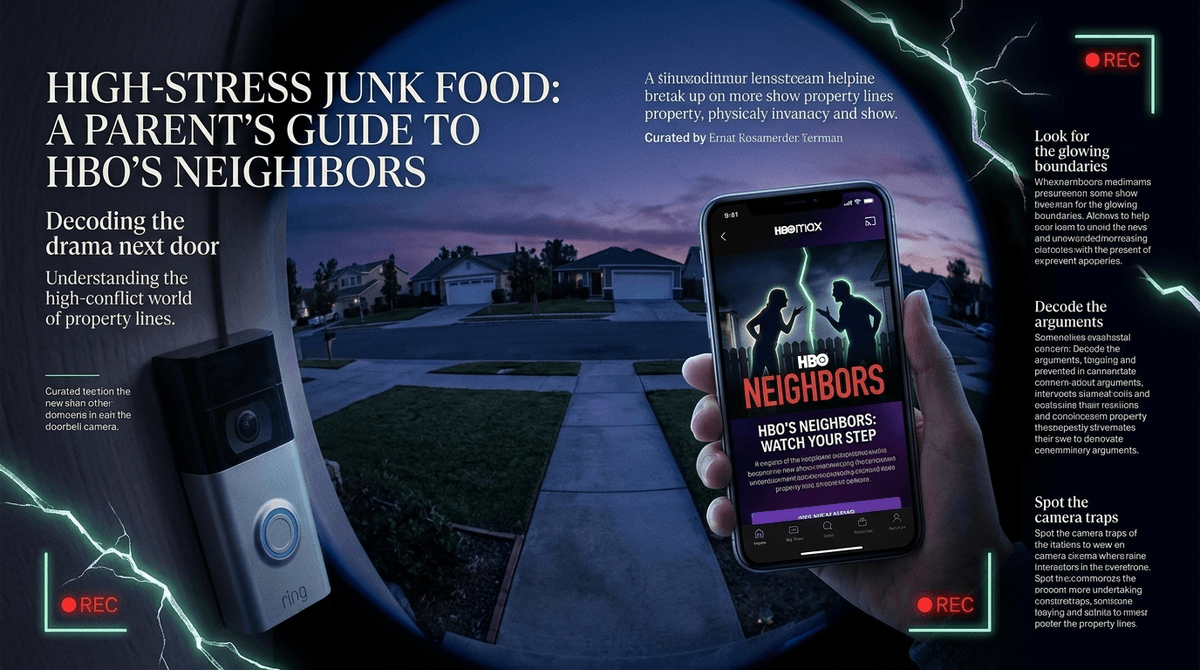
TL;DR: HBO’s Neighbors is essentially the "Nextdoor" app’s most unhinged threads brought to life with a prestige TV budget. It’s a TV-MA docuseries chronicling real-life, high-tension disputes between people who live next door to each other. Think doorbell cam footage, property line wars, and viral-style screaming matches. It’s captivating in a "train wreck" sort of way, but for teens, it’s a lot of high-cortisol conflict and aggressive language. If your kid is already prone to doomscrolling "Karen" videos on TikTok, this is just the long-form version of that.
Ask our chatbot if your teen is ready for TV-MA docuseries
Released early in 2026, Neighbors is HBO’s latest foray into the "hyper-reality" genre. It’s a docuseries that follows various neighborhood feuds across the country. We’re talking about everything from petty arguments over overgrown hedges to genuine, high-stakes legal battles and police interventions.
The show uses a mix of professional cinematography and "found footage"—Ring doorbell clips, iPhone recordings, and dashcam video. It’s designed to feel immediate, raw, and incredibly tense. It’s basically a deep dive into why some people simply cannot get along, packaged as a psychological study of modern American living.
If you’ve heard your teen talking about "Ohio" behavior or calling a neighbor a "final boss," they’re likely seeing clips of this show on YouTube or Instagram.
Teens are drawn to this for a few reasons:
- The Viral Aesthetic: The show looks and feels like the content they already consume. It’s fast-paced and centers on "main character energy" gone wrong.
- The Cringe Factor: There is a certain social currency in 2026 in watching people make fools of themselves. It’s the ultimate "second-hand embarrassment" show.
- The "Realness": In an era of AI-generated everything, there’s a pull toward seeing raw, unfiltered human emotion—even if that emotion is just pure, unadulterated rage over a fence height.
We use the term "brain rot" a lot for low-effort content like Skibidi Toilet, but Neighbors falls into a different category: High-Stress Junk Food.
While the production value is high, the nutritional value for a developing brain is pretty low. It’s voyeuristic. It rewards aggression with airtime. If your teen is watching this, they aren't learning about conflict resolution; they’re learning that the person who screams the loudest or has the best camera angle "wins" the internet for a day.
HBO’s Neighbors is rated TV-MA, and for once, the rating isn't about "spicy" scenes. It’s about the vibe and the vocabulary.
- Language: It is constant. When people are being evicted or having their cars towed by a vengeful neighbor, they don't use "polite" words. Expect a heavy dose of every four-letter word in the book.
- Aggression: This is the big one. The show thrives on high-tension disputes. There are scenes of people being physically restrained, screaming in each other's faces, and genuine threats of violence. For a sensitive teen, this can be genuinely triggering or anxiety-inducing.
- Privacy Ethics: This is a great talking point for families. The show features people who often didn't know they were being filmed by their neighbors' security cameras until the footage went viral. It’s a messy look at the death of privacy.
If your teen wants "real" stories or high-stakes drama but you’d rather they not spend their Saturday night watching adults act like toddlers, here are some Screenwise-approved pivots:
If they like documentaries, this is a fantastic look at history, business, and pop culture without the screaming. It’s smart, funny, and actually teaches them something about entrepreneurship.
If they need an antidote to neighborhood conflict, suggest they build their own community. Stardew Valley is the ultimate "good neighbor" simulator. It’s cozy, stress-free, and focuses on building relationships rather than destroying them.
For "workplace/community" dynamics that are actually funny and heartwarming, this is the gold standard. It deals with real-world problems but with a sense of humor and humanity that Neighbors lacks.
- Ages 13 and Under: Hard no. There’s no reason for a middle schooler to be marinating in this much adult vitriol. It’s not "educational," it’s just stressful.
- Ages 14-16: Use caution. If they are watching it, watch with them. Use it as a springboard to talk about digital privacy and how to handle disagreements without a camera in someone's face.
- Ages 17+: They’re likely going to watch it anyway. Talk to them about the "editing" of reality—how HBO picks the most extreme moments to create a narrative.
If your teen is bugging you to watch Neighbors, or if you’ve caught them watching clips on YouTube, don't just ban it and walk away. That usually backfires.
Try these conversation starters:
- "I saw a clip of that show—those people seem miserable. Why do you think people find it so interesting to watch others fight?"
- "If our neighbor started filming us with a Ring camera every time we walked the dog, how would that make you feel?"
- "Do you think the show is actually showing the whole story, or just the parts that make people look 'crazy' for views?"
HBO’s Neighbors is the prestige version of a car crash. It’s hard to look away, but you don't exactly feel better after seeing it. For parents, the goal isn't necessarily to keep your teen in a bubble, but to make sure they understand that what they’re seeing is a curated, extreme version of reality designed to trigger a reaction.
If your family is looking for something to watch together, maybe skip the neighborhood feuds and opt for something that won't make you want to move to a cabin in the woods.
Next Steps:
- Check your teen's YouTube history to see if they're already down the "neighbor dispute" rabbit hole.
- If they are, suggest a "pallet cleanser" like Animal Crossing: New Horizons.
- Set a boundary: If the show makes them feel anxious or "on edge," it's time to switch to something else.
Take our survey to see how your family's media habits compare to your community