

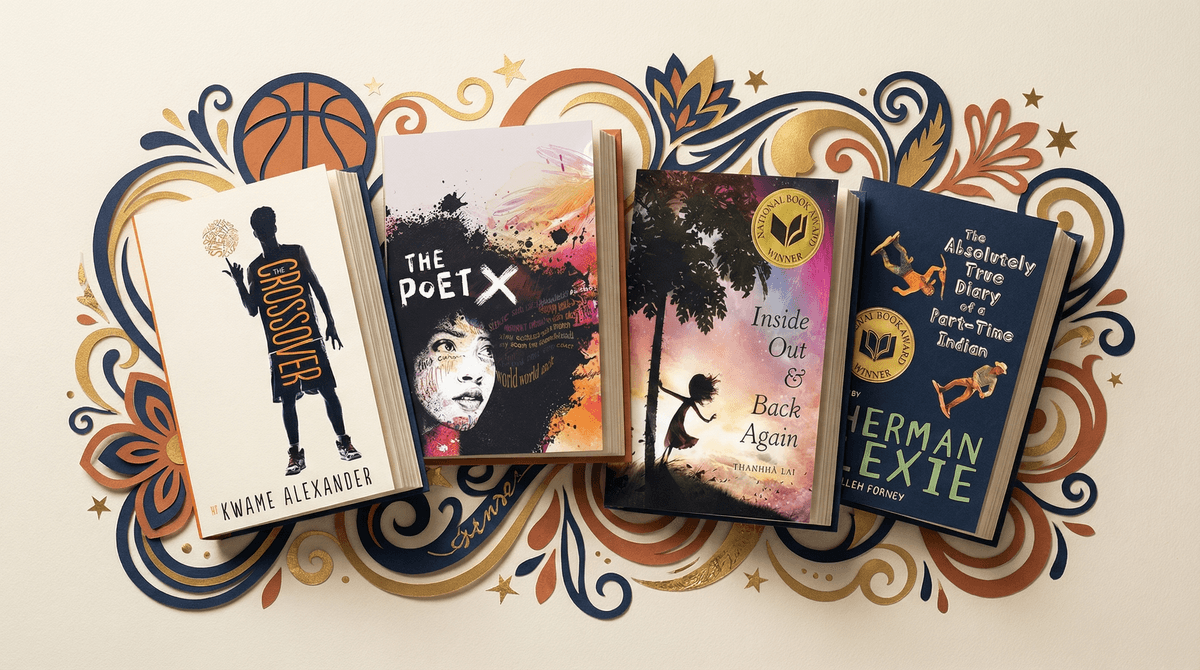
The National Book Awards have been honoring the best in American literature since 1950, and their Young People's Literature category (added in 1996) spotlights books that push boundaries, tackle tough topics, and treat young readers like the thoughtful humans they are. These aren't your "safe" school library picks—they're books that win because they're genuinely excellent literature that happens to be written for younger audiences.
Recent winners include everything from The Poet X by Elizabeth Acevedo (a Dominican-American teen finding her voice through slam poetry) to The Crossover by Kwame Alexander (basketball, brotherhood, and family told entirely in verse). These books don't shy away from death, identity, racism, poverty, or family dysfunction—which is exactly why they matter.
Look, I get it. You're reading a guide on a digital wellness platform about books. But here's the thing: in a world where your kid can lose three hours to YouTube Shorts without blinking, books that actually hook readers are your secret weapon.
National Book Award winners tend to have a few things going for them:
- They're page-turners - These aren't assigned reading slogs. Kids who pick these up often finish them in days.
- They spark real conversations - About identity, justice, loss, belonging—the stuff that matters.
- They build reading stamina - Which directly impacts focus, critical thinking, and yes, the ability to resist the dopamine slot machine of infinite scroll.
The research is pretty clear: kids who read for pleasure perform better academically, have stronger empathy, and develop better focus. But getting a kid who's used to TikTok's pace to sit with a book? That requires a book that's actually worth their time.
National Book Award winners span a wide age range, roughly ages 10-18, but the sweet spot is middle grade through YA (ages 10-16). Here's what to know:
Ages 10-12 (Middle Grade): Books like Echo by Pam Muñoz Ryan or The Crossover work beautifully here. They tackle serious themes but through age-appropriate lenses. Expect: death of loved ones, social justice themes, family conflict, historical trauma.
Ages 13-15 (Young Adult): This is where things get heavier. The Poet X deals with religious trauma and sexual awakening. Long Way Down by Jason Reynolds is about gun violence and revenge. These books trust teens to handle complexity and moral ambiguity.
Ages 16-18: At this point, National Book Award winners are basically adult literary fiction with teen protagonists. The Absolutely True Diary of a Part-Time Indian by Sherman Alexie includes alcoholism, poverty, and masturbation jokes. It's also hilarious and heartbreaking.
A note on content: These books often include profanity, sexual content (usually not explicit), violence, and heavy themes like suicide, racism, and abuse. They're award-winning because they handle these topics with nuance and care—but you should absolutely preview anything you're unsure about. Common Sense Media has detailed reviews if you want specifics.
These aren't "easy" books—and that's the point.
If your kid is used to Dog Man or Diary of a Wimpy Kid (both great!), jumping straight to a National Book Award winner might feel like going from the kiddie pool to the ocean. That's okay. You can:
- Start with verse novels - Books like The Crossover or Inside Out and Back Again by Thanhha Lai are told in poetry, which means shorter pages, white space, and a rhythm that feels faster-paced.
- Try audiobooks - Many kids who "don't like reading" actually love stories—they just struggle with decoding or focus. The audiobook of Long Way Down is under 90 minutes and absolutely gripping.
- Read together - Not in a "let me read to you" way, but in a "we're both reading this and can talk about it" way. Book clubs aren't just for adults.
They're diverse—in every sense.
The National Book Awards have made a clear effort to honor books by and about people from marginalized communities. This isn't tokenism; it's recognition that the best American literature reflects actual American experiences. If your family is white and suburban, these books will expose your kids to perspectives they won't get in their daily lives. If your family isn't, your kids might finally see themselves centered in award-winning literature.
They'll probably want to talk about what they're reading.
Unlike Fortnite lore or whatever's happening on Roblox, books create natural conversation opportunities. "What did you think about...?" is an easy opener. Don't force it, but be available. Some of the best parent-kid conversations I've heard about have started with a National Book Award winner.
1. Let them choose. Show them the list, read a few back-cover descriptions together, and let them pick. Autonomy matters.
2. Don't make it homework. No book reports, no quizzes, no "what's the theme?" If they want to talk about it, great. If not, also fine. The goal is to build a reading habit, not create another assignment.
3. Model reading. If your kid only sees you scrolling your phone, they're not going to value books. Read your own stuff—and let them see you doing it.
4. Bribe them if necessary. I'm not above "read for 30 minutes, earn 30 minutes of screen time." Whatever works.
5. Try a series or author. If they love The Crossover, there are sequels. If they connect with Jason Reynolds, he has a dozen other books. Build momentum.
National Book Award winners for kids aren't perfect, and they're not for every kid at every moment. But they represent some of the best storytelling available for young readers—books that respect their intelligence, challenge their thinking, and might just compete with the pull of screens.
In a digital landscape where everything is designed to be addictive and consumable in 15-second chunks, a book that makes a kid want to keep turning pages is genuinely radical. These books do that.
- Browse the full list - The National Book Foundation has every winner since 1996 on their website
- Check your library - Most libraries have National Book Award winner displays
- Start with verse - If your kid is a reluctant reader, try The Crossover or Long Way Down
- Ask a librarian - Seriously, they're amazing at matching kids with books
- Explore alternatives to endless scrolling that still feel engaging to your kid