

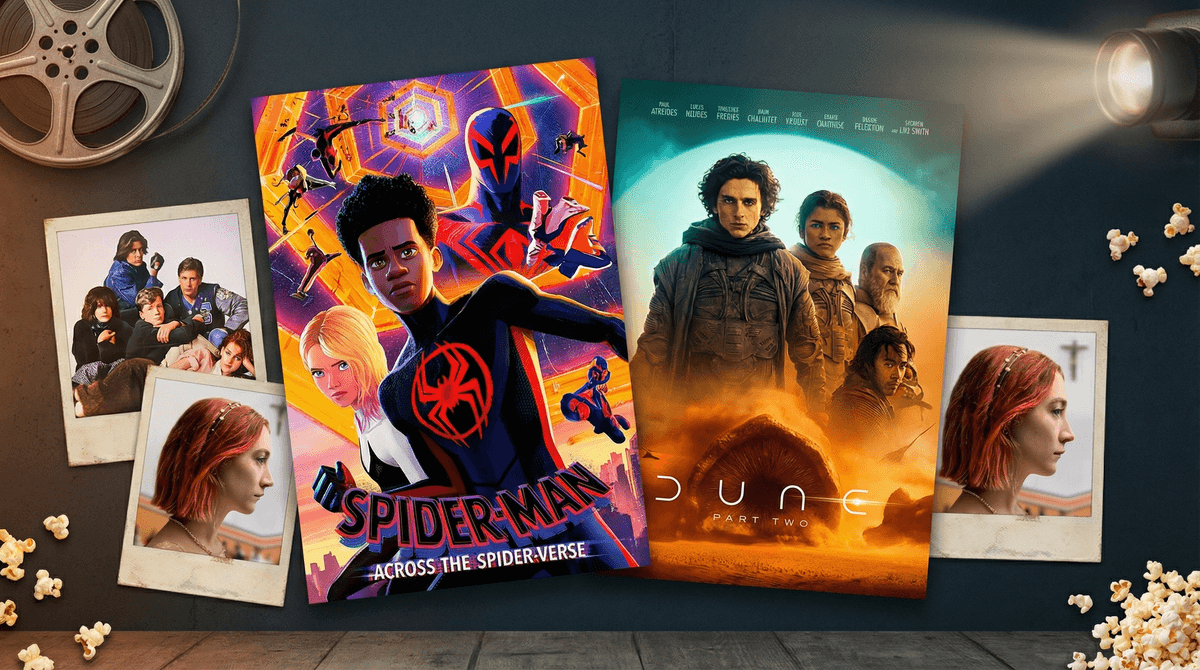
Must-Watch Movies for Teens: New Releases and Timeless Classics
TL;DR: Looking for movies that'll actually hold your teen's attention (and maybe yours too)? Here are the films worth watching together—from recent releases like Dune: Part Two and Spider-Man: Across the Spider-Verse to classics like The Breakfast Club and Dead Poets Society. These aren't just entertainment—they're conversation starters about identity, friendship, morality, and what it means to grow up.
Here's the thing about finding good movies for teens: they've got incredibly refined BS detectors. They can smell a "message movie" from a mile away, they'll call out bad CGI faster than any film critic, and they're watching everything through the lens of their own complex social worlds and emerging identities.
But when you find the right film? Magic happens. Suddenly you're having a real conversation about ethics, or identity, or what courage actually looks like—and it doesn't feel forced because you're both just talking about the movie.
This guide covers recent releases that are actually worth the hype, plus timeless films that still resonate with today's teens (yes, even the ones made before they were born).
Ages 13+
Denis Villeneuve's sequel is a masterclass in world-building and visual storytelling. It's also a surprisingly nuanced exploration of religious fanaticism, colonialism, and the corrupting nature of power. Paul Atreides' journey from reluctant messiah to something darker offers rich material for discussion about leadership, destiny, and moral compromise.
Why it works: The action is spectacular, but it's the ethical complexity that makes this stick. Teens are at the perfect age to grapple with the idea that the "chosen one" narrative might be more problematic than heroic.
Content note: Intense action violence, some disturbing images. The themes are mature but handled thoughtfully.
Ages 10+
This isn't just a superhero movie—it's a meditation on identity, belonging, and what happens when you're told there's only one "right" way to be yourself. Miles Morales' struggle against the literal canon of Spider-Man stories is a perfect metaphor for teens trying to write their own narratives.
Why it works: The animation is groundbreaking, the soundtrack slaps, and the emotional core is real. Plus, it tackles code-switching, cultural identity, and parent-teen relationships with genuine depth.
Ages 15+
A quiet, devastating film about childhood friends reuniting as adults. This one's for older teens who can handle slow-burn storytelling and emotional complexity. It's about roads not taken, cultural identity, and the person you might have been.
Why it works: Teens are constantly making choices about who they want to be. This film shows how those choices ripple forward in ways you can't predict. Also, it's a masterclass in what romance can look like beyond the typical Hollywood formula.
Content note: No violence, minimal language. The maturity requirement is all about emotional complexity.
Ages 14+
Yes, it's chaotic. Yes, there are hot dog fingers and googly eyes. But underneath the multiverse madness is a deeply moving story about parent-child relationships, generational trauma, and finding meaning in an overwhelming world.
Why it works: The absurdist humor appeals to teens' sense of irony, while the emotional core—a mother trying to understand her queer daughter—hits hard. It's also genuinely funny while dealing with depression and existential dread.
Content note: Some crude humor, martial arts violence, mature themes. The rapid-fire editing might be overwhelming for some viewers.
Ages 13+
The quintessential teen movie still works because high school social hierarchies haven't changed that much. Five stereotypes—the brain, the athlete, the basket case, the princess, and the criminal—spend Saturday detention discovering they're more than their labels.
Why it still works: Teens are obsessed with authenticity and the performance of identity. This film makes those dynamics visible and then systematically deconstructs them. Plus, the dialogue is genuinely sharp.
Fair warning: Some dated language around mental health and sexuality. Use it as a jumping-off point to discuss how conversations have evolved.
Ages 13+
Robin Williams as an English teacher who encourages his students to "seize the day" and think for themselves. This film about conformity, passion, and the cost of parental pressure remains devastatingly relevant.
Why it still works: Teens are navigating intense pressure around college, careers, and meeting expectations. The film's exploration of what happens when you pursue your own path versus the one laid out for you hits differently in the age of college admissions anxiety.
Content note: Deals with suicide. This requires a conversation before and after viewing.
Ages 14+
Greta Gerwig's semi-autobiographical film about a high school senior navigating her relationship with her mother, her hometown, and her own identity. It's funny, painful, and achingly real.
Why it works: The mother-daughter relationship is portrayed with unusual honesty—both characters are right and wrong, loving and hurtful. It's a perfect conversation starter about how we see our parents versus who they actually are.
Ages 14+
A sensitive freshman finds his people—a group of misfit seniors who introduce him to music, parties, and what friendship can feel like. It's about mental health, trauma, and the transformative power of being truly seen.
Why it works: The film handles heavy topics (depression, PTSD, sexual abuse) with care while also capturing the euphoria of teenage friendship. The "we are infinite" scene still gives people chills.
Content note: Deals with sexual abuse, mental health crises, and LGBTQ+ themes. Important viewing, but requires context and follow-up conversation.
Ages 12+
A man discovers his entire life is a reality TV show. Made in 1998, it's somehow more relevant now than ever. Teens living in the age of Instagram, TikTok, and constant performance will find this uncomfortably resonant.
Why it works: It raises questions about authenticity, surveillance, and what's real versus performed. Also, it's a surprisingly hopeful film about choosing the messy reality over the comfortable lie.
Ages 13+
A linguist tries to communicate with aliens, but this is really a film about time, grief, and choice. It's cerebral sci-fi that trusts its audience to keep up.
Why it works: The film's central question—if you knew how your life would unfold, including the painful parts, would you still choose it?—is profound without being preachy. Perfect for teens starting to grapple with big philosophical questions.
Ages 13+
Christopher Nolan's mind-bending heist film about dreams within dreams. Yes, you'll need to pause and discuss what's happening. That's part of the fun.
Why it works: Teens love puzzles and theories. This film rewards close attention and repeat viewing. Plus, it's a gateway to discussions about reality, memory, and what makes something "real."
Ages 10+
The true story of Black women mathematicians at NASA during the Space Race. It's inspiring without being saccharine, and it makes the injustice of segregation visceral without being exploitative.
Why it works: These women used their brilliance to overcome systemic barriers—and they did it with grace, humor, and solidarity. It's a film about excellence in the face of discrimination.
Ages 14+
A Black teen witnesses a police officer shoot her unarmed friend. The film follows her journey as she finds her voice and decides whether to testify. Based on Angie Thomas's powerful novel.
Why it works: It doesn't simplify the complexity of navigating different worlds—Starr code-switches between her predominantly white prep school and her Black neighborhood. The film trusts teens to handle difficult conversations about race, justice, and activism.
Content note: Police violence, strong language, intense scenes. Essential viewing, but emotionally heavy.
Ages 11+
A British-Indian teen wants to play soccer despite her traditional parents' expectations. It's funny, warm, and honest about cultural conflict without demonizing anyone.
Why it works: The film balances respect for tradition with the need to forge your own path. Plus, it's just genuinely fun—the soccer scenes are great, and the friendship between Jess and Jules feels real.
Ages 13+
A murder mystery that's also a sharp commentary on class, immigration, and privilege. Rian Johnson crafts a perfect puzzle box while making pointed observations about wealth and entitlement.
Why it works: Teens love a good mystery, and this one respects their intelligence. The immigrant protagonist's story adds depth to what could have been just a clever whodunit.
Ages 16+
Bong Joon-ho's masterpiece about class warfare disguised as a thriller. A poor family infiltrates a wealthy household with increasingly disturbing consequences.
Why it works: It's a film that makes economic inequality visceral without being preachy. The tonal shifts are masterful, and the ending will spark debate. For mature teens ready for challenging content.
Content note: Violence, disturbing images, mature themes. Subtitled (which is actually great for building media literacy).
Ages 10-12: Stick with Spider-Man: Across the Spider-Verse, Hidden Figures, Bend It Like Beckham, and The Truman Show. These handle complex themes but with age-appropriate content.
Ages 13-15: Most films on this list work for this age group. Be thoughtful about Past Lives (requires emotional maturity) and The Hate U Give (intense but important).
Ages 16+: Everything's on the table. Parasite and Everything Everywhere All at Once are challenging but rewarding for mature teens.
The real metric: Know your kid. Some 13-year-olds can handle Parasite's violence and themes; some 16-year-olds will find it too intense. You know what they're ready for.
Watch together when possible. Not in a helicopter parent way, but because these films are better with discussion. Some of my favorite parenting moments have been post-movie conversations that went way past bedtime.
Don't explain everything. Let them sit with complexity. If they're confused by Inception's ending or unsettled by Dune's moral ambiguity, that's the point. Ask what they think rather than providing answers.
Use content warnings thoughtfully. Knowing The Perks of Being a Wallflower deals with trauma doesn't spoil it—it lets you prepare for important conversations. Check Common Sense Media or Find content warnings for specific movies before viewing.
Older films need context. The Breakfast Club has some language around mental health that hasn't aged well. Use it as a teaching moment about how conversations evolve.
Subtitles are your friend. Parasite is subtitled, and that's actually great. It builds media literacy and breaks the (very American) resistance to foreign films. Plus, many teens already watch with subtitles anyway.
The best teen movies don't talk down to their audience. They trust teens to handle complexity, ambiguity, and difficult emotions. They spark conversations that go beyond "did you like it?" to "what would you have done?" and "why do you think the character made that choice?"
Your teen might roll their eyes when you suggest movie night. But put on Spider-Man: Across the Spider-Verse or Knives Out, and suddenly you're two hours into a conversation about identity, justice, or what makes a good mystery.
That's the power of a great film—it creates a shared experience you can reference later. When your teen is dealing with social pressure, you can talk about The Breakfast Club. When they're struggling with expectations, there's Dead Poets Society or Lady Bird.
Movies don't solve problems, but they open doors to conversations that might otherwise feel too heavy or awkward. And sometimes, that's exactly what you need.
Want more recommendations? Check out our guides on best shows for teens, books that changed how teens see the world, or how to talk to teens about what they're watching.
Not sure if a specific movie is right for your family? Find age-appropriateness and content warnings—we can help you make informed decisions based on your family's values and your teen's maturity level.