

Look, the preschool years (ages 3-5) are this weird sweet spot where your kid is finally interested in sitting still for more than 12 minutes, but their brains are also like little sponges that absorb everything — including the scary parts you thought they weren't paying attention to.
Movies safe for preschoolers are films that entertain without overstimulating, teach without preaching, and most importantly, don't give your kid nightmares about talking vegetables or whatever. We're talking about content that respects where their emotional development actually is, not where Disney thinks it should be for maximum merchandising opportunities.
The challenge? The movie industry's rating system is basically useless for this age group. A G-rating can mean anything from Encanto (genuinely great) to something with chase scenes that'll have your 4-year-old sleeping in your bed for a week.
Preschoolers are developing their understanding of reality vs. fantasy, cause and effect, and emotional regulation. A movie that seems "fine" to us can be genuinely terrifying or confusing to a brain that's still figuring out whether the moon follows them in the car.
Here's what happens in that little brain during screen time:
- They can't always distinguish pretend from real — which is why even cartoon villains can feel legitimately threatening
- They process emotions differently — sad or scary moments hit harder and last longer
- Their attention spans are still developing — overstimulation leads to crankiness, not engagement
- They're building their internal narrative about how the world works — and media is part of that construction
The American Academy of Pediatrics recommends limiting screen time to 1 hour per day of high-quality programming for ages 2-5, and honestly? That hour matters. Make it count.
Forget the ratings. Here's what actually makes a movie work for this age:
Pacing that doesn't feel like a sugar rush Movies that work for preschoolers have breathing room. Lots of modern kids' content is edited like a TikTok feed, and it shows in your kid's behavior afterward. Look for films with calm moments, not just constant action.
Conflict that doesn't require therapy Yes, stories need conflict. No, that conflict doesn't need to involve parent death, abandonment, or existential dread. Finding Nemo is a masterpiece, but the opening scene? Absolutely not appropriate for most 3-year-olds, no matter what the rating says.
Humor that lands at their level Preschoolers think silly sounds and physical comedy are hilarious. They don't get sarcasm, irony, or most pop culture references. If the movie is trying to entertain both you and your kid equally, it's probably aimed at older elementary ages.
Runtime under 90 minutes Seriously. Even if they seem engaged, that's a long time for a preschool brain to process visual information. Shorter is better.
Here are movies that consistently work well for this age group:
The Gold Standard:
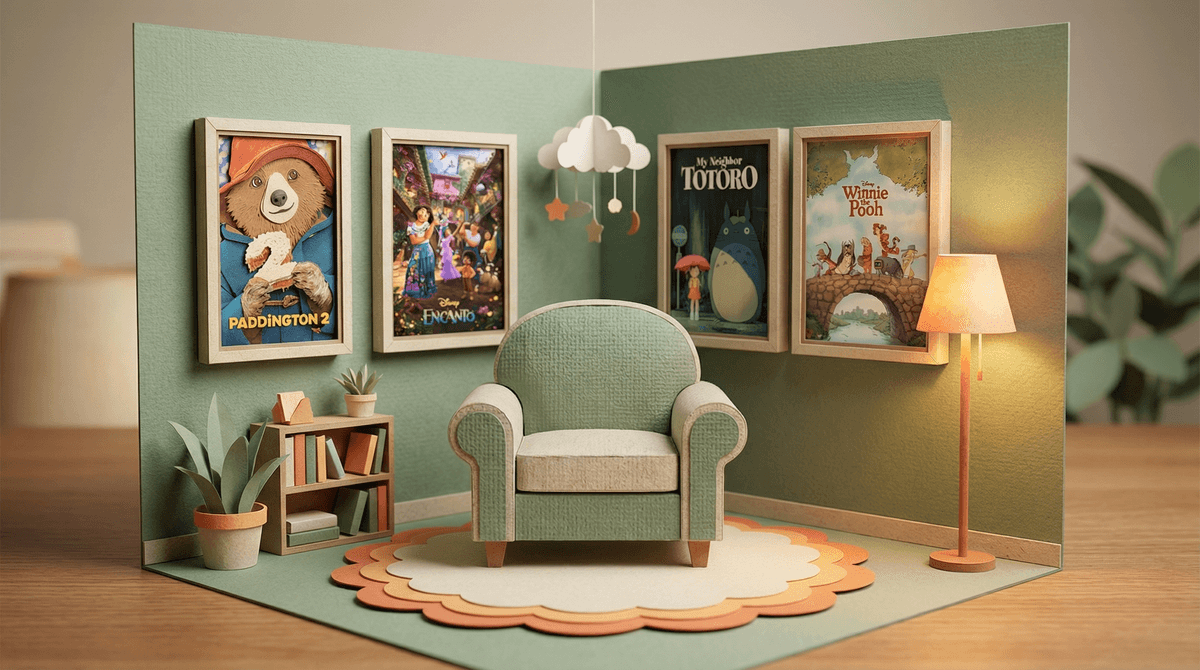
- Paddington and Paddington 2 — genuinely gentle, funny, and sweet without being saccharine
- Winnie the Pooh (2011) — slow-paced, hand-drawn, exactly what preschool content should be
- Shaun the Sheep Movie — no dialogue, lots of physical comedy, perfect for this age
- My Neighbor Totoro — yes, it's slow. That's the point. It's meditative and beautiful.
Pretty Safe Bets:
- Moana — though Te Kā can be scary for sensitive kids
- The Lego Movie — fast-paced but joyful (better for 4-5 year olds)
- Bluey: The Movie — if your kid loves the show, this works
- Ponyo — another Studio Ghibli win
Proceed with Caution:
- Frozen — Elsa's powers scare a lot of 3-year-olds, and the parents die (off-screen, but still)
- The Lion King — this is a movie about processing grief. Maybe not for your 3-year-old's first movie experience?
- Toy Story — Sid's scenes are legit disturbing for young kids
Movies with parent death/separation as a plot device This is like half of Disney's catalog. Your preschooler doesn't need to work through abandonment anxiety via Bambi. They have enough big feelings about you leaving for the grocery store.
Anything with realistic peril Cartoon characters falling off cliffs? Usually fine. Realistic car chases or natural disasters? Not great for this age.
Fast-paced, overstimulating content If it feels like watching a strobe light, it's not appropriate. You'll know it when you see it — and you'll see it in your kid's behavior afterward.
Movies that rely on mean humor Preschoolers are just learning about kindness and empathy. Content where characters are cruel for laughs teaches the wrong lessons.
Co-view the first time Yes, even if you've already seen it. You need to see how YOUR kid reacts to specific moments. Every child is different.
Preview without them If you're not sure about a movie, watch it yourself first. That 5-minute villain scene might be the thing that ruins bedtime for a week.
Have an exit strategy Make it clear that if the movie feels too scary or too much, you can turn it off. No shame, no "you have to finish it." This builds trust and emotional awareness.
Talk about it afterward "What was your favorite part?" "How do you think [character] felt when...?" This helps them process what they watched and builds media literacy early.
Consider the timing Movie before bed? Probably not the best choice. Mid-afternoon on a rainy day? Perfect.
The "right" movie for your preschooler isn't about the rating or what other kids are watching. It's about what YOUR kid can handle emotionally and developmentally right now.
Some 5-year-olds are ready for Encanto. Some 5-year-olds still need Daniel Tiger's Neighborhood content. Both are completely fine.
Trust your gut. If something feels too intense, it probably is — regardless of what the rating says or what your sister's kids watched at that age. You know your kid best.
And hey, if movie time isn't working yet? That's okay too. There are plenty of great preschool shows that might be a better fit for now. Movies will still be there when they're ready.
Start with TV episodes first — If your kid hasn't done much screen time yet, try 11-minute episodes of Bluey before jumping to a 90-minute movie.
Check Common Sense Media reviews — Look specifically at parent reviews for age-specific concerns, not just the overall rating.
Build a safe movie list — Keep a running list of what worked well for YOUR kid, because that's more valuable than any generic recommendation.
Learn more about age-appropriate screen time guidelines for the full picture on how movies fit into overall media use.