

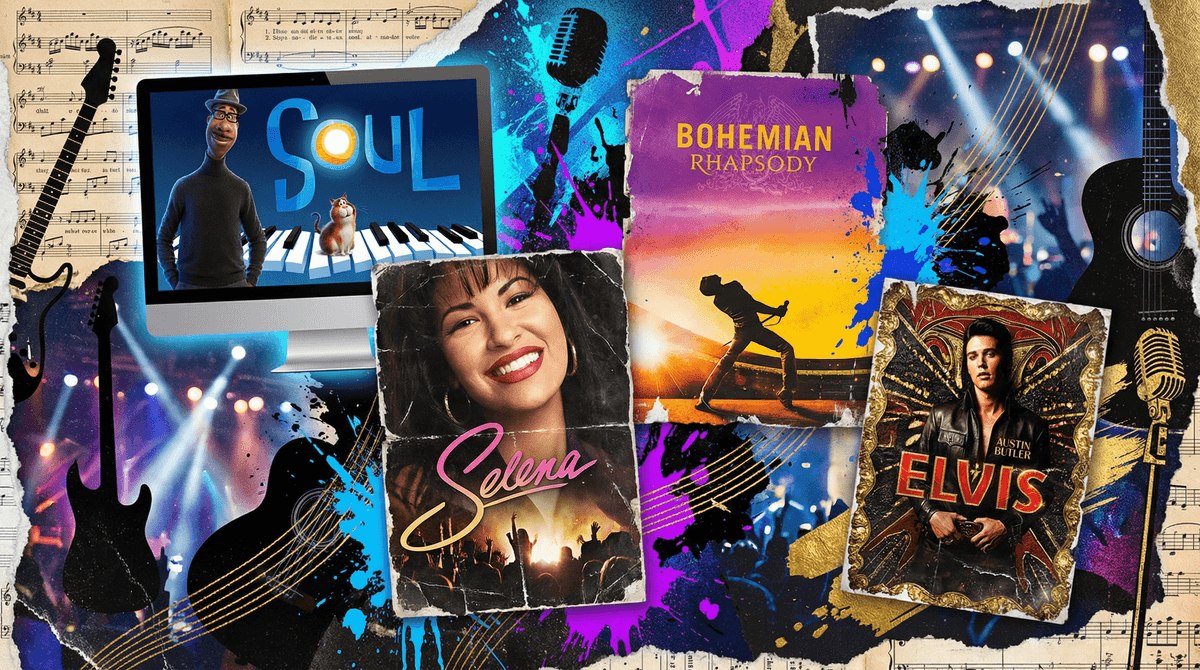
Movies About Musicians: What Parents Should Know Before Pressing Play
Your 12-year-old just discovered Bohemian Rhapsody exists and wants to watch it. Your 9-year-old is obsessed with Encanto and now wants to see "real musician movies." Your teen is asking about Elvis. And you're standing there thinking: "Wait, aren't these all rated R? Or PG-13? What am I getting into here?"
Here's the thing about movies about musicians: they're almost always more intense than you expect. Even the ones that seem innocent. Because musicians' lives—especially the ones Hollywood decides to make movies about—tend to involve a lot of sex, drugs, and yes, rock 'n' roll. Plus heartbreak, addiction, mental health struggles, and tragically early deaths.
But they're also often incredible films that capture something real about creativity, passion, and the cost of art. So let's talk about what you're actually dealing with here.
Musician biopics and music-centered films occupy this weird space where they're often critically acclaimed, culturally significant films that parents want their kids to see... but they're also frequently packed with content that makes us go "oh no, not yet."
The pattern goes like this:
- Act 1: Talented person discovers their gift (often wholesome!)
- Act 2: Rise to fame, creative peak, everything's amazing
- Act 3: The dark side—addiction, relationship destruction, mental health crisis, sometimes death
Even animated or family-friendly music films like Coco or Soul deal with heavy themes (death, existential crisis, family trauma). They handle them beautifully, but they're still heavy.
Here's where it gets tricky: the MPAA rating system is nearly useless for musician movies.
Bohemian Rhapsody is PG-13. So is Rocketman. But Rocketman has explicit drug use, sexual content, and self-harm, while Bohemian Rhapsody got its PG-13 by strategically editing around the same content. Both deal with similar themes; one just shows more.
Meanwhile, Walk the Line (Johnny Cash) is PG-13, but Ray (Ray Charles) is PG-13, and Straight Outta Compton is R—all dealing with addiction, but with very different levels of explicit content.
The rating tells you almost nothing about whether your specific kid is ready for the emotional weight of watching someone's life fall apart on screen.
Ages 6-9: Stick to Animated or Family Musical Films
- Coco (PG) - Deals with death beautifully, might need conversation
- Sing / Sing 2 (PG) - Light, fun, low stakes
- Encanto (PG) - Family trauma but age-appropriate
- The Sound of Music (G) - Classic, though Nazis are the bad guys so context needed
Ages 10-13: Carefully Selected Biopics
This is where you can start introducing real musician stories, but you need to preview first.
Better bets:
- Soul (PG) - Existential but handled well for this age
- The Beatles: Eight Days a Week (Documentary, not rated) - Focuses on the music, skips the heavy stuff
- Selena (PG) - Tragic ending but relatively clean content
- Yesterday (PG-13) - Beatles music, light romance, minimal heavy content
Proceed with caution:
- Bohemian Rhapsody (PG-13) - Drug use, sexuality (implied more than shown), Freddie's death from AIDS
- Jersey Boys (R) - Language, mob connections, but less explicit than most
Ages 14+: Time for Real Talk
High schoolers can handle more, but you still want to watch together or at least have conversations after.
Strong choices for mature teens:
- Walk the Line (PG-13) - Johnny Cash's addiction and redemption
- Ray (PG-13) - Ray Charles, similar themes
- 8 Mile (R) - Eminem's story, language and poverty
- Rocketman (R) - Elton John, doesn't shy away from sexuality or addiction
Preview first even for older teens:
- The Doors (R) - Jim Morrison, heavy drug content
- Sid and Nancy (R) - Sex Pistols, extremely dark
- Straight Outta Compton (R) - N.W.A., violence and language
The "Tortured Artist" Narrative Is Real
Almost every musician biopic follows the same arc: talent → fame → destruction → (sometimes) redemption. This is partly because that's genuinely how many musicians' lives went, but it's also because Hollywood loves this story.
Talk to your kids about whether suffering is actually necessary for great art, or whether we just romanticize it.
Music Movies Are Often More About Mental Health Than Music
Bohemian Rhapsody is about Freddie Mercury's struggle with identity and belonging. Rocketman is about Elton John's childhood trauma and addiction. A Star Is Born (any version) is about addiction and suicide.
If your kid isn't ready for conversations about mental health, addiction, or suicide, they're not ready for most musician biopics.
Historical Context Matters
Straight Outta Compton requires understanding of 1980s-90s race relations and police brutality. Selena connects to Latinx representation. Respect (Aretha Franklin) deals with civil rights and domestic abuse.
These aren't just music movies—they're history lessons. Which can be powerful! But only if your kid has the context to understand them.
The Music Itself Is the Hook
Here's the upside: these movies introduce kids to incredible music they might never discover otherwise. After watching Bohemian Rhapsody, kids dive into Queen's catalog. Walk the Line leads to Johnny Cash. Rocketman creates Elton John fans.
This is actually valuable. Introducing kids to music history through film can be a gateway to deeper cultural literacy.
Preview or Read Detailed Reviews
Don't trust the rating. Read Common Sense Media reviews, watch the movie yourself first, or at minimum read detailed parent guides. Five minutes of research saves awkward conversations mid-movie.
Watch Together When Possible
Especially for ages 10-15, watching together lets you:
- Pause for context or questions
- Gauge their reaction in real-time
- Have natural conversation afterward
- Skip or fast-forward through scenes if needed
Use It as a Conversation Starter
"Why do you think so many musicians struggle with addiction?" "What do you think about how the movie showed [character's] sexuality?" "Do you think fame would be worth it if this was the cost?"
These movies are rich material for real conversations about creativity, mental health, relationships, and consequences.
Consider Documentaries First
Documentaries about musicians often give you more control over content. Summer of Soul (PG-13) is incredible and focuses on the music and historical moment. 20 Feet from Stardom (PG-13) tells backup singers' stories without heavy content.
Musician movies are almost never just about the music. They're about ambition, identity, addiction, relationships, mental health, and mortality. They can be powerful, beautiful films that introduce your kids to incredible artists and important cultural moments.
But they require more intentionality than throwing on a Marvel movie. You need to:
- Know what you're getting into (preview or research)
- Match content to your kid's emotional maturity, not just their age
- Be ready for conversations about heavy topics
- Use them as teaching moments about art, history, and human complexity
And honestly? Sometimes the answer is "not yet." There's no rush. Bohemian Rhapsody will still be there when your kid is 15. In the meantime, there's always Coco.
- Browse music and musical movies to find age-appropriate options
- Check out documentaries for kids for less dramatized music content
- Explore movies that spark conversations if you want to use film as a teaching tool
And if you're wondering about a specific movie, See if a musician movie is appropriate for your kid—we've probably seen it and have thoughts.