

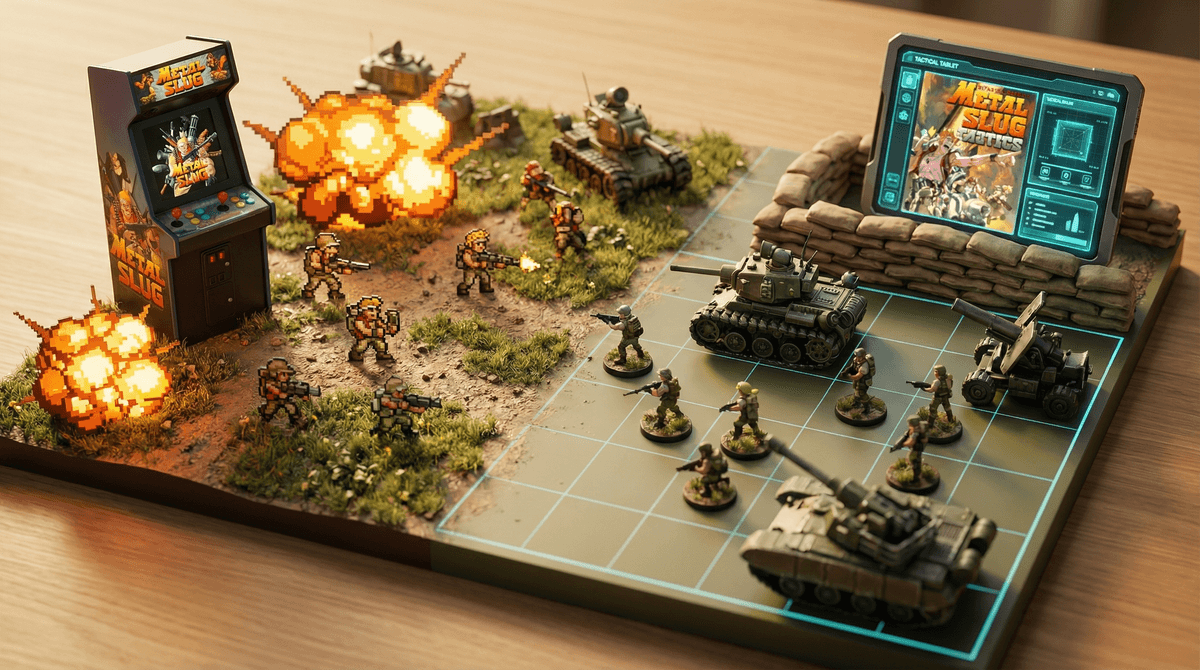
If you grew up pumping quarters into arcade machines in the '90s, you probably remember Metal Slug—that gorgeous, chaotic run-and-gun shooter where pixelated soldiers blasted through hordes of enemies while everything exploded in glorious 2D animation. Well, someone had the wild idea to take that frenetic energy and... make it turn-based.
Metal Slug Tactics is a 2024 strategy game that reimagines the classic arcade franchise as a tactical roguelike. Instead of reflexes and button-mashing, you're now carefully positioning units on a grid, planning attacks, and thinking three moves ahead. It's like if chess and Saturday morning cartoons had a baby, and that baby was really into military hardware.
The game keeps the series' signature hand-drawn art style—seriously, it's stunning—but swaps the arcade cabinet adrenaline for the cerebral satisfaction of outsmarting your opponents. You'll control a small squad of characters (many familiar faces from the original games), each with unique abilities, as you take on procedurally generated missions against the evil General Morden's forces.
Here's the thing: this shouldn't work. Taking a beloved arcade classic known for its speed and reflexes and turning it into a slow, methodical strategy game sounds like a recipe for disaster. But Metal Slug Tactics pulls it off.
The developers at Leikir Studio clearly understood the assignment. They kept everything that made Metal Slug special—the absurd humor, the over-the-top weapons, the ridiculously detailed sprite work—and built a genuinely engaging tactics game around it. The result feels both nostalgic and fresh.
The roguelike structure means each run is different. You'll unlock new characters, weapons, and abilities as you play, which gives the game serious replay value. And unlike some tactical games that can drag on for hours (cough looking at you, XCOM cough), missions here are bite-sized. Perfect for "just one more run" syndrome.
Age Rating: The game is rated T for Teen (13+), which feels about right. There's cartoon violence—lots of shooting, explosions, and enemies getting taken out—but it's all presented in that classic Metal Slug style where everything is so exaggerated and cartoony that it never feels realistic or disturbing.
Learning Curve: This is a strategy game, which means there's actual thinking involved. If your kid has played tactics games like Fire Emblem or Into the Breach, they'll pick this up quickly. If they're new to the genre, expect some trial and error. The roguelike structure means they'll die a lot—that's literally part of the game design.
Reading Required: There's text to read—mission briefings, ability descriptions, weapon stats. Not a ton, but enough that younger kids who struggle with reading might need help understanding the strategic nuances.
Time Commitment: Individual runs take 30-60 minutes, which is actually pretty manageable. No endless campaigns that stretch for weeks. That said, the "one more run" factor is real, so be aware that stopping can be hard.
Violence Context: Yes, you're shooting enemy soldiers. But in the same way you're "shooting" enemies in Plants vs. Zombies—it's stylized, cartoonish, and there's no blood or gore. Enemies disappear in puffs of smoke. The tone is more Saturday morning action cartoon than war simulation.
Look, I'm not going to pretend this is DragonBox or some explicitly educational game. But tactical strategy games actually teach some valuable skills:
Strategic thinking: Every move matters. Kids learn to think ahead, consider consequences, and plan multi-step strategies.
Resource management: You're constantly balancing limited ammunition, special abilities, and positioning. These are genuine decision-making skills.
Adaptability: The roguelike structure means no two runs are identical. Kids learn to adapt strategies on the fly based on what the game throws at them.
Perseverance: You will lose. A lot. The game is designed around failure and learning from mistakes. That's actually a pretty valuable life lesson wrapped in explosions and pixel art.
Here's the honest take: if your kid loves strategy games, they'll probably dig this. If they're looking for the frantic action of the original Metal Slug games, they might be disappointed—this is a completely different genre wearing the Metal Slug costume.
The game has gotten solid reviews from critics (mid-70s to low-80s on Metacritic), with most praising the art style and tactical depth while noting it can feel repetitive after extended play sessions. That's pretty typical for roguelikes though.
For parents, the real question is whether your kid has the patience for turn-based strategy. If they bounce off Pokémon battles because they're "too slow," this probably isn't their jam. If they love games like Slay the Spire or Civilization, this could be their new obsession.
Metal Slug Tactics is available on PC (Steam), Nintendo Switch, PlayStation, and Xbox. It runs about $25, which is reasonable for an indie tactics game. No microtransactions, no battle pass, no surprise charges—you buy it once and own the whole game. Refreshing, right?
The Switch version is particularly nice for this kind of game since you can play in short bursts in handheld mode. Perfect for car rides or waiting rooms (you know, when you've given up on the "no screens in public" battle).
Metal Slug Tactics is a well-crafted strategy game that successfully reimagines a classic franchise for a completely different genre. It's not going to rot anyone's brain, it actually requires thinking and planning, and the violence is cartoonish enough that it shouldn't keep you up at night.
Good for: Kids 12+ who enjoy strategy games, can handle losing repeatedly, and have the patience for turn-based gameplay.
Skip if: Your kid wants fast-paced action, gets frustrated easily by difficult games, or isn't developmentally ready for strategic thinking.
Family tip: If you're a Metal Slug fan from back in the day, this could actually be a fun way to share that nostalgia with your kid while introducing them to tactical strategy games. Just manage expectations—this is not the arcade experience you remember.
Want to explore more strategy games that might fit your family? Check out alternatives to turn-based strategy games or dive into what makes roguelike games so addictive .
.