The Art of the Explosion
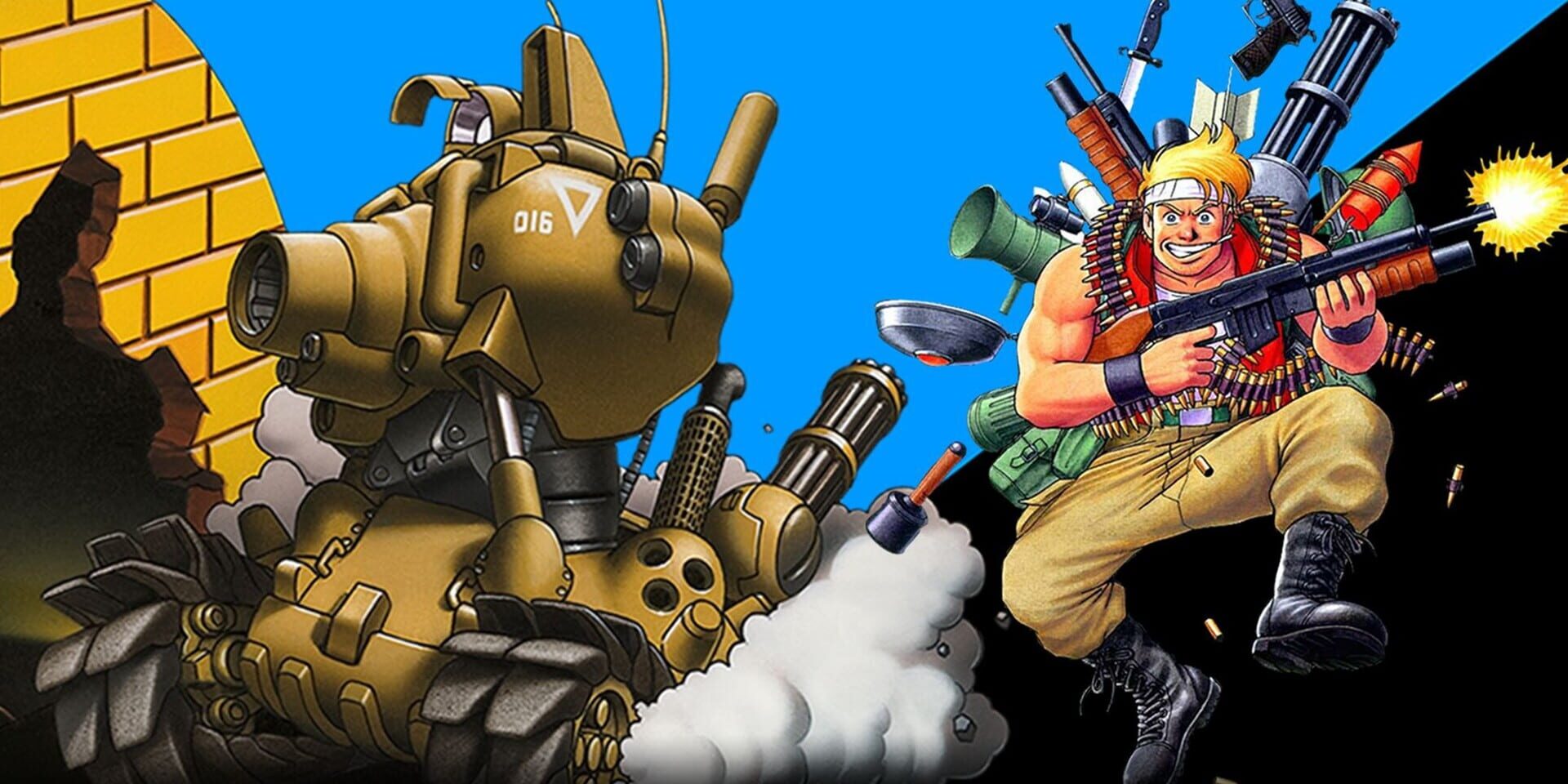
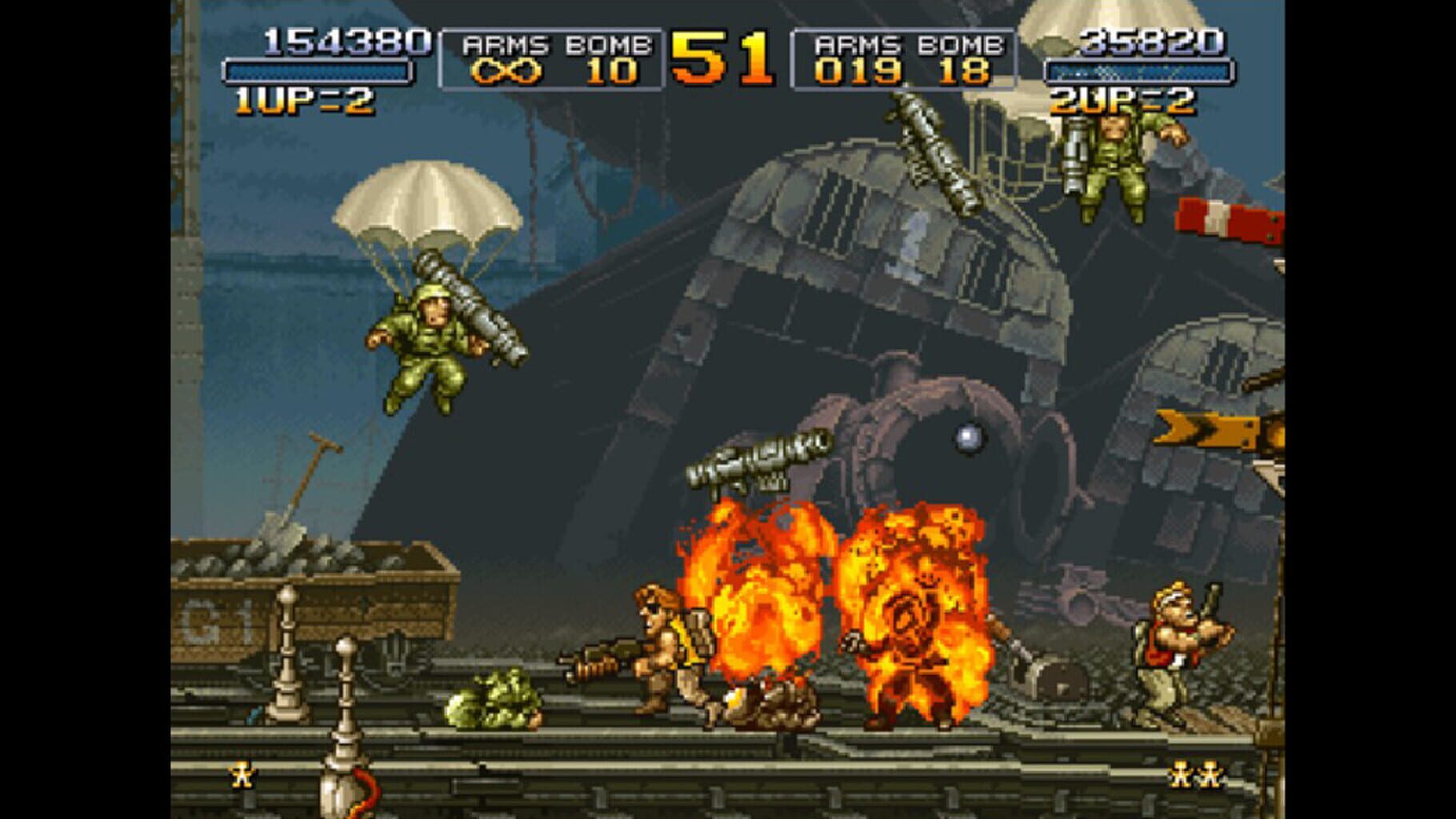
If you want to understand why people still talk about a thirty-year-old arcade game, look at the details. Most modern games use 3D models that look "clean," but Metal Slug is a masterclass in hand-drawn pixel art. When you shoot a building, it doesn't just disappear; it crumbles brick by brick. When an enemy soldier sees you, they don't just stand there—they might be sitting by a campfire, eating a rice ball, or panicking with a hilarious bug-eyed expression before they scramble for a weapon.
This isn't just window dressing. The visual feedback is so dense that it makes the simple act of "moving right and shooting" feel visceral. The titular "Slug"—that bouncy, squat little tank—is the highlight. It feels heavy, powerful, and surprisingly agile. Jumping into the tank and hearing the announcer shout "Metal Slug!" is one of those core gaming memories that still hits today. For a kid who appreciates the "boss fight" spectacle of something like Cuphead, this is the original blueprint.
The "Quarter Muncher" Friction
We need to talk about the difficulty because it is unapologetic. This game was born in arcades where the goal was to kill the player every three minutes so they would drop another coin into the machine. One hit and you’re dead. There are no health bars for Marco or Tarma.
Modern "quality of life" features—like infinite continues on most home versions—actually create a weird psychological loop. If your kid just mashes the "Start" button to respawn instantly, the game loses its stakes. It becomes a 30-minute blur of explosions where nothing matters. To actually get this game, you have to play for mastery. Encourage them to see how far they can get on a single "credit." That’s where the resource management of grenades and special ammo actually starts to matter. Without that self-imposed challenge, it’s just a loud, short movie.
Beyond the Run-and-Gun
While the 1996 original is a pure shot of adrenaline, it’s also very linear. You run, you shoot, you see the credits. If your kid finds the world of Metal Slug cool but finds the twitchy, one-hit-death gameplay more annoying than fun, there are other ways into this universe.
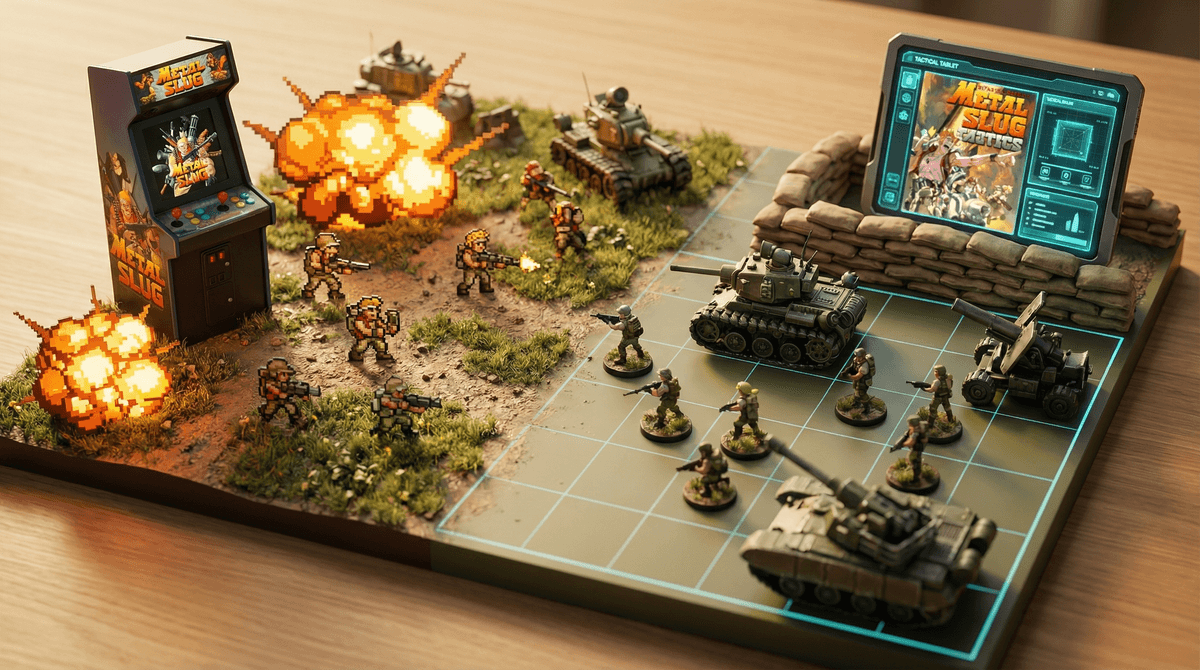
The franchise has recently branched out into different genres that trade the "quarter-muncher" stress for actual strategy. If they prefer games that let them stop and think, check out Metal Slug Tactics: When the Arcade Classic Slows Down to Think. It keeps the gorgeous art style and the "Peregrine Falcon Strike Force" characters but moves them into a grid-based tactical game. It’s a great way to engage with the IP without needing the reflexes of a 90s arcade pro.
The Verdict on the Violence
The "T" rating is mainly for the blood. When you shoot enemies, there’s a distinct red splash. It’s stylized and "crunchy" in that 16-bit way, but it’s constant. However, the tone is closer to a Looney Tunes episode than a gritty war movie. The Rebel Army soldiers are often played for laughs, and the sheer absurdity of fighting giant mechanical crabs or massive flying wings keeps it firmly in the realm of fantasy. It’s loud, it’s chaotic, and it’s silly, which is why it has aged better than the "realistic" shooters that came out just a few years later.