

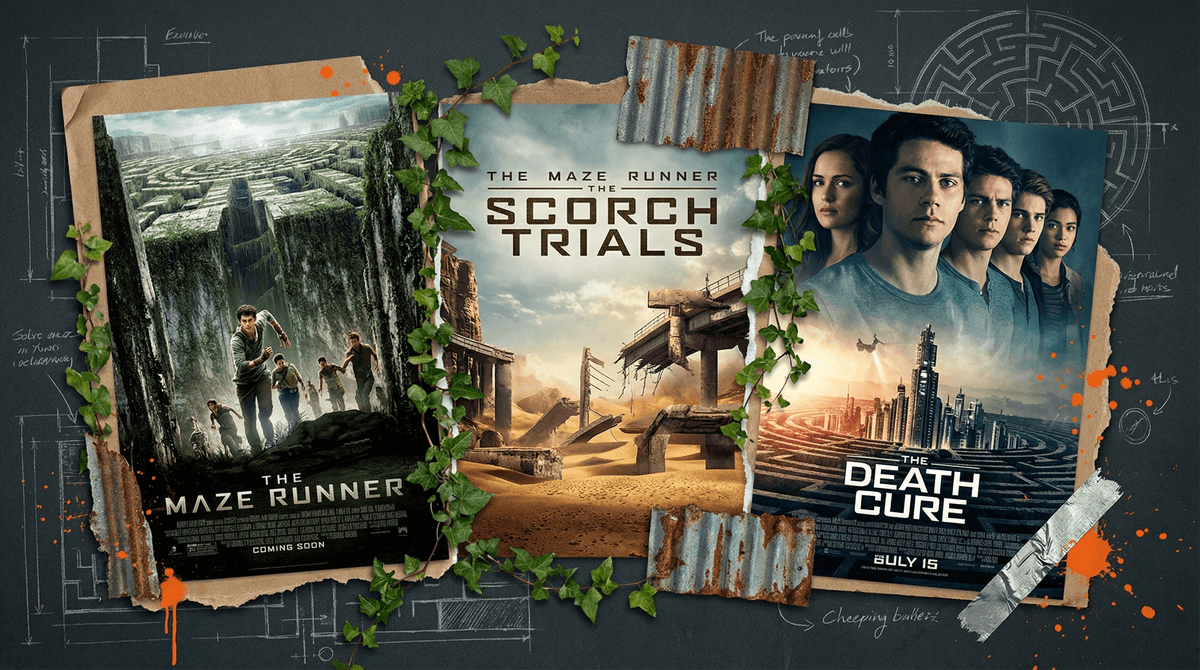
The Maze Runner is a dystopian sci-fi series that started as a YA book trilogy by James Dashner and became a film franchise from 2014-2018. The story follows Thomas, a teenager who wakes up in a mysterious elevator with no memory, arriving in "the Glade" — a community of boys surrounded by a deadly, ever-changing maze. The films star Dylan O'Brien and include The Maze Runner (2014), Maze Runner: The Scorch Trials (2015), and Maze Runner: The Death Cure (2018).
If your teen loved The Hunger Games or Divergent, they've probably already heard about this one. It's that same post-apocalyptic, teens-fighting-the-system energy that defined mid-2010s YA.
The Maze Runner hits that sweet spot for teens: mystery, action, and young people taking control when adults have failed them. The first film especially works as a puzzle box — viewers figure out the maze alongside Thomas, and the reveals are genuinely satisfying.
The cast is likable, the world-building is compelling, and there's enough plot momentum to keep teens engaged through all three films. It also tackles themes teens relate to: identity, memory, trust, and questioning authority figures who claim to know what's best for you.
Plus, let's be real — it's got that found-family vibe with the Gladers working together to survive, which teens eat up.
The Violence Is Significant
This is PG-13, but it's hard PG-13. The films include:
- Teens dying in gruesome ways (crushed by maze walls, attacked by bio-engineered monsters called Grievers)
- Gun violence and explosions throughout the sequels
- A zombie-like virus (the Flare) that makes infected people violent and eventually inhuman
- Torture and medical experimentation on children
- Suicide (a character shoots himself on-screen in the first film)
The violence isn't gratuitous or gory like an R-rated horror film, but it's persistent and the stakes feel real. Characters you care about die, sometimes suddenly.
The Sequels Get Darker
The first film is contained — teens in a maze, figuring out a mystery. By the second and third films, the world expands into full-on apocalyptic territory with zombie-like "Cranks," corrupt organizations, and increasingly bleak scenarios. The Death Cure especially feels more like a war film than a teen adventure.
If your teen watches the first one and loves it, just know the tonal shift is real.
Themes Worth Discussing
Beyond the action, The Maze Runner raises genuinely interesting questions:
- When is it okay to distrust authority? The organization WICKED (World In Catastrophe: Killzone Experiment Department — yes, really) believes sacrificing some kids to find a cure is justified. Are they right?
- What does it mean to be a good leader? Thomas makes decisions that get people killed, but also saves lives. How do you lead when there are no good options?
- Memory and identity: If you can't remember who you were, are you still that person?
These aren't just background themes — they're central to the plot and can spark real conversations.
Language and Romance
There's some language (mostly "hell," "damn," occasional stronger words), but nothing shocking for a teen audience. The romance subplot between Thomas and Teresa is pretty low-key — a few kisses, some hand-holding, nothing graphic. It's almost refreshingly understated compared to other YA series.
Ages 13+: This is the right starting point for most families. The PG-13 rating is earned, and younger kids will likely find the violence and darker themes too intense.
Ages 10-12: If you have a mature middle schooler who's already seen The Hunger Games and handled it well, they might be ready for the first Maze Runner film. But I'd skip the sequels until they're older — the Cranks in particular are nightmare fuel.
Ages 16+: Teens this age can handle the full series and will probably get the most out of the moral complexity.
Consider Reading First
The Maze Runner books let kids control the pacing and imagine the scary parts at their own comfort level. If you're on the fence about whether your teen is ready for the films, starting with the book is a solid move.
The Maze Runner series is solid dystopian entertainment with enough substance to justify the runtime. It's not trying to be high art, but it's well-made, engaging, and raises questions worth discussing.
The violence is real and the tone gets heavy, so this isn't for younger kids or sensitive viewers. But for teens 13+ who are ready for intense action and darker themes, it's a worthwhile watch — especially if you're willing to talk through the ethical dilemmas afterward.
Is it as good as The Hunger Games? Debatable. Is it better than Divergent? Absolutely. Does it hold up in 2026? Surprisingly yes — the themes about institutional power and medical ethics feel even more relevant now.
Watch together: The first film especially benefits from co-viewing so you can pause and discuss what's happening and whether your teen is comfortable with the intensity.
Talk about WICKED's justification: The organization's motto is "WICKED is good" because they believe their experiments will save humanity. See if the end justifies the means in Maze Runner
Explore alternatives: If your teen loves the dystopian genre, check out our guide to dystopian movies and shows for teens for more recommendations.
Set expectations for sequels: If they love the first film, have a conversation before diving into the sequels about the tonal shift and increased intensity.