

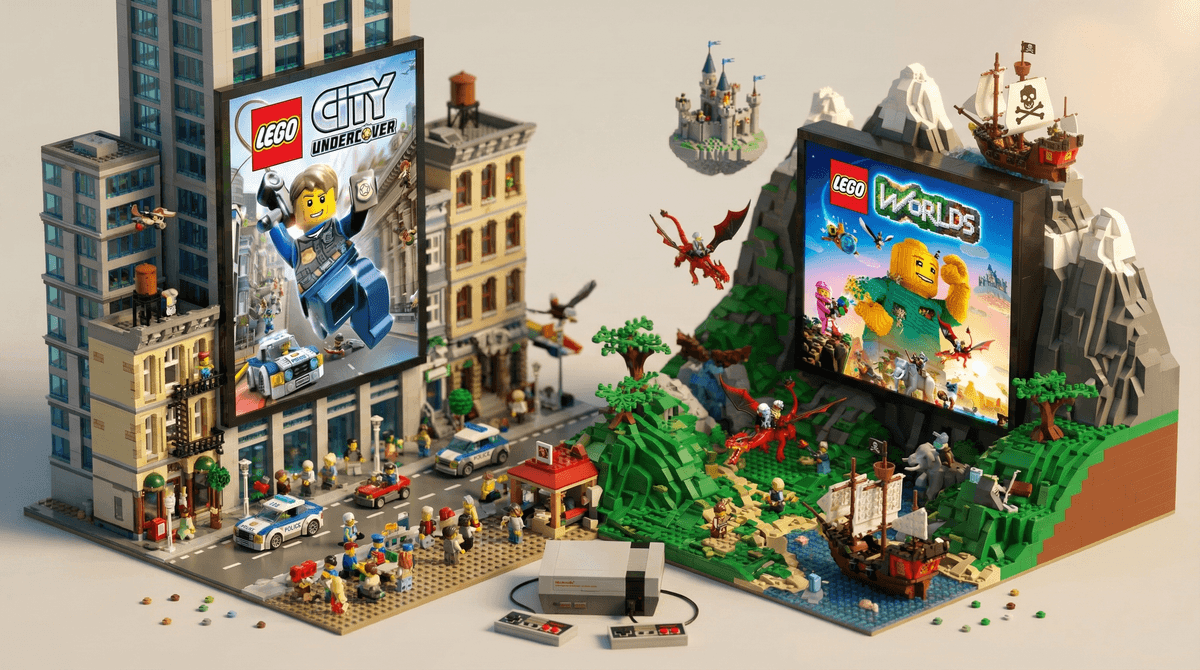
LEGO video games are exactly what they sound like — action-adventure games where everything is made of LEGO bricks, including the characters who hilariously explode into pieces when they "die" (don't worry, they instantly reassemble). Since 2005, developer TT Games has been cranking these out, taking beloved franchises like Star Wars, Harry Potter, Marvel, and DC and turning them into family-friendly gaming experiences with puzzle-solving, combat, and genuinely funny cutscenes.
The formula is pretty consistent across titles: you smash LEGO objects to collect studs (the currency), solve environmental puzzles, unlock new characters with different abilities, and progress through story levels based on whatever franchise the game is covering. They're designed for co-op play, which means parent-kid gaming sessions or sibling teamwork (or sibling chaos, let's be real).
LEGO games hit a sweet spot for kids because they combine familiar characters they already love with the tactile, creative appeal of LEGO. There's something deeply satisfying about smashing everything on screen into a pile of colorful bricks — it's like digital bubble wrap.
Plus, these games are genuinely forgiving. You can't really "lose" — when characters die, they just lose some studs and respawn immediately. This makes them accessible for younger or less experienced gamers who might get frustrated with more punishing titles. The humor is physical and silly (think pratfalls and sight gags rather than dialogue-heavy jokes), which works for a wide age range.
And honestly? The collecting aspect is addictive. There are hundreds of characters to unlock, hidden collectibles in every level, and that completionist itch that keeps kids (and adults) coming back to achieve 100% completion.
Not all LEGO games are created equal. Some are genuinely excellent, others are... fine. Here's the breakdown:
Top Tier: These Are Excellent
LEGO Star Wars: The Complete Saga (Ages 7+) This is the gold standard. It covers all six original Star Wars films with charm, humor, and surprisingly good gameplay. The 2022 remaster, The Skywalker Saga, is even better — it's basically the definitive LEGO game experience with updated graphics, open-world elements, and all nine films. If you're only getting one LEGO game, this is it.
LEGO Marvel Super Heroes (Ages 8+) An original story featuring basically every Marvel character you can think of (150+ playable characters). The open-world New York City is fun to explore, and the variety of superpowers keeps gameplay fresh. Kids who are into the MCU will lose their minds over this one.
LEGO Harry Potter Collection (Ages 8+) Covers all seven books/eight movies and does a surprisingly good job capturing the magic (pun intended) of Hogwarts. The spell-casting mechanics are satisfying, and exploring the castle is genuinely delightful. Heads up: there are some darker moments from the later books, but they're handled in a cartoonish LEGO way.
Solid Middle: Good but Not Essential
LEGO City Undercover (Ages 7+) Think Grand Theft Auto but family-friendly. You play as an undercover cop in an open-world LEGO city. No licensed franchise here — it's all original, which is refreshing. Great for kids who want exploration without the baggage of needing to know a specific movie or show.
[LEGO Batman 3: Beyond Gotham](https://screenwiseapp.com/media/lego-batman-3-beyond-gotham-boardgame (Ages 8+) The Batman games are consistently good, and this one expands beyond Gotham to include the Justice League and space settings. Tons of DC characters to unlock. The story is a bit convoluted, but the gameplay is solid.
LEGO The Incredibles (Ages 7+) Covers both Incredibles movies. It's fun, but it doesn't bring much new to the formula. If your kids are obsessed with the films, they'll love it. Otherwise, it's skippable.
Skip or Wait for a Sale
LEGO Worlds (Ages 8+) This tried to be LEGO's answer to Minecraft — an open-world building game. It's... fine? But honestly, if kids want creative building, they're better off with actual Minecraft or Roblox. The building controls are clunky.
LEGO Dimensions (Ages 8+) This was the "toys-to-life" game where you bought physical LEGO sets and minifigures to unlock content. It's been discontinued, and while you can still find it used, the full experience requires buying a ton of expensive add-ons. Not worth it in 2026.
Most Movie Tie-In Games Games like LEGO Jurassic World or LEGO The Hobbit aren't bad, but they're very clearly churned out to coincide with movie releases. They lack the polish and creativity of the top-tier titles.
Ages 6-8: Start with LEGO Star Wars: The Complete Saga or LEGO City Undercover. These have simple mechanics and no reading required (or minimal). The co-op mode means you can play alongside them and help with tricky puzzles.
Ages 9-12: They can handle any LEGO game at this point. LEGO Marvel Super Heroes and LEGO Harry Potter are great for this age because the source material is more complex and engaging.
Ages 13+: Honestly, by this age, many kids are moving on to more challenging games, but LEGO games can still be a fun, low-stress option or a nostalgia trip. The newer titles like The Skywalker Saga have enough depth to keep older kids engaged.
Content concerns: LEGO games are rated E10+ or sometimes just E (Everyone). The violence is cartoonish — characters break into LEGO pieces, no blood, no gore. Some games based on darker franchises (Harry Potter, Batman) have mildly scary moments, but they're defanged by the LEGO aesthetic.
Screen time value: As far as video games go, LEGO games are pretty solid. They require problem-solving, spatial reasoning, and often collaboration if you're playing co-op. They're not educational per se, but they're not brain rot either.
The co-op catch: Split-screen co-op can be chaotic. In older LEGO games, the camera is dynamic, which means if players get too far apart, the screen splits and merges constantly. This can be disorienting for younger kids. Newer games handle this better.
The collecting trap: These games are designed to be replayed. You'll finish the story, but then there are hundreds of collectibles, characters to unlock, and challenges to complete. Some kids love this; others find it tedious. Just know that "beating" the game doesn't mean they're done with it.
Monetization: Most LEGO games are pay-once-and-play with no in-app purchases or microtransactions. This is refreshing in 2026. However, some have DLC (downloadable content) that adds new levels or characters, usually for $5-15. Not necessary, but kids will want it.
LEGO video games are a safe bet for family gaming. They're funny, accessible, and genuinely well-made (especially the top-tier titles). If you're looking for a game you can play with your kid that won't make you want to throw the controller through the TV, start with LEGO Star Wars: The Skywalker Saga or LEGO Marvel Super Heroes.
Are they going to teach your kid to code or solve world hunger? No. But they're a hell of a lot better than doomscrolling TikTok, and you might actually have fun playing together. That's worth something.
- Check what your kid is already into: If they're obsessed with Harry Potter, start there. If they love Marvel, go with that. The franchise connection makes a huge difference in engagement.
- Look for sales: LEGO games go on deep discount regularly (50-75% off). Check Steam, PlayStation Store, Xbox Store, or Nintendo eShop during seasonal sales.
- Set expectations about 100% completion: If your kid is a completionist, these games can eat up 30-50 hours. Decide as a family if that's time well spent or if you want to set limits after finishing the main story.
Want more recommendations? Check out our guide to cozy games for kids or alternatives to Minecraft.