

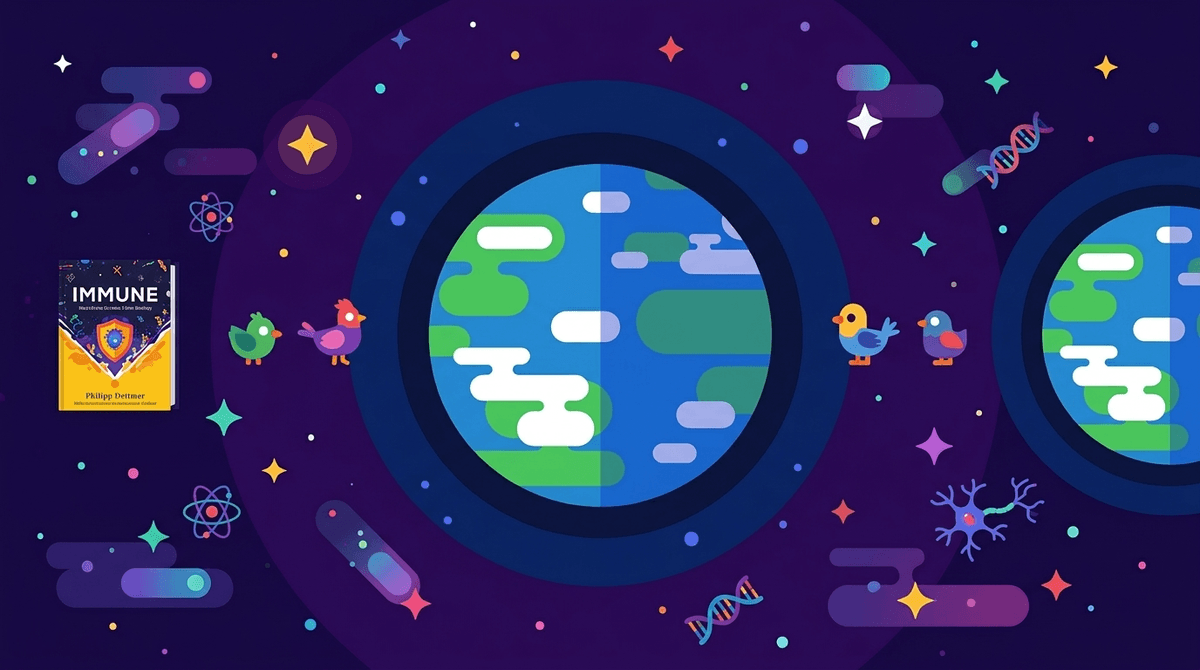
TL;DR: Kurzgesagt – In a Nutshell is arguably the gold standard of educational YouTube. It combines world-class animation, rigorous scientific research, and a quirky obsession with ducks (or "birbs") to explain everything from black holes to the immune system. It’s brilliant, beautiful, and occasionally triggers a minor existential crisis.
Quick Recommendations:
- Best for biology fans: The Immune System
- Best for space lovers: The Largest Star in the Universe
- Best for deep thinkers: Optimistic Nihilism
- If they want more science: Mark Rober or Veritasium
If you’ve spent any time looking over your kid’s shoulder while they’re on YouTube, you’ve probably seen the "birbs." Kurzgesagt (German for "in a nutshell") is a Munich-based animation studio that produces some of the most visually stunning and intellectually dense content on the internet.
The channel is famous for its signature "flat design" animation style—bright colors, clean lines, and adorable avian characters that frequently meet grizzly (but bloodless) ends to illustrate scientific points. Whether they are nuking a city to explain radiation or shrinking a bird to the size of an atom, the production value is lightyears ahead of the typical "guy talking in front of a camera" setup.
Unlike the chaotic energy of MrBeast or the brain-numbing loops of Skibidi Toilet, Kurzgesagt is slow-paced, narrated by the soothing, authoritative voice of Steve Taylor, and backed by actual scientific papers.
It’s easy to assume "educational" equals "boring," but Kurzgesagt has mastered the art of the "What If." Kids who grew up playing Minecraft or Roblox are often drawn to the channel’s ability to take a massive, abstract concept and turn it into a visual sandbox.
- The "Birbs": The recurring bird characters give the channel a mascot-like feel. They are cute, expressive, and provide a sense of continuity across wildly different topics.
- High Stakes: Kids are naturally curious about the "big stuff." Kurzgesagt doesn't shy away from topics like "What happens if a black hole enters your pocket?" or "The End of the Universe." It treats kids like they’re smart enough to handle the truth.
- Visual Storytelling: The animation is genuinely mesmerizing. It’s "eye candy" in the best sense—complex biological processes look like organized dances, and cosmic events look like psychedelic art.
Here is where we need to have a real conversation. Kurzgesagt is famous for a philosophy they call "Optimistic Nihilism."
On one hand, they explain that the universe is unimaginably vast, we are tiny, and eventually, every star will burn out and the universe will go cold. On the other hand, they argue that because nothing "matters" on a cosmic scale, we are free to enjoy our lives, be kind, and eat a good bowl of pasta.
For a 12-year-old who is already prone to deep thinking, this can be a lot. Some videos touch on:
- Climate Change: They are very honest about the state of the planet.
- Death and Longevity: They’ve explored why we age and what happens when we die.
- The Fermi Paradox: The terrifying possibility that we are alone in the universe (or that every other civilization has been wiped out).
If your child is particularly sensitive or prone to anxiety about the future, you might want to pre-watch some of the "Existential Dread" playlist. However, for most kids, these videos act as a safe space to explore these big feelings with a narrator who sounds like a calm, wise uncle.
While there is no "inappropriate" content in the traditional sense (no swearing, no sexual content, no real-world violence), the complexity of the topics makes it a better fit for certain ages.
Ages 5-8: Watch Together
At this age, the science will mostly go over their heads, but they will love the colors and the birds. You’ll likely need to pause and explain things like "What is a cell?" or "Why did the bird blow up?" It’s a great "lap-time" activity if you want to spark an early interest in STEM.
Ages 9-12: The Sweet Spot
This is the prime audience. Kids in upper elementary and middle school are starting to grapple with how the world works. They’ll likely binge-watch the Immune System videos or the ones about dinosaurs. This age group also loves the merch—expect requests for "birb" plushies or the Immune book by Philipp Dettmer.
Ages 13+: Deep Dives
Teens will appreciate the more philosophical and sociological videos. Topics like "Loneliness," "The Tail End," and "Universal Basic Income" provide excellent jumping-off points for dinner table debates.
Check out our guide on navigating YouTube's algorithm for teens
Is it perfect? Not quite.
A few years ago, the channel went through a bit of a "reckoning" where they deleted two of their most popular videos (one on addiction and one on climate change) because they felt the science wasn't up to their current standards. I actually respect this immensely. In an era of "fake news" and clickbait, seeing a creator say, "We got this wrong, here is how we're fixing it," is a powerful lesson in intellectual honesty for our kids.
However, keep in mind that Kurzgesagt is a storytelling channel. They simplify things to make them fit into a 10-minute video. It’s an incredible "hook" to get kids interested in science, but it shouldn't be their only source of information.
Also, be aware of the "Rabbit Hole" effect. Because Kurzgesagt is so high-quality, the YouTube algorithm might start suggesting other "educational" channels that aren't nearly as vetted. One minute they're learning about neutron stars, and three clicks later they're watching a "documentary" about how aliens built the pyramids.
If your kid is a Kurzgesagt fan, use it as a bridge.
- Ask about the "Birbs": "Which bird was your favorite in that video? Why do they always use ducks?"
- Discuss the "What Ifs": "If you could change one thing about how the human body works based on that video, what would it be?"
- Tackle the Big Stuff: If they watch a video on climate change or the end of the world, ask, "How did that make you feel? Did it make you feel worried or curious?"
Kurzgesagt – In a Nutshell is one of the "good ones." It’s a rare corner of the internet that is actually making kids smarter, more curious, and more appreciative of the weird, wonderful universe we live in. It’s "prestige TV" for the YouTube generation.
If your kid is obsessed with it, consider it a win. Just be prepared to answer some very difficult questions about the heat death of the universe right before bedtime.
- Watch a "Starter" Video: I recommend The Elephant in the Room or any of the space-themed videos to get a feel for the tone.
- Check the Bookshelf: If they love the biology videos, the book Immune by Philipp Dettmer is a fantastic deep dive that keeps the same visual style.
- Explore Alternatives: If they've seen every Kurzgesagt video twice, check out Mark Rober for engineering or SmarterEveryDay for physics and nature.
Learn more about how to set up a supervised YouTube account for your child