

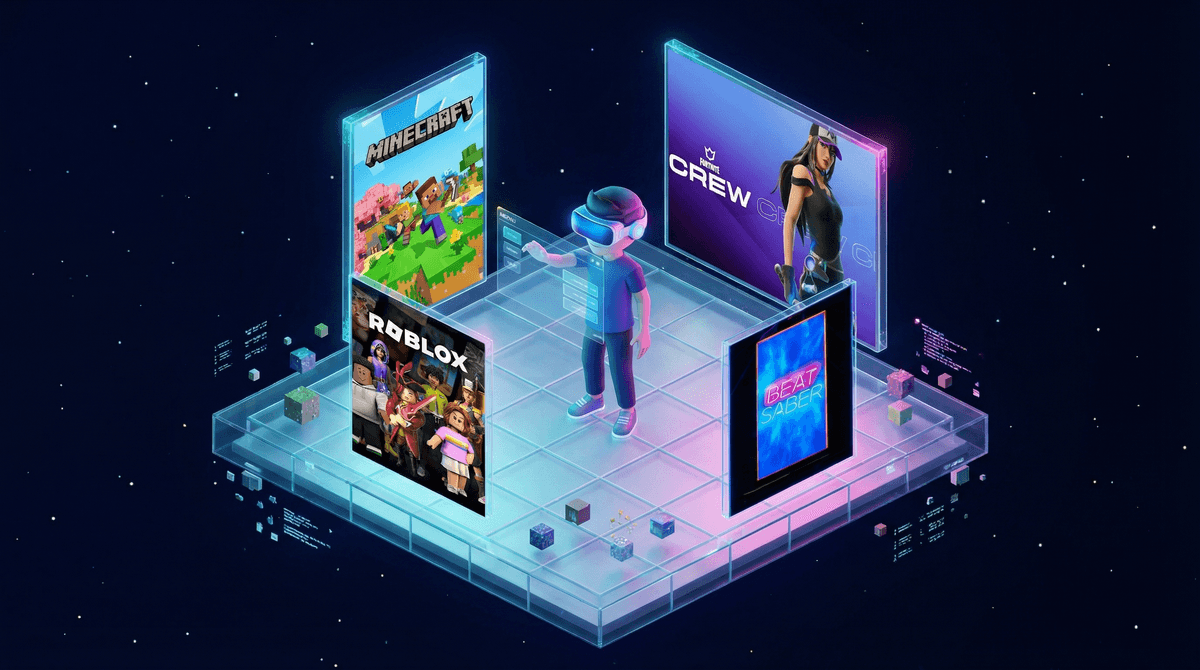
Okay, let's cut through the hype. The metaverse is basically the fancy tech-bro term for immersive virtual worlds where people hang out using avatars. Think of it as the internet, but instead of scrolling through websites, you're walking around inside them.
Here's the thing: your kids are probably already in "the metaverse" and just don't call it that. When they're building worlds in Roblox, exploring islands in Fortnite, or creating elaborate builds in Minecraft, they're experiencing what tech companies are breathlessly calling "the metaverse."
The term got super buzzy when Facebook rebranded to Meta in 2021, but the concept isn't new. Virtual worlds like Second Life have existed since 2003. What's different now is that the technology is better, more kids have access to it, and there's a LOT of money being thrown at making these virtual spaces more immersive through VR headsets and AR experiences.
The metaverse isn't one single place—it's more like a collection of virtual worlds and experiences where you can:
- Socialize with friends through avatars
- Play games and complete challenges
- Create and share content
- Buy, sell, and trade virtual items
- Attend events (concerts, classes, hangouts)
- Express yourself through customization
Your kid probably isn't asking about "the metaverse" specifically—they're asking to play Roblox with friends after school, begging for V-Bucks to buy a new Fortnite skin, or wanting a VR headset for their birthday.
Kids gravitate to these spaces because they offer something genuinely compelling: a place to hang out with friends that feels more interactive than a phone call but less formal than an in-person playdate. It's the digital equivalent of the mall or the park—a third space where they have autonomy and can express themselves.
In these virtual worlds, kids can:
- Be whoever they want: Shy kid in real life? Your avatar can be confident and outgoing
- Create without limits: Build elaborate structures, design games, make art
- Connect across distance: Your bestie moved to another state? You can still hang out daily in Roblox
- Earn and spend: Many platforms have virtual economies where kids can create items and actually make money (more on this in a sec)
- Experience things that aren't possible IRL: Attend a concert with millions of people, explore fantasy worlds, defy physics
The social aspect is HUGE. For many kids, especially post-2020, these virtual spaces aren't just games—they're where their social lives happen. According to various studies, over 50% of kids ages 9-12 are on Roblox regularly, and for many of them, it's their primary way of keeping in touch with friends.
So your kid wants a Meta Quest or PlayStation VR. Should you be worried?
The honest answer: VR is incredibly cool technology, but it comes with real considerations beyond just "is this game appropriate?"
Most VR headset manufacturers recommend ages 13+ for a reason. The concerns include:
- Physical effects: Eye strain, motion sickness, and spatial awareness issues are real, especially for developing eyes and brains
- Social isolation: Strapping on a headset is inherently isolating—you can't see what your kid is experiencing or who they're interacting with
- Content exposure: VR feels MORE real, which means scary or inappropriate content can be more impactful
- Time distortion: It's easier to lose track of time in VR than with traditional screens
That said, VR experiences can be genuinely educational and amazing. Games like Beat Saber get kids moving, and experiences like Google Earth VR can be mind-blowing learning tools.
If you're considering a VR headset:
- Wait until at least age 10, ideally 13+
- Start with short sessions (15-20 minutes max)
- Keep the headset in a common area
- Try it yourself first so you know what they're experiencing
- Use parental controls and age-appropriate content only
- Make it a social activity—take turns, discuss experiences
Here's where things get complicated: many metaverse platforms have virtual currencies that kids can earn, spend, and—importantly—convert to real money.
In Roblox, kids can create games and items and earn Robux, which can be cashed out for actual dollars (though Roblox takes a significant cut). In Fortnite, kids are begging for V-Bucks to buy skins. In various NFT-based platforms, kids might be trading items worth actual money.
This is both amazing and terrifying:
The good: Kids can learn real entrepreneurship skills, understand digital economies, and even earn money from their creativity. Some teen developers have made six figures from Roblox games.
The concerning: Virtual economies are designed to be addictive. They use the same psychological tricks as gambling—loot boxes, limited-time offers, FOMO, and social pressure. Kids don't always understand that Robux = real money, and the conversion rates are intentionally confusing.
What parents should know:
- Set clear spending limits and use parental controls to restrict purchases
- Talk about the real money behind virtual currency—Robux absolutely is real money

- If your kid is creating content to earn money, treat it seriously—discuss taxes, saving, and the value of their work
- Watch for predatory monetization—if a "free" game is constantly pushing purchases, that's a red flag
- Consider giving kids a fixed monthly "gaming budget" they manage themselves
Let's be real: the metaverse has the same safety concerns as any online space, but they can feel more intense because the experiences are more immersive.
The actual risks:
1. Stranger danger is real: Many metaverse platforms have open chat and voice communication. Your kid can be approached by adults, exposed to inappropriate conversations, or groomed. This isn't hypothetical—it happens regularly.
2. Harassment and bullying: Avatar-based harassment can be intense. Kids report being followed, verbally harassed, and even experiencing "virtual assault" in VR spaces where avatars can touch.
3. Inappropriate content: User-generated content means there's inevitably going to be sexual, violent, or otherwise inappropriate stuff that slips through moderation.
4. Privacy concerns: Many platforms collect extensive data about behavior, preferences, and even physical movements (especially in VR).
5. Addiction by design: These platforms are engineered to be habit-forming, using the same techniques as social media and gambling.
What you can do:
- Use privacy settings aggressively—disable open chat, friend requests from strangers, and voice communication until your kid is old enough to handle it
- Set up Roblox parental controls and similar tools on whatever platform they're using
- Keep gaming devices in common areas when possible
- Have regular check-ins about who they're playing with and what they're experiencing
- Teach them to screenshot and report inappropriate behavior
- Model good digital citizenship yourself
Ages 6-8: Stick with heavily moderated, closed platforms like Minecraft in creative mode with friends only, or Animal Crossing. No VR. No open chat. Play together so you can monitor.
Ages 9-12: Platforms like Roblox and Fortnite are appropriate WITH strict parental controls. Disable voice chat and open messaging. Friend lists should be approved by you. VR is still not recommended, but if you go there, supervised sessions only with age-appropriate content.
Ages 13+: More autonomy is appropriate, but keep communication open. They can probably handle voice chat with friends, but discuss safety regularly. VR becomes more reasonable. Set clear time limits and spending boundaries. Talk about digital reputation and permanence.
Ages 16+: At this point, they're probably more tech-savvy than you. Focus on conversations about healthy habits, digital wellness, online reputation, and the difference between virtual relationships and real ones.
Instead of lecturing, try curiosity:
"Show me what you're building in Roblox. Walk me through it."
"Who do you usually play with? How did you meet them?"
"What's the coolest thing you've seen someone create?"
"Have you ever felt uncomfortable or seen something weird? What did you do?"
Frame it as digital literacy, not restriction. You're not trying to keep them away from virtual worlds (that ship has sailed), you're trying to help them navigate these spaces safely and healthily.
Talk about:
- How to identify and report predatory behavior
- Why they shouldn't share personal information
- The difference between online friends and IRL friends (both are valid, but different)
- How virtual economies work and why companies design them to be addictive
- The importance of balance—virtual worlds are fun, but they shouldn't replace physical activity, sleep, or face-to-face relationships
The metaverse isn't some scary future dystopia—it's already here, and your kids are probably already in it. These virtual worlds offer genuine benefits: creativity, socialization, skill-building, and even entrepreneurship opportunities.
But they also come with real risks: predatory behavior, addictive design, privacy concerns, and the potential for unhealthy escapism.
Your job isn't to keep kids out of virtual worlds entirely (good luck with that). Your job is to help them navigate these spaces safely, set healthy boundaries, and maintain balance between their digital and physical lives.
Start with these practical steps:
- Know what platforms your kids are using—actually spend time in them yourself
- Set up parental controls on every platform (yes, it's annoying, do it anyway)
- Establish clear rules about spending, screen time, and who they can interact with
- Keep devices in common areas when possible
- Have regular, non-judgmental conversations about their online experiences
The metaverse isn't going away. It's going to become more immersive, more compelling, and more integrated into daily life. The sooner you get educated and involved, the better equipped you'll be to help your kids navigate it.
Ready to get specific? Here's where to go from here:
- Using Roblox? Set up parental controls now
- Curious about Fortnite? Read our full guide
- Looking for alternatives? Check out games like Minecraft
- Want to understand virtual currencies better? Learn about how Robux works
- Considering a VR headset? Explore VR safety guidelines
The metaverse is complicated, but you've got this. Stay curious, stay involved, and remember: you don't need to be a tech expert to be a good guide for your kids' digital life. You just need to care enough to learn alongside them.