

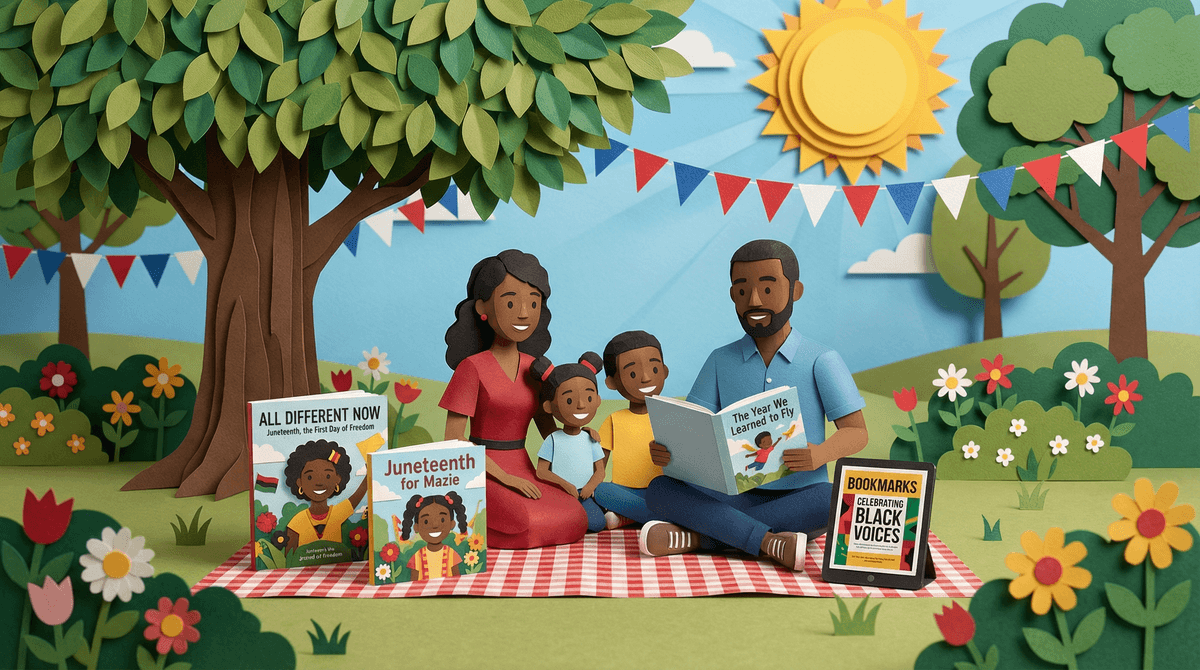
Juneteenth (June 19th) commemorates the day in 1865 when enslaved people in Galveston, Texas finally learned they were free—two and a half years after the Emancipation Proclamation. It's a celebration of freedom, resilience, and Black culture, and since becoming a federal holiday in 2021, more families are looking for meaningful ways to observe it.
Here's the thing: teaching kids about Juneteenth isn't just about adding another holiday to the calendar. It's an opportunity to have real conversations about American history, justice, and why freedom delayed is freedom denied. And yes, you can do this in age-appropriate ways that don't feel like a heavy lecture.
Let's be honest—a lot of us didn't learn about Juneteenth in school. The history we were taught often glossed over the messy, uncomfortable parts. But kids today are asking questions, and they're getting information from TikTok, YouTube, and their friends anyway.
Better that these conversations happen with you, where you can provide context, answer questions, and model how to talk about difficult history.
Plus, celebrating Juneteenth teaches kids something crucial: that the fight for freedom and justice is ongoing, and that regular people—not just famous leaders—make history happen.
Ages 3-7: Building Foundation Through Stories
Little kids understand fairness and unfairness in concrete ways. Focus on:
Read picture books together:
- All Different Now: Juneteenth, the First Day of Freedom by Angela Johnson is beautifully illustrated and captures the emotion of that day
- Juneteenth for Mazie by Floyd Cooper follows a young girl learning about the holiday from her grandmother
Watch age-appropriate content:
- The Sesame Street Juneteenth special does what Sesame does best—makes complex topics accessible without dumbing them down
- Ada Twist, Scientist on Netflix has episodes about historical figures and asking questions about the world
Do creative activities:
- Make a freedom flag with red, white, and blue (the colors of Juneteenth)
- Have a "freedom celebration" picnic in your backyard
- Listen to music and talk about how songs can tell stories
Ages 8-12: Going Deeper With Context
Middle elementary kids can handle more nuance and are starting to understand systemic issues.
Watch documentaries and shows together:
- Bookmarks: Celebrating Black Voices on Netflix features celebrities reading children's books by Black authors—great for sparking conversations
- Search for age-appropriate Juneteenth content on PBS Kids or the PBS website
Read chapter books:
- The Year We Learned to Fly by Jacqueline Woodson
- Books from the Who Was/What Was series about historical figures like Harriet Tubman, Frederick Douglass, and Sojourner Truth
Engage with interactive content:
- Virtual museum tours (many museums have online Juneteenth exhibits)
- Listen to podcasts like Brains On! which occasionally covers history topics, or Tumble for science stories from diverse perspectives
Have real conversations: Ask questions like: "Why do you think it took so long for the news to reach Texas?" or "What would freedom feel like if you'd never had it before?"
Ages 13+: Critical Thinking and Current Connections
Teens can—and should—grapple with the hard stuff. They're already seeing social justice content online, so help them develop critical thinking skills.
Watch more complex content:
- 13th on Netflix (though check the rating—it's heavy)
- High on the Hog on Netflix explores Black food culture and history
- YouTube channels that discuss history through a critical lens (vet these first—some are better than others)
Discuss modern parallels: Talk about how the delay in freedom relates to ongoing struggles for justice. What does freedom mean today? What barriers still exist?
Support Black creators:
This is a great time to explore content from Black creators on platforms your teens already use—YouTube, TikTok, podcasts. Help them understand how algorithms work and why actively seeking diverse perspectives matters.
You don't have to be an expert. Seriously. It's okay to say "I don't know, let's find out together." Modeling curiosity and a willingness to learn is powerful.
White families: this is for you too. Actually, especially for you. If you're worried about saying the wrong thing, remember that saying nothing teaches kids something too—that these topics are too uncomfortable to discuss. Here's how to talk to kids about race.
It's not just one day. Juneteenth can be a springboard for ongoing conversations about history, justice, and current events. The goal isn't to check a box—it's to raise kids who think critically about the world.
Center Black voices. When choosing books, shows, and activities, prioritize content created by Black authors, filmmakers, and educators. This isn't about performative allyship—it's about authentic representation.
Yes, this guide includes screen-based activities. Here's why that's okay:
Quality matters more than quantity. Watching a documentary together and discussing it is fundamentally different from passive scrolling. Co-viewing and conversation transform screen time into learning time.
Balance digital and real-world activities. Pair screen time with visits to local museums, attending community Juneteenth celebrations, or supporting Black-owned businesses. The digital content provides context; real-world action makes it meaningful.
Use parental controls thoughtfully. If your kids are exploring Juneteenth content independently online, make sure they're in age-appropriate spaces. YouTube Kids has curated content, but for older kids, have conversations about evaluating sources and recognizing quality information.
Juneteenth isn't about performative posts or checking a diversity box. It's about teaching kids that American history is complicated, that freedom has always been contested, and that ordinary people doing extraordinary things can change the world.
Start where you are. Read a book. Watch a show together. Visit a local celebration. Ask questions. Listen more than you talk. And remember: the goal isn't perfection—it's progress.
- This week: Choose one age-appropriate book or show from the lists above
- This month: Attend a local Juneteenth celebration or event
- Ongoing: Make learning about Black history and culture a year-round practice, not just a June thing
Want to explore more ways to teach history through media? Check out documentaries for kids or books that teach empathy.