

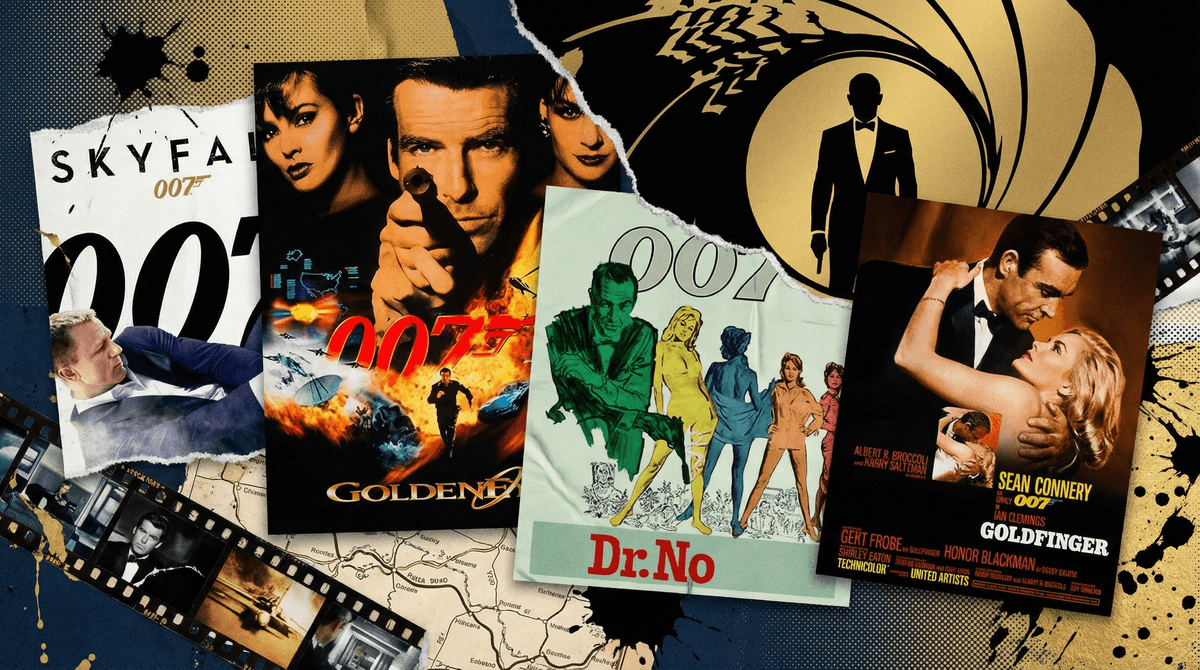
The James Bond film series spans six decades, 25 official films, and six different actors playing 007. It's one of the longest-running franchises in cinema history, and at some point, your kid is going to discover it—whether through a friend, a meme, or stumbling onto it while you're scrolling streaming options.
But here's the thing: not all Bond films are created equal when it comes to age-appropriateness. We're talking about a franchise that ranges from campy 1960s spy adventures to genuinely intense modern action thrillers. Some have the sexual content of a 1970s Playboy spread, others have torture scenes that'll make you wince.
Screenwise Parents
See allSo if your family wants to explore the world of martinis (shaken, not stirred) and Aston Martins, you need a roadmap.
Bond has surprising staying power with younger audiences for a few reasons:
The gadgets and cars - Kids love Q's inventions, the ejector seats, the watch lasers, the invisible cars. It's like a precursor to every spy gadget they see in modern movies and games.
The action sequences - Parkour chases, ski stunts, underwater battles. The practical effects in older Bond films are genuinely impressive and different from today's CGI-heavy action.
Cultural literacy - Bond references are everywhere. From Fortnite skins to TikTok sounds, understanding Bond means getting a massive chunk of pop culture references.
The formula - Kids actually appreciate the predictability: pre-title action sequence, theme song, exotic locations, villain with a plan, Bond wins. It's comforting in its structure.
Let's be real: most Bond films are PG-13 for good reason, and some push that rating hard. Here's how to navigate by age:
Ages 10-12: Start with Craig (Selectively)
Counterintuitively, the Daniel Craig era offers the most consistent entry point for tweens, specifically:
-
Casino Royale (2006) - Yes, there's a torture scene you'll want to skip (you'll know it when you see it), but this is the most grounded, least sexualized Bond. The poker scenes are tense without being inappropriate.
-
Skyfall (2012) - Gorgeous cinematography, compelling villain, and the most "family viewing" of the Craig films. Some intensity, but nothing gratuitous.
Skip with this age group: Quantum of Solace (confusing and violent), Spectre (torture and creepy), No Time to Die (heavy themes and a rough ending).
Ages 13-15: Add the Brosnan Era
Once you're in solid PG-13 territory, Pierce Brosnan's Bond becomes accessible:
-
GoldenEye (1995) - The best starting point for teens. Great action, Judi Dench as M, and it literally rebooted the franchise. Also, if they play GoldenEye 007, they'll get the references.
-
Tomorrow Never Dies (1997) - Surprisingly relevant themes about media manipulation. Michelle Yeoh is fantastic.
Be cautious: The World Is Not Enough and Die Another Day have their moments but are generally considered the weaker Brosnan films (and Die Another Day is... let's just say it's not great).
Ages 16+: The Full Catalog Opens
At this point, you can explore the classic Connery films and beyond, with some caveats:
The Connery Era (1962-1971) - Dr. No, From Russia with Love, Goldfinger, and Thunderball are the classics. But be prepared for serious sexism—Bond is often predatory, and women are treated as objects. This is a "watch and discuss" situation, not a "leave them alone with it" situation.
The Roger Moore Era (1973-1985) - The campiest Bond. The Spy Who Loved Me is genuinely fun. But Moore's films have some truly cringey sexual content and racial stereotypes. View to a Kill has Christopher Walken as a villain, which is delightful, but the film is otherwise forgettable.
Timothy Dalton (1987-1989) - The Living Daylights is solid and darker. Dalton tried to bring Bond back to the books' grittier tone.
The sexism is real - Older Bond films feature behavior that would be called sexual harassment or assault today. If you're watching these, have conversations about consent and how cultural norms have evolved .
.
Violence levels vary wildly - Craig's Bond is brutal and visceral. Moore's Bond is cartoonish. Connery's is somewhere in between. Check Common Sense Media ratings before committing.
The theme songs are half the fun - Seriously, make a playlist. Adele's "Skyfall," Shirley Bassey's "Goldfinger," and Carly Simon's "Nobody Does It Better" are iconic. Even the bad Bond films usually have decent theme songs.
Chronological vs. quality - You don't need to watch in release order. Starting with Craig's Casino Royale (which is technically a reboot/origin story) and then jumping around based on interest is totally valid.
Streaming is scattered - Bond films bounce between streaming services. Check JustWatch or your library for current availability.
For families wanting a curated experience:
- Skyfall - Start here. If they love it, continue.
- Casino Royale - Go back to Craig's beginning.
- GoldenEye - Jump to Brosnan for variety.
- Goldfinger - If they're ready for classic Bond (and the discussion that comes with it).
- The Spy Who Loved Me - For campy fun.
For teens who want the "full experience" - Watch in release order, but have a guide ready to discuss the problematic elements.
The Bond franchise can be a fun family exploration of film history, action sequences, and cultural evolution—but it requires active parenting. These aren't "put it on and walk away" films, especially the older ones.
Start with Craig or Brosnan depending on your kid's age and maturity. Use the older films as opportunities to discuss how entertainment (and society) has changed. And honestly? Some Bond films are just not good. It's okay to skip Die Another Day entirely and pretend it doesn't exist.
The franchise has genuine gems that showcase practical stunt work, exotic locations, and compelling spy stories. Just go in with your eyes open about what you're getting into.
- Check out our guide to action movies for teens for more age-appropriate recommendations
- Explore spy-themed games and media if your kid loves the espionage angle
- Learn how to have conversations about outdated gender roles in media