

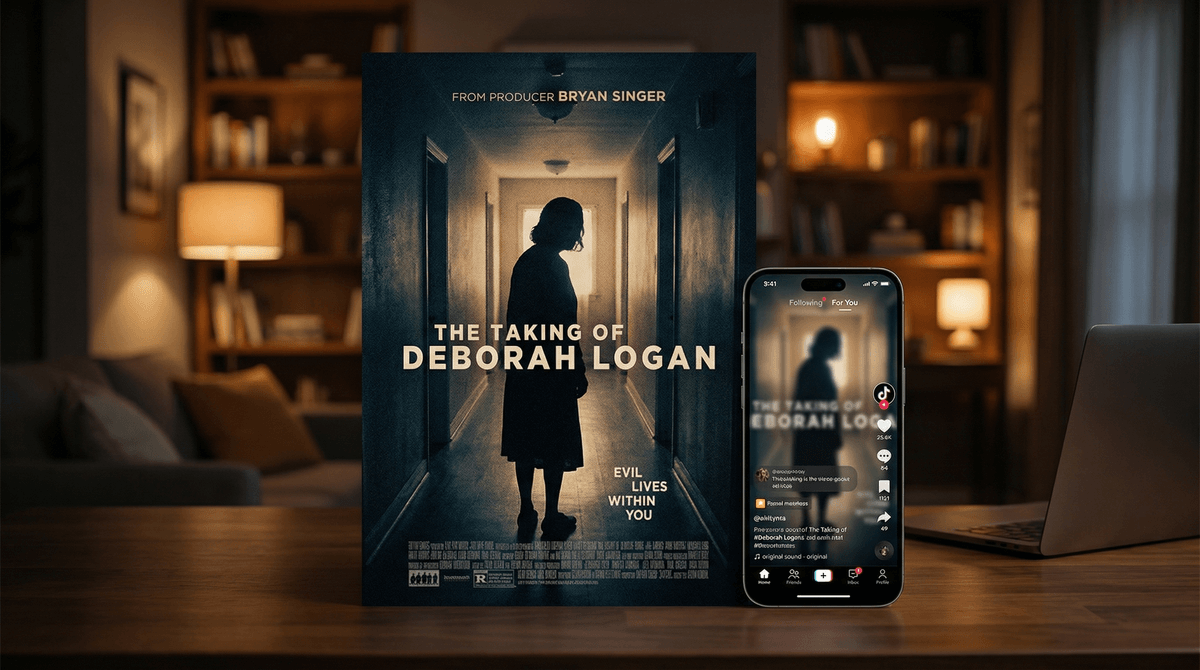
Is The Taking of Deborah Logan Too Scary for Kids? A Parent's Guide
Short answer: This is NOT for kids. The Taking of Deborah Logan is a genuinely disturbing found-footage horror film that earns its R rating through psychological terror, body horror, and deeply unsettling imagery. Recommended minimum age: 17+, and even then, only for teens who actively seek out intense horror and can handle serious themes around dementia, possession, and loss of bodily autonomy.
If your teen is asking about it, they're probably seeing clips on TikTok or hearing about it from the horror community. This guide will help you understand what they're getting into and how to have that conversation.
Released in 2014, this is a found-footage horror film that follows a documentary crew filming an elderly woman (Deborah Logan) with Alzheimer's disease. What starts as a medical documentary quickly spirals into something far more sinister as Deborah's behavior becomes increasingly disturbing and supernatural.
The film has a 90% audience score on Rotten Tomatoes and has developed a cult following in the horror community for being genuinely frightening—not just jump-scare horror, but the kind that stays with you. It's currently streaming on various platforms and experiencing a resurgence thanks to horror TikTok highlighting its most disturbing scenes.
Here's what makes this movie particularly intense compared to typical horror fare:
The dementia angle is exploitative and deeply uncomfortable. The film uses a real disease that affects millions of families as its horror premise. Watching someone lose their mind and sense of self is already terrifying in real life—this movie weaponizes that fear. If your family has been touched by Alzheimer's or dementia, this will be especially disturbing.
The body horror escalates significantly. Without spoiling specifics, there are scenes involving contortion, violence toward children (implied and shown), and imagery that's genuinely nauseating. The final act includes a scene that's become infamous in horror circles for being almost unwatchable.
It's psychologically relentless. Unlike slashers where you get breaks between kills, this is a slow-burn descent into madness. The found-footage format makes it feel uncomfortably real, and there's no comic relief or "fun" horror moments to break the tension.
The themes are adult and dark. We're talking about possession, murder of children, loss of identity, and the horror of watching a loved one deteriorate. These aren't abstract concepts—the film forces you to sit with them.
Let's be specific about what's in this film:
Violence and Gore:
- Disturbing physical contortions and body horror
- Violence toward children (both historical and present-day)
- Self-harm imagery
- Animal death (a snake)
- Blood and medical horror
Psychological Content:
- Extended sequences of mental deterioration
- Themes of possession and loss of bodily autonomy
- Gaslighting and manipulation
- Claustrophobic, trapped scenarios
Sexual Content:
- Minimal, but there are references to abuse
Language:
- Strong language throughout, appropriate for the R rating
The Scene Everyone Talks About: There's a particular scene in the final act that's become notorious online. Without spoiling it, it involves a child and is genuinely one of the most disturbing images in modern horror cinema. If your teen has seen clips on TikTok, this is probably what they're referencing.
If your teenager is asking about this movie, here's probably why:
Horror TikTok is obsessed with it. Clips from the film, particularly "that scene," regularly go viral in horror communities. Teens see these out-of-context clips and want the full experience.
It's a "test your limits" movie. In teen horror circles, there are certain films that function as badges of honor—can you make it through without looking away? This is one of them.
The found-footage format feels accessible. Teens who grew up with YouTube and TikTok are drawn to found-footage because it feels more "real" than traditional horror filmmaking.
It's genuinely well-made. Unlike a lot of exploitation horror, this film has strong performances (especially Jill Larson as Deborah) and actual craft behind it. Horror-literate teens appreciate that.
Under 15: Absolutely not. The themes alone are too mature, and the imagery will be genuinely traumatic for younger teens.
Ages 15-16: Still no, with rare exceptions. Maybe—and this is a big maybe—if you have a teen who is deeply into horror as a genre, has demonstrated they can process intense content, and you're willing to watch it with them and debrief afterward. But honestly, there are better entry points to serious horror.
Ages 17+: Proceed with caution. At this age, if your teen is interested in horror cinema and understands what they're getting into, this becomes more of a conversation than a hard no. But you should still discuss it beforehand and be available afterward.
For context: This is significantly more disturbing than mainstream horror like A Quiet Place or even Get Out. It's in the same conversation as films like Hereditary or The Autopsy of Jane Doe—horror for people who really want to be disturbed.
Let's be real: they've probably already seen the infamous scene out of context. Here's how to handle that:
Don't shame them for seeking it out. Curiosity about disturbing content is normal, especially in the age of viral horror clips.
Ask what they know and what they've seen. Get a sense of whether they saw a 10-second clip or watched a full breakdown. Context matters.
Explain why the full film is different. Seeing a clip is very different from sitting through 90 minutes of psychological buildup. The clip might be shocking, but the film is draining.
Talk about the dementia exploitation. This is a good opportunity to discuss how horror films can cross lines by using real suffering as entertainment. Ask them how they'd feel if someone made a horror movie about a disease affecting their grandparent.
If your teen wants horror that's intense but more age-appropriate, consider:
For psychological horror:
- The Sixth Sense (PG-13, genuinely scary but thoughtful)
- The Others (PG-13, atmospheric and smart)
- Coraline (PG, legitimately creepy for all ages)
For found-footage fans:
- Cloverfield (PG-13, intense but less psychologically damaging)
- Chronicle (PG-13, found-footage superhero horror)
For serious horror with better boundaries:
- A Quiet Place (PG-13, intense but family-appropriate)
- The Conjuring (R, but more traditional horror with clearer good vs. evil)
Check out horror movies for teens who can handle scares for more recommendations.
If your older teen is pushing to watch this, here's how to approach it:
Start with curiosity, not judgment: "I saw you're interested in this movie. What have you heard about it? What makes you want to watch it?"
Be honest about the content: "This isn't me being overprotective—this film uses dementia and child endangerment as horror devices. That's different from monster movies or slashers."
Discuss their horror experience: "What's the most intense horror you've watched? How did you feel afterward?" This helps you gauge their readiness.
Set conditions if you're considering it: "If we're going to watch this, we watch it together, and we talk about it afterward. Deal?"
Respect their autonomy (for older teens): If they're 17-18, acknowledge that you can't control what they watch at friends' houses or online, but you can control what you're comfortable facilitating in your home.
Offer the alternative: "What if we find something that scratches the same itch but doesn't use real disease as entertainment?"
The Taking of Deborah Logan is effective horror precisely because it's so disturbing. It's not gratuitous for the sake of it—it's crafted to unsettle you on a deep psychological level. That's also why it's not appropriate for kids or most teens.
The R rating exists for a reason, and this film earns it. Even among R-rated horror, this one pushes boundaries. If your teen is younger than 17, the answer should be no. If they're 17-18 and genuinely interested in horror cinema as an art form, this becomes a conversation about maturity, context, and your family's boundaries.
The real question isn't "is it too scary?"—it's "is it too psychologically heavy?" And for most teens, the answer is yes.
If they're determined to explore intense horror, guide them toward films that don't exploit real suffering. There's a whole world of thoughtful horror movies that can challenge and scare without crossing into exploitation.
And if they do end up watching it (at a friend's house, let's be honest), make sure they know they can talk to you about it afterward. Sometimes the most important parenting happens in the debrief.
Want to explore more about age-appropriate horror? Check out our guide to how to introduce kids to scary movies or learn about why teens are drawn to horror content .
.