

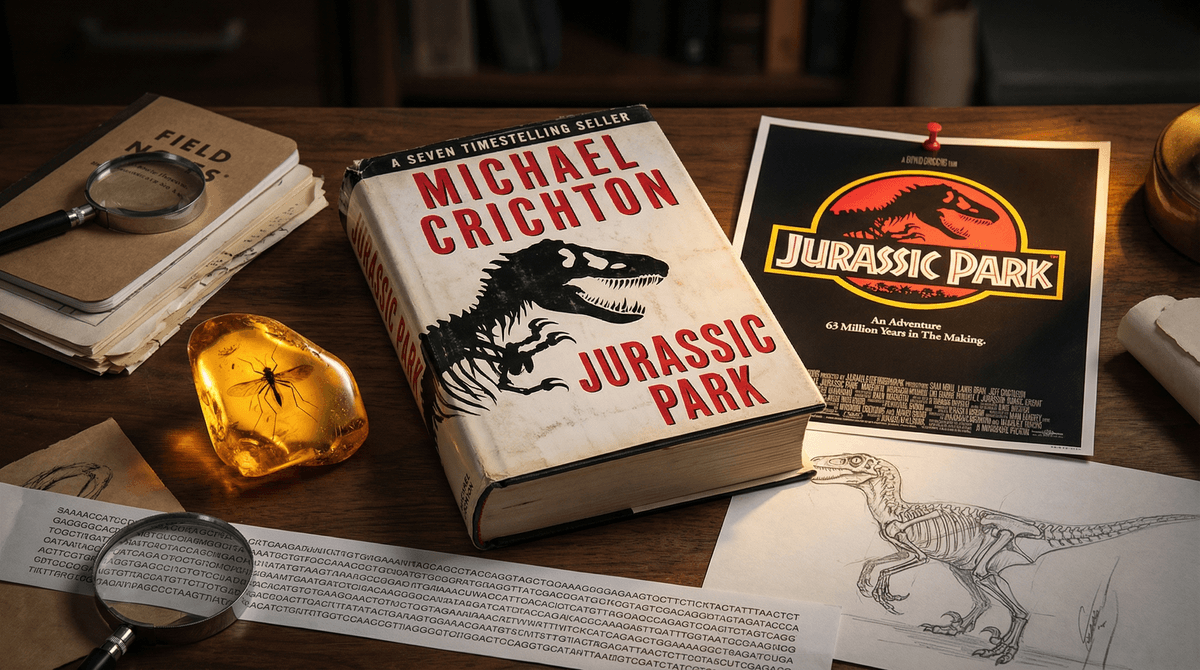
Is the Jurassic Park Book Too Violent and Profane for Kids?
Michael Crichton's Jurassic Park novel is significantly more violent, graphic, and profane than the Spielberg film. We're talking explicit child deaths, gruesome dismemberments described in clinical detail, and a level of gore that would make the movie's T-Rex attack scene look like a nature documentary.
Quick age guidance:
- Under 13: Probably not, unless you have an unusually mature reader who's already comfortable with horror
- 13-15: Maybe, depending on their tolerance for graphic violence and whether they've read other intense thrillers
- 16+: Generally appropriate for most teens who want a smart sci-fi thriller
If you're looking for dinosaur books for younger kids, there are way better options. But if your teen loved the movies and wants something meatier, let's talk about what they're actually getting into.
The 1993 Spielberg film is PG-13 and mostly keeps the violence off-screen or implies it. The book? Crichton pulls zero punches. He was writing for adults in 1990, and it shows.
The violence is clinical and detailed. Crichton has a medical degree, and he writes like it. When dinosaurs attack, you get descriptions of bite force, bone structure, and exactly how various body parts separate from each other. It's not gratuitous in a slasher-film way—it's almost worse because it's so matter-of-fact and scientific.
Kids die on-page. In the movie, we see kids in danger but they survive. In the book, a baby gets eaten in the opening pages (we don't see it directly, but we see the aftermath). Later, there are explicit descriptions of children being attacked and killed by compys (the small scavenger dinosaurs). These aren't quick deaths—Crichton describes the neurotoxin effects, the paralysis, the whole process.
The profanity is frequent. Characters drop F-bombs regularly. It's not Tarantino-level, but it's definitely adult language throughout. Malcolm (the mathematician) is particularly colorful in his rants about chaos theory.
The sexual content is minimal but present. There's some adult innuendo and references to relationships, but nothing explicit. This is honestly the least concerning aspect.
The tone is darker. The movie has moments of wonder—that first brachiosaurus reveal, the "life finds a way" optimism. The book is cynical from page one. It's about corporate greed, scientific hubris, and the fundamental arrogance of thinking we can control nature. Even when they "win," it doesn't feel triumphant.
Spielberg made deliberate choices to make the story accessible to families. He:
- Kept most deaths off-screen or implied
- Made the kids older and more capable (Lex is 7-8 in the book, not a teen)
- Cut the baby death entirely
- Removed most profanity
- Added more sense of wonder and adventure
- Changed character fates (some who die in the book live in the movie, and vice versa)
- Simplified the science lectures into digestible chunks
The movie is a masterpiece of suspenseful family entertainment. The book is a techno-thriller for adults who want to think about genetic engineering ethics while reading about people getting eaten.
Let me be specific about what parents should know:
Graphic violence includes:
- Detailed descriptions of people being mauled, dismembered, and eaten
- A baby's death (off-page but the aftermath is described)
- Children being attacked by small dinosaurs in a prolonged, horrifying sequence
- Visceral descriptions of injuries, blood, and gore
- Deaths that are drawn out rather than quick
Language:
- F-word appears regularly (not constantly, but it's there)
- Other profanity scattered throughout
- Some crude language and adult expressions
Themes that might be intense:
- Corporate negligence leading to deaths
- Adults making catastrophically bad decisions
- The fundamental helplessness of humans against nature
- Genetic engineering ethics and "playing God"
- Cynicism about human nature and capitalism
What's NOT in there:
- Sexual content beyond mild innuendo
- Drug use (though there's alcohol)
- Extreme torture or sadism (the violence is dinosaur-based, not human cruelty)
Ages 10-12: Almost certainly too intense. Even mature readers in this age range will likely find the graphic violence disturbing. The clinical descriptions of how bodies are torn apart is nightmare fuel. If they loved the movies and want more dinosaur content, try The Wild Robot by Peter Brown for adventure with heart, or Hatchet by Gary Paulsen if they want survival thrills without the gore.
Ages 13-15: This is the judgment call zone. Some 13-year-olds can handle intense content and separate fiction from reality. Others will have nightmares. Consider:
- Have they read other intense thrillers? (Stephen King's less graphic work, for example)
- How do they handle movie violence?
- Are they reading it because they genuinely want to, or because they think they "should"?
- Can they talk to you about disturbing content when it bothers them?
If you're unsure, maybe read it yourself first, or read it together and check in about the intense parts.
Ages 16+: Most teens this age can handle it if they're interested. At this point, they've likely been exposed to comparable or worse content in movies, TV, or other books. The science and ethical questions are actually fascinating discussion material for this age group.
Despite the violence, this isn't trash. Crichton was a brilliant writer who did serious research. The book offers:
Real science education: The genetic engineering explanations are detailed and (for 1990) remarkably accurate. Teens interested in biology, genetics, or paleontology will learn actual concepts.
Ethical debates worth having: The book raises genuine questions about genetic engineering, corporate responsibility, and scientific ethics that are even more relevant in 2026 than they were in 1990. These are conversations worth having with teens .
.
Strong writing: Crichton knows how to build tension. The pacing is excellent, and the technical details make it feel real rather than bogging it down.
Character complexity: The characters are more nuanced than in the movie. Dr. Grant's character arc is different, Malcolm is more philosophical, and even Hammond is more interesting (and less sympathetic).
Honestly? If your kid is under 15 and wants to read it, yeah, you probably should read it first. It's a quick read—most people finish it in a few days. You'll know immediately whether your specific child can handle it.
The book is genuinely engaging for adults. It's not like you're slogging through Diary of a Wimpy Kid to vet it. You'll probably enjoy it.
If your kid loves dinosaurs and adventure but isn't ready for Crichton's violence:
For younger readers (8-12):
- Hatchet - Survival adventure without gore
- The Wild Robot - Robot survival story with heart
- Holes by Louis Sachar - Mystery and adventure
For teens ready for intense content but wanting less graphic violence:
- The Martian by Andy Weir - Survival sci-fi with humor and science
- Ender's Game - Sci-fi with violence but less graphic
- Crichton's other books like [Timeline](https://screenwiseapp.com/media/timeline-movie or Prey (though Prey also has intense moments)
If they specifically want more Jurassic Park:
- The Jurassic Park movies are all less intense than the book
- The sequel novel The Lost World is similarly violent (just so you know)
If your teen is reading it or has read it, some conversation starters:
About the violence: "That compy scene was pretty intense. How did you feel reading that?" (Not "Did that disturb you?"—that's leading. Just open the door.)
About the science: "Do you think the genetic engineering stuff could actually work?" (It's actually a fascinating discussion about CRISPR and modern genetics.)
About the ethics: "Hammond thinks he's creating wonder. Malcolm thinks he's playing God. Who's right?" (There's no wrong answer, and teens love this kind of debate.)
About corporate responsibility: "InGen cut corners to save money and people died. Where have we seen that in real life?" (Sadly, lots of examples.)
Jurassic Park the novel is a legitimately excellent techno-thriller that's genuinely too violent and intense for most kids under 13, appropriate for many teens 13-15 depending on maturity, and fine for most readers 16+.
The violence isn't gratuitous, but it's graphic and clinical in a way that can be more disturbing than slasher-film gore. Kids die on the page in horrible ways. The language is adult. The tone is dark and cynical.
But: It's smart, well-researched, thought-provoking, and raises questions about science and ethics that are worth discussing with teens who are ready for it.
If your kid wants to read it, consider their maturity level, their tolerance for graphic content, and whether you can be available to talk about the intense parts. When in doubt, read it yourself first—it's only 400 pages and genuinely engaging.
And if they're not ready? The movies are still great, and there are plenty of other adventure books that won't give them nightmares.
- Check your teen's reading history: Have they handled intense content before?
- Read it yourself if you're unsure—seriously, it's worth your time
- Start a conversation about what kinds of content they're comfortable with
- Consider reading it together if they're on the younger end of appropriate
- Explore other science thrillers that might be a better fit
Want to discuss whether your specific kid is ready? Let's talk about your reader's maturity level and interests.