

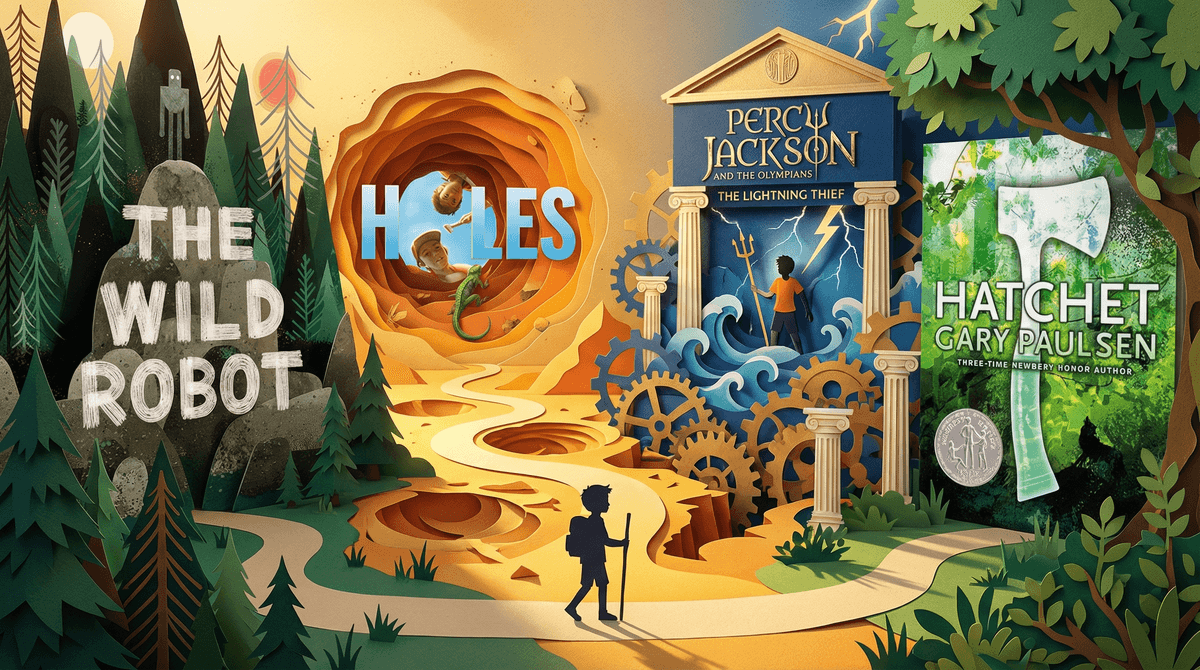
Look, we need to talk about the fact that getting kids to read actual books in 2026 feels like trying to convince them that broccoli is candy. But here's the thing: adventure books are basically the gateway drug to reading. We're talking about stories where kids go on quests, solve mysteries, survive in the wilderness, battle dragons, or navigate magical worlds. Think Percy Jackson, Hatchet, The Wild Robot, or classics like Holes.
These aren't the books kids read because they have to for school (though some definitely end up on reading lists). These are the books that make kids actually want to turn pages instead of scrolling TikTok. And honestly? That's worth its weight in gold right now.
Sure, reading builds vocabulary and comprehension and all that stuff teachers talk about. But adventure books do something specific that's incredibly relevant to our screen-saturated kids: they build the mental muscle for sustained attention and complex problem-solving.
When a kid reads about Karana surviving alone on an island in Island of the Blue Dolphins, they're not getting dopamine hits every 8 seconds like they do on YouTube Shorts. They're learning to sit with tension, imagine solutions, and follow cause-and-effect over dozens of chapters. That's the exact opposite of what most digital content trains them to do.
Adventure books also tend to feature protagonists who face real stakes and make consequential decisions. Your kid isn't just passively watching Bluey's dad be perfect (love Bluey, but you know what I mean). They're following characters who mess up, face danger, figure things out, and grow. That's a different kind of engagement.
And let's be real: a kid reading an adventure book is building courage and resilience in their imagination before they need it in real life. Whether it's Brian figuring out how to make fire in Hatchet or Meg facing the darkness in A Wrinkle in Time, these stories create mental frameworks for "I can handle hard things."
Ages 5-7: Picture Books and Early Readers
- Where the Wild Things Are - The OG adventure book
- Dragons Love Tacos - Silly but genuinely adventurous
- The Wild Robot - Can be read aloud, absolutely magical
Ages 7-9: Chapter Books
- Magic Tree House series - Time travel adventures, perfect for reluctant readers
- The Wild Robot - If they didn't read it younger, now's the time
- Hoot - Environmental adventure with humor
Ages 9-12: Middle Grade
- Percy Jackson series - Greek mythology meets modern adventure, genuinely funny
- Hatchet - Survival story that's been hooking kids for decades
- Holes - Mystery and adventure intertwined brilliantly
- The Ranger's Apprentice series - Fantasy adventure, great for kids who like Minecraft
- Keeper of the Lost Cities - Magic school vibes but more adventurous
Ages 12+: Young Adult
- The Hunger Games - Intense but incredibly well-written
- Ender's Game - Sci-fi adventure that raises real ethical questions
- The Maze Runner - Dystopian survival mystery
Here's the uncomfortable truth: you can't force a love of reading. You can only create conditions where it might happen. Some things that actually work:
1. Read aloud together, even with older kids. Yes, even your 10-year-old. Some of the best adventure books (The Wild Robot, Hatchet) are incredible read-aloud experiences. You're modeling sustained attention and creating a shared story world.
2. Let them see you reading. Not scrolling your phone with a book nearby. Actually reading. Kids are mimics.
3. Connect books to their existing interests. Kid obsessed with Roblox? Try Ready Player One (for older kids). Love Minecraft? The Ranger's Apprentice has that crafting/survival vibe. Into Greek mythology from playing Hades? Percy Jackson is waiting.
4. Audiobooks count. Full stop. If your kid will listen to Percy Jackson on audiobook during car rides, that's reading. Don't be a purist about paper vs. audio.
5. Don't make it homework. The second you require a book report or quiz them on comprehension, you've killed the joy. Let them just... read.
Here's why this matters for Screenwise parents specifically: adventure books are one of the few things that can genuinely compete with screens for your kid's attention. Not because they're "better" in some moral sense, but because they offer something screens often don't: deep immersion in a single story with real stakes.
When kids are reading Holes or Hatchet, they're building the exact cognitive skills that excessive screen time erodes: sustained focus, delayed gratification, complex narrative comprehension, and imagination. You're not replacing Fortnite with books (that's not realistic). You're adding something to the mix that creates balance.
And honestly? A kid who's genuinely into a book series will naturally choose reading time over screen time sometimes. Not always. But sometimes. And that's the goal.
Adventure books aren't a magic bullet for screen addiction or attention problems. But they're one of the most powerful tools we have for building the mental habits that screen-heavy childhoods tend to undermine. They teach kids that stories can be thrilling without jump cuts every 3 seconds, that problems can be complex and take time to solve, and that they can be brave in their imaginations before they need to be brave in real life.
Start with one book. Read it aloud together if your kid won't read independently yet. Let them pick the next one. Don't make it a thing. Just... create space for adventure.
Want more specific recommendations based on your kid's age and interests? Find adventure books for your specific situation . And if you're trying to balance reading time with screen time, check out our guide on creating a media diet that actually works.