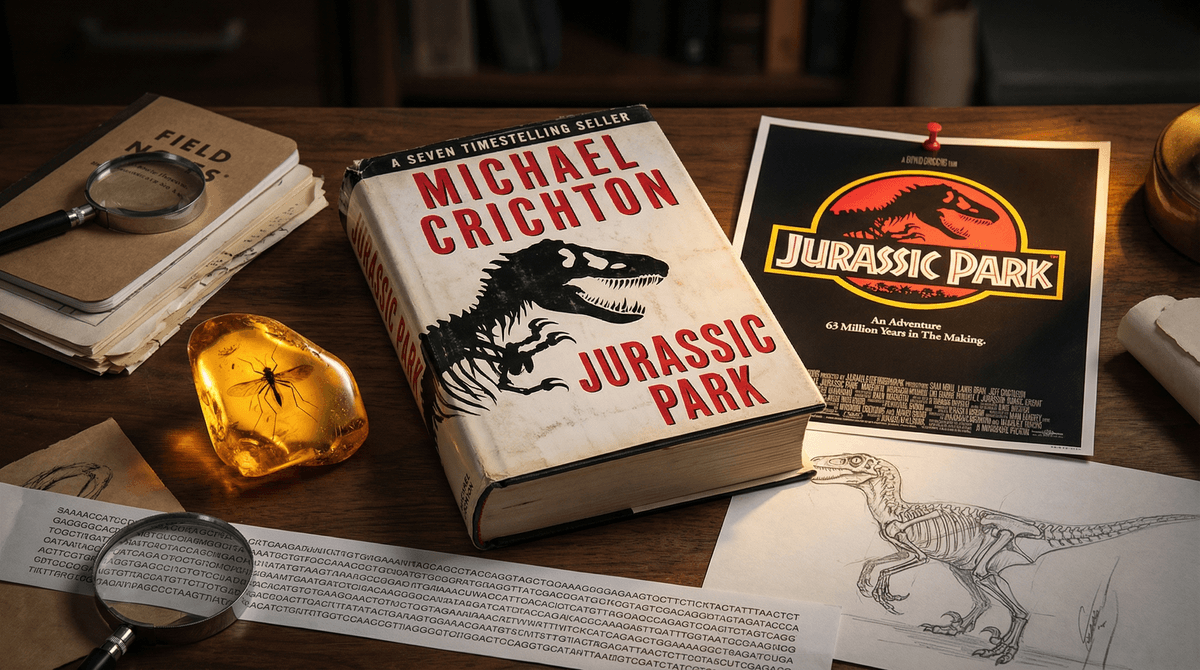
The movie is a lie
If your kid is coming to this because they saw the 1997 film and want more of the same, they are in for a shock. While the movie is often remembered for its "raptor gymnastics" or the T-Rex wandering through San Diego, the book is a much tighter, more cynical survival thriller. It discards almost everything from the film's second half in favor of a high-stakes look at Isla Sorna, the "Site B" where the dinosaurs were actually manufactured.
The biggest draw here is the return of Ian Malcolm. In the first book, his survival was a bit of a question mark, but here he is the undisputed star. He doesn't just run from monsters; he provides a running commentary on why the entire ecosystem is failing. For a certain type of kid—the one who prefers logic puzzles and hard facts over middle-school social drama—this is catnip. It feels like a "grown-up" book because it doesn't pander. If your reader enjoyed the analytical side of Hannah Saves the World, they will likely appreciate how Crichton uses dinosaurs to explain complex ideas like chaos theory and prions.
Clinical gore and "Smart" violence
Crichton’s writing style is famously dry. He describes a dinosaur attack with the same detached precision he uses to describe a broken computer system. This makes the violence feel different than what you see in a typical YA novel. It isn't emotional or stylized; it’s biological. When a predator catches a character, the description is graphic and clinical.
If you are worried about the intensity, it’s worth checking out our breakdown on whether the Jurassic Park book is too violent for kids. The Lost World follows that same blueprint. There is no "movie magic" to save the characters here. If someone makes a tactical error, they usually pay for it in a way that is described in vivid, anatomical detail.
Why it still works
Even though this was published in 1995, it hasn't aged into a period piece. Because the "tech" in the book is focused on genetic engineering and field equipment rather than social media or the internet, it feels remarkably current. The core conflict—corporate greed versus scientific ethics—is a conversation that hasn't slowed down in thirty years.
The "bad guys" are admittedly a bit thin. They are classic corporate caricatures who exist primarily to make the "right" characters look smarter and to eventually provide a gruesome action sequence. But you aren't reading Crichton for deep character arcs. You're reading him to see how a group of smart people uses technology and logic to survive a situation that is spiraling out of control. It’s a page-turner that rewards kids for paying attention to the details.