

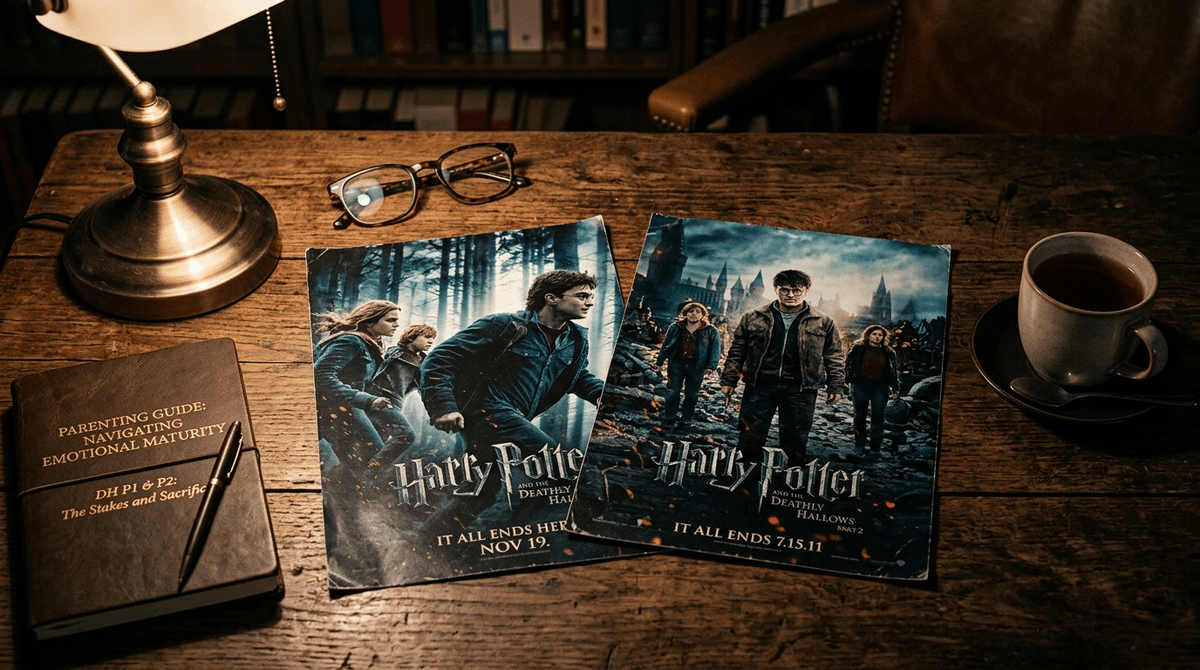
TL;DR: Harry Potter and the Deathly Hallows Part 1 is a massive tonal shift from the "whimsical magic school" vibes of the early films. It is rated PG-13 for a reason. While many 10-year-olds handle it fine, the jump from The Goblet of Fire to this is steep. Expect psychological intensity, character deaths that actually hurt, and a scene involving a snake that might make you (and your kid) jump out of your skin.
If your kid is under 10 or sensitive to "hopelessness" in stories, you might want to hit pause. If they’ve breezed through The Half-Blood Prince, they’re likely ready, but be prepared for some heavy post-movie debriefing.
We’ve all been there: you start the Harry Potter series with The Sorcerer's Stone and it’s all chocolate frogs, flying broomsticks, and "it’s Levi-O-sa." It’s cozy. It’s peak "autumn vibes."
But by the time we hit Deathly Hallows Part 1, the "magic school" is gone. Hogwarts isn't even in this movie. Instead, we have three teenagers on the run in the woods, dealing with isolation, jealousy, and the very real threat of a wizarding genocide.
The biggest mistake we see parents make is "binge-watching" the series too fast. When these books and movies first came out, the audience aged with Harry. If your kid is seven and just finished movie three, they might try to power through to movie seven in the same week. Don’t do it. The jump in maturity required between movie one and movie seven is about five years of emotional development.
Unlike the other films, this is a road movie. Harry, Ron, and Hermione are hunting "Horcruxes" (bits of Voldemort’s soul) while the Ministry of Magic falls to a fascist regime.
It’s less about "spells" and more about "survival." There is a heavy focus on the psychological toll of war. Ron becomes increasingly paranoid and aggressive due to the influence of a cursed locket, which leads to some intense interpersonal conflict that can be more upsetting to kids than the actual monsters.
When we talk about "dark," we usually mean three things: imagery, emotional weight, and "the jump scares."
1. The Imagery
The movie opens with a woman being suspended over a table and then fed to a giant snake while the villains watch. It sets the tone immediately: the stakes are life and death, and the "good guys" are losing. There’s also the "Godric’s Hollow" sequence involving an elderly woman who... well, let's just say she isn't who she seems, and the practical effects are straight out of a horror movie.
2. The Emotional Weight
Characters we’ve loved for years die in this movie. And they don't die "heroic" deaths in a massive battle (that’s Part 2); they die in messy, sudden, and heartbreaking ways. The death of Dobby the House Elf is a core memory for many Gen Z and Millennial parents, and it hits just as hard for today’s kids.
3. The Torture Scene
There is a scene at Malfoy Manor where Hermione is tortured (off-screen, but you hear the screaming) while a character carves a slur into her arm. It’s a lot. For kids who have mostly seen "cartoon violence" in games like Fortnite or Roblox, this kind of personal, visceral cruelty can be a shock to the system.
Ask our chatbot for a list of specific "scary" timestamps in Deathly Hallows Part 1
Every kid is different, but here is how the Screenwise community generally breaks down the "readiness" for this film:
Ages 7-9: Generally Too Young
Unless your child is incredibly mature and has already read the Harry Potter books, this movie is likely to cause nightmares. The pacing is slow (which leads to boredom) and the scary parts are very scary. If they’re itching for magic, maybe pivot to The Worst Witch or Percy Jackson & The Olympians.
Ages 10-12: The "Yellow Light" Zone
This is the most common age for kids to tackle the end of the series. They can handle the plot, but they might need "the talk" about why the movie feels so depressing. It’s a great time to watch with them so you can pause and explain things.
Ages 13+: The "Green Light" Zone
At this point, they’ve likely seen worse in PG-13 Marvel movies. They’ll appreciate the cinematography and the deeper themes of friendship and sacrifice.
Let’s be real: this movie is half of a story. Because they split the final book into two parts, Part 1 can feel a bit like a "camping trip from hell." It’s moody, it’s grey, and it’s slow.
The "Brain Rot" Factor: Zero. This is high-quality filmmaking. It requires attention, empathy, and an understanding of complex themes like prejudice, government corruption, and grief. It’s the opposite of "Skibidi Toilet" content. It’s a movie that asks kids to sit with uncomfortable feelings.
The "Entrepreneurship" of Roblox vs. The Themes of Potter: While we often talk about whether Roblox is teaching kids about money, Harry Potter is teaching them about moral courage. This movie specifically explores what happens when doing the "right thing" is actually really boring, exhausting, and scary. That’s a valuable lesson for a pre-teen.
Check out our guide on the best movies for teaching kids about courage
If you decide to let your kid watch it, here are three conversation starters for the car ride afterward:
- "Why do you think Ron left?" (Discusses jealousy and how stress affects friendships).
- "Which of the 'Three Brothers' from the story of the Hallows would you be?" (Discusses the desire for power vs. the reality of mortality).
- "How does the Ministry of Magic changing remind you of things we see in the real world?" (A light way to touch on how systems can change for the worse).
Is Deathly Hallows Part 1 too dark? For a seven-year-old, yes. For a twelve-year-old who has watched Harry grow up, it’s a rite of passage.
It’s a heavy movie, but it’s also the one that prepares them for the epic conclusion in Part 2. Just keep the lights on, have some actual chocolate nearby (for the "dementor" vibes), and be ready for a few "Wait, what just happened?" questions.
Next Steps:
- If they find Part 1 too intense, take a break and watch something lighter like The LEGO Batman Movie or Spider-Man: Into the Spider-Verse.
- If they loved it, they are ready for the finale: Deathly Hallows Part 2.
- Want to see how your kid's media diet compares to other kids their age? Take the Screenwise Survey.