

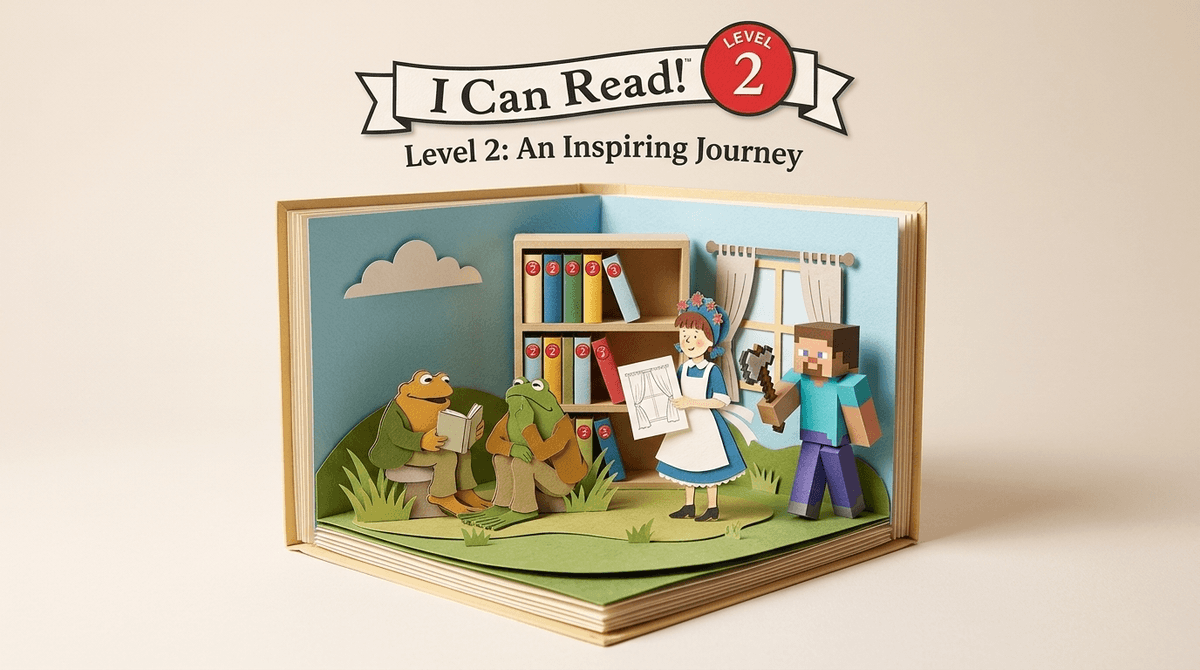
TL;DR: The "Reading with Help" Sweet Spot
Level 2 books are the bridge between "I'm just sounding out sounds" and "I actually want to know what happens next." If your kid is in 1st or 2nd grade and starting to recognize sight words but still gets stuck on multi-syllable "bossy R" words, this is your zone.
Quick Recommendations:
- The Gold Standard: Frog and Toad Are Friends
- The Laugh-Out-Loud Choice: Amelia Bedelia
- The Modern Adventure: Flat Stanley and the Firehouse
- The Digital Bridge: Minecraft: Mob Squad (for the kids who only want to read about Minecraft)
If you’ve spent any time in the Target book aisle or a school library, you’ve seen those little color-coded bars on the top of paperbacks. Level 2 (usually labeled "High-Interest Stories" or "Reading with Help") is a very specific developmental window.
At this stage, your kid has likely mastered the basics of phonics. They aren't struggling to realize that "C-A-T" says cat. But they are still struggling with stamina. A full page of text looks like a mountain. Level 2 books solve this by using longer sentences, more complex vocabulary, and—crucially—actual plot lines that aren't just "The dog is big. The dog is red."
This is also the age where the competition for their attention gets fierce. They’re seeing Skibidi Toilet references on the playground and they want to know why everyone is saying "Ohio" is "sus." If the book in front of them is boring, they’re going to tap out and ask for your phone to play Roblox.
Level 2 is where we either hook them on reading for pleasure or we turn reading into a "chore" that happens before they get to do the "fun stuff" (screens).
The goal here isn't just literacy; it's fluency. Fluency is the ability to read with expression and understanding. When a kid moves into Level 2, they start to notice things like humor, sarcasm, and character motivation. They realize that Amelia Bedelia is hilarious because she takes everything literally, not just because she's wearing a funny hat.
Find book series that match your child's specific interests
There is a reason Arnold Lobel’s classics are still the GOAT. The vocabulary is simple enough for a developing reader, but the emotional intelligence is off the charts. It’s a masterclass in friendship, patience, and the absurdity of being alive. It’s basically the "low-stakes cozy" version of literature. If your kid likes the vibe, you can also check out the Frog and Toad show on Apple TV+.
Amelia Bedelia is the original "chaos agent." Kids at this age love her because they are finally starting to understand idioms and wordplay. When she "draws the curtains" by literally sketching a picture of them, it makes a 7-year-old feel like the smartest person in the room. This "insider knowledge" is a huge confidence booster for a reader who is still a bit shaky.
The Level 2 versions of Flat Stanley are perfect for kids who need a bit more "action" to stay engaged. The sentences are a bit more descriptive, and the stakes feel higher than your average "I have a pet" story.
While many Biscuit books are Level 1 (or "My First"), the Level 2 entries introduce slightly more dialogue and more "big" words that require some decoding. It’s a safe, non-threatening entry point for a kid who is nervous about moving up a level.
Okay, technically these aren't always narrative "stories," but for the kid who thinks fiction is "for babies," these are the ultimate weapon. High-interest facts, weird photos, and short bursts of text. It's the "scroll-friendly" version of a book. If they like this, they’ll probably love the National Geographic Kids website too.
I know, we’re Screenwise, and we’re all about intentionality. Sometimes the best way to get a kid to read a book is to meet them where they already are: on their iPads.
If your school hasn't already forced you to sign up for this, Epic! is basically the Netflix of kids' books. It has a massive library of Level 2 titles. The "Read-to-Me" feature is a great scaffold—it highlights the words as they are read aloud, which helps kids connect the sounds they hear to the symbols on the page.
While Starfall is often associated with Pre-K and Kindergarten, their "I'm Reading" section is fantastic for Level 2 practice. It’s interactive without being "brain rot" distracting.
If your kid is obsessed with Minecraft, don't fight it. Use it. There are tons of Level 2 readers set in the Minecraft universe. Is it high literature? No. Is it better than them watching a 20-minute YouTube video of someone screaming while they play Minecraft? Absolutely.
Check out our guide on how to balance gaming and reading time
The biggest mistake we make as parents at this stage is thinking "Reading with Help" means "I should correct every single mistake they make."
Pro-tip: If your kid is reading and they miss a word but the sentence still makes sense (e.g., they say "house" instead of "home"), let it go. They are reading for meaning, which is the goal. If they hit a word that stops them cold, give them 5 seconds to try and decode it, then just tell them the word. We want to keep the "plot" moving so they don't lose interest in the story.
The "Five Finger Rule"
Not sure if a Level 2 book is too hard? Have them read one page. Every time they hit a word they don't know, they put up a finger.
- 0-1 fingers: Too easy (Level 1 territory).
- 2-3 fingers: The "Goldilocks" zone (Perfect Level 2).
- 4-5 fingers: Too hard (Save it for a read-aloud).
We have to be real here: a book is competing with YouTube Kids and Roblox. Those platforms are designed by literal neuroscientists to trigger dopamine. A book about a toad looking for a lost button... isn't.
But Level 2 reading is where kids build the "deep work" muscles they need to eventually navigate the digital world. If they can't focus on a 32-page story, they’re going to have a hard time navigating the complex instructions in a game like Scratch or understanding the terms of service (or the scams) in Roblox.
Entrepreneurship vs. The Bank Account: You'll hear people say Roblox teaches kids to code or be entrepreneurs. And sure, it can. But you know what those kids need first? Literacy. They need to be able to read the trade requests, understand the value of items, and not get "scammed" because they couldn't read the fine print. Level 2 reading is the foundation of digital literacy.
Instead of asking "Did you finish your reading?" (which sounds like a chore), try:
- "Wait, did Amelia Bedelia actually put the lights out on the porch?"
- "Which one are you more like: Frog or Toad?" (I’m a Toad, personally. I also don't want to get out of bed.)
- "I bet you can't find three 'bossy R' words on this page."
The "I Can Read!" Level 2 stage is a short but vital window. It’s the transition from learning to read to reading to learn (and reading to laugh). Don't stress if they aren't reading Harry Potter yet. If they are engaged with the story and only asking for help every couple of pages, you’re doing great.
Keep a stack of these in the car, in the bathroom, and next to the bed. When the iPad battery dies, a Level 2 book should be the easiest thing to grab.
- Audit the Shelf: Take a look at your current books. Are they too easy (Level 1) or too intimidating (Chapter books)? Grab 2-3 Level 2 titles this week.
- Screen-to-Page Pipeline: If your kid loves Bluey, find a Bluey book. If they love Pokemon, find a Pokemon Level 2 reader.
- Model the Behavior: Let them see you reading a physical book or a Kindle. If they only see you on a phone, they think "screens are for adults, books are for kids."
Find more age-appropriate book and app recommendations in our full library