

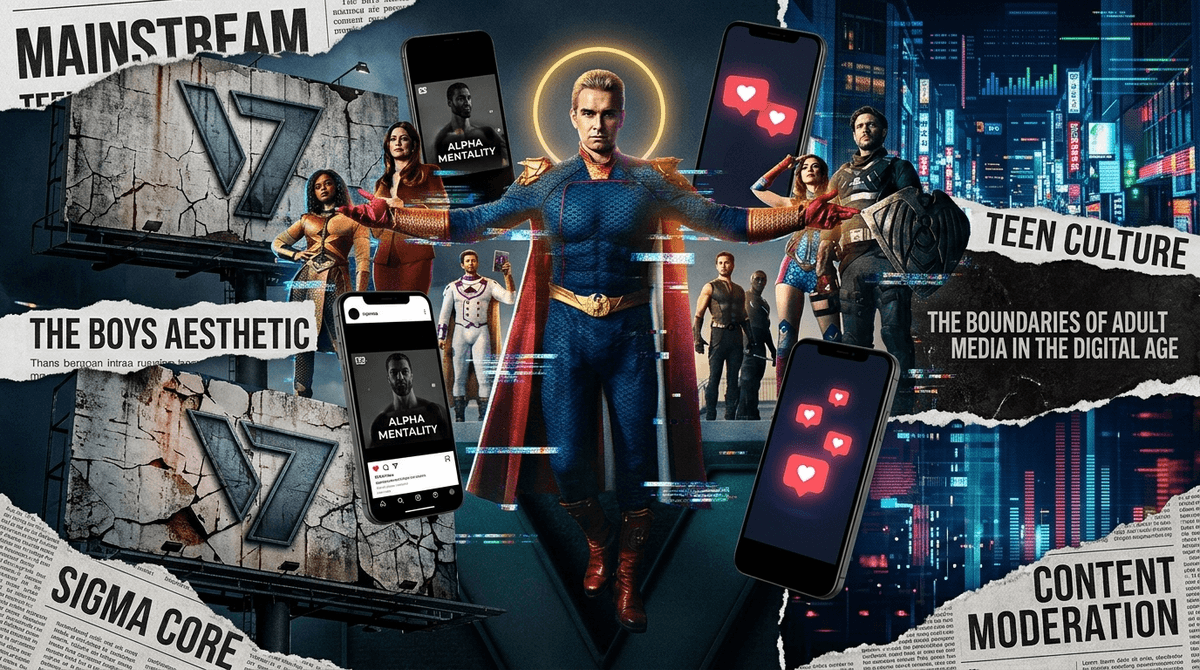
Homelander is the terrifying, sociopathic "superhero" from The Boys who has become a viral meme icon for teens, representing a dark, "Sigma" brand of humor that usually goes way over their heads—and way past their age rating.
TL;DR: Homelander is the primary antagonist of the TV-MA series The Boys, a show known for extreme gore and cynical satire. While the show is strictly for adults, Homelander’s "god complex" facial expressions have become a staple of TikTok and Instagram meme culture, often associated with "Sigma" or "literally me" edits. Screenwise recommends keeping kids under 17 away from the source material, even if they’ve already seen the memes.
If you haven’t seen The Boys on Amazon Prime, imagine Superman, but instead of being raised by the kindly Kents in Kansas, he was raised in a corporate laboratory by scientists who forgot to give him a soul. Homelander is the leader of "The Seven," a corporate-sponsored superhero team. On the outside, he’s all American flags and pearly white smiles. On the inside, he’s a fragile, murderous narcissist with a literal god complex.
The show itself is a brutal satire of celebrity culture, corporate greed, and politics. It’s not just "violent"—it’s "exploding bodies and psychological trauma" violent. As we hit the ultra-violent series finale in 2026, the character has reached a cultural fever pitch. He isn't a hero; he’s a warning. But in the weird, distorted lens of the internet, that distinction often gets blurred.
You might be wondering why your 14-year-old knows who Homelander is if they’ve never watched an episode of the show. It’s because Homelander (played brilliantly by Antony Starr) has the most "memeable" face on the planet.
You’ve probably seen the clips on your teen's phone:
- The Stare: A close-up of Homelander looking increasingly unhinged, usually paired with a caption about losing your cool.
- The "I can do whatever I want": A clip of him realizing his power has no consequences, which has become a shorthand for "main character energy."
- The Milk: Don't ask. It's a weird plot point in the show that has become a recurring joke on YouTube.
These clips are often stripped of their context. In the show, these moments are horrifying or pathetic. In a 15-second TikTok edit with a heavy bass soundtrack, they look "cool" or "edgy." This is the "Homelander Effect"—where a villainous character is reclaimed by internet culture as a symbol of power and non-conformity.
We need to talk about "Sigma" culture. If your kid is calling everything "Ohio" or talking about "Skibidi," they’re just speaking Gen Alpha/Z slang. But if they are obsessed with "Sigma" edits, they are wading into a specific subculture that prizes the "lone wolf" who doesn't care about rules or feelings.
Homelander has been drafted into this world alongside characters like Patrick Bateman from American Psycho. The problem? These characters are meant to be losers or villains. When teens see these edits, they might miss the satire entirely. They see a guy who is powerful, feared, and does whatever he wants, and they think, "Yeah, that’s the vibe."
Learn more about the "Sigma" male trend and its impact on boys
Let’s be real: No.
Screenwise gives The Boys a very hard TV-MA. It’s not just the blood—though there is a lot of it—it’s the sexual violence, the nihilism, and the sheer gross-out factor. It’s a great show for adults who want to deconstruct the superhero genre, but for a developing brain, it’s basically "brain rot" with a high production budget.
If your teen is begging to watch it because "everyone else is," you should know that even "mature" 15-year-olds might find some scenes genuinely disturbing. There is a difference between a "scary movie" and the kind of cynical, boundary-pushing content found in this series.
If your teen is drawn to the "darker" side of superheroes or complex characters who aren't just "goody-two-shoes," there are much better ways to scratch that itch without the trauma of The Boys.
Still very violent (it’s animated, but definitely for older teens), but it has a much stronger moral core. It explores the "evil Superman" trope through Omni-Man but handles the emotional fallout with way more maturity.
The gold standard for "gritty" superheroes. It deals with chaos and morality without needing to be gratuitous. The Joker is a much more interesting "villain study" than Homelander for a teen.
If they want to see the "corporate" side of superheroes, this anime does it brilliantly. It explores how heroes are ranked and marketed but keeps the focus on what it actually means to be a good person.
For the ultimate "villain to hero" (or vice versa) character study, nothing beats Zuko. It’s the perfect way to talk about power, parental pressure, and making the right choice.
If you see Homelander on your kid’s screen, don’t freak out. They probably just think the meme is funny. But it’s a great opening for a conversation about "performative" power vs. real strength.
Try asking:
- "I see that guy everywhere. Do you actually know what he does in the show?"
- "Why do you think people make 'Sigma' edits of villains? Is it because they're actually cool, or just because they're powerful?"
- "What do you think is the difference between a hero who follows the rules and a character who just 'does whatever they want'?"
Check out our guide on talking to teens about toxic masculinity in media
Q: Is Homelander a hero or a villain? Homelander is the primary villain of The Boys. While he presents himself as a hero to the public, he is a sociopathic antagonist who commits horrific acts throughout the series.
Q: Can a 13-year-old watch The Boys? Screenwise strongly recommends against this. The show is rated TV-MA for extreme graphic violence, pervasive strong language, and explicit sexual content. It is intended for audiences 17 and older.
Q: Why is Homelander in video games like Mortal Kombat and Call of Duty? Homelander was added as a "guest character" to Mortal Kombat 1 and Call of Duty as part of a marketing crossover. This is often how younger kids are introduced to the character without ever seeing the show.
Q: What is the "Homelander Stare" meme? It’s a viral trend where clips of the character looking intensely into the camera are used to represent someone who is barely containing their anger or who has "snapped" mentally.
Homelander is a fascinating character for adults, but for kids, he’s a digital pied piper of "edgy" content. The memes are mostly harmless, but they are a gateway to a show—and a subculture—that isn't ready for them yet. You don't need to ban the memes (good luck with that anyway), but you should definitely be the voice of reason that reminds them that "doing whatever you want" doesn't actually make you a hero.
Ask our chatbot for more age-appropriate superhero recommendations