

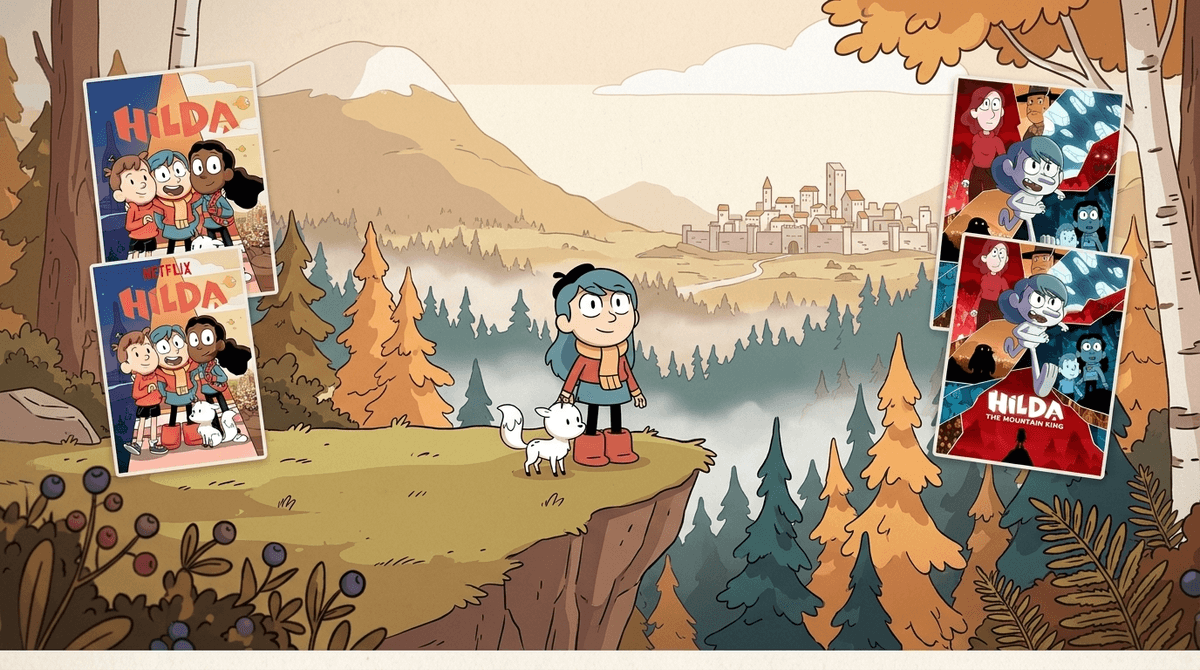
TL;DR: Hilda is the ultimate "low-arousal" alternative to the loud, frantic "brain rot" often found on streaming platforms. It’s a beautifully animated series about a brave, blue-haired girl navigating a world of Scandinavian folklore. Think Studio Ghibli meets Gravity Falls, but with more emotional depth and less snark. It’s perfect for kids aged 6-11 (and parents who are tired of being overstimulated by the TV).
- Watch it: Hilda on Netflix
- Read it: Hilda Graphic Novels by Luke Pearson
- Similar vibe: Over the Garden Wall
If you haven't stumbled upon Hilda yet, you’re in for a treat. Based on the graphic novels by Luke Pearson, the show follows Hilda, a young girl who begins the series living in a cozy cabin in the wilderness with her mom and her "deerfox" pet, Twig.
The world of Hilda is steeped in Nordic folklore—we're talking giant invisible elves, mountain trolls that turn to stone in the sunlight, and "tide mice" that grant wishes. Eventually, Hilda and her mom move to the walled city of Trolberg. While Hilda is initially devastated to leave the wild, she quickly discovers that the city has its own brand of magic (and its own set of bureaucratic, slightly ridiculous problems).
Unlike many modern cartoons that rely on rapid-fire editing and constant shouting to keep a child's attention, Hilda takes its time. The color palette is muted—lots of autumnal oranges, deep teals, and soft greys—and the soundtrack is atmospheric and synth-heavy. It feels like a warm blanket in digital form.
We talk a lot at Screenwise about "digital wellness," and often that focuses on how much time kids spend on screens. But the quality of that time matters just as much. There is a massive difference between the neurological impact of a high-speed, high-stress show like SpongeBob SquarePants and a show like Hilda.
Hilda is what some educators call "gentle media." This doesn't mean it's boring—there are chase scenes, giant monsters, and high stakes—but it doesn't try to hijack your child's dopamine system. It encourages focus, empathy, and curiosity rather than just passive consumption.
Learn more about the difference between high-arousal and low-arousal media
1. Radical Independence
Hilda is a "free-range" kid. She spends her days exploring the woods or the city streets with her sketchbook and her friends. In an era where many kids have very scheduled, supervised lives, watching Hilda navigate the world on her own terms is incredibly aspirational. She makes mistakes, gets lost, and has to use her wits to get out of trouble.
2. The "Creature of the Week"
Every episode introduces a new mythological concept. Kids who love Pokemon or Minecraft will appreciate the "lore" of the Hilda universe. Whether it’s the Woodman who walks into her house without knocking or the tiny elves that require a mountain of paperwork to be seen, the world-building is top-tier.
3. Relatable Friendships
Hilda’s friends, David and Frida, aren't just sidekicks. Frida is a high-achieving "Sparrow Scout" who struggles with perfectionism, and David is a cautious, bug-fearing boy who often finds himself in over his head. Their trio feels real—they fight, they have different comfort levels with danger, and they grow together.
The Mother-Daughter Dynamic
One of the best parts of Hilda is Johanna, Hilda’s mom. Unlike the "clueless parent" trope common in kids' TV, Johanna is a fully realized character. She’s an artist, she’s supportive, but she also gets frustrated when Hilda lies to her or puts herself in danger. Their relationship evolves as Hilda grows up, moving from total protection to a nuanced kind of trust. It’s one of the most honest portrayals of parenting you’ll find in animation.
Emotional Intelligence
The show doesn't have "villains" in the traditional sense. Most of the "monsters" are just creatures whose needs are in conflict with humans. The solution to a problem is rarely "punch the bad guy." Instead, it’s usually "listen to the creature," "understand the history," or "fix the environmental imbalance." It teaches kids that empathy is a superpower.
Recommended Ages: 6 to 11
- Ages 5-7: Younger kids might find the trolls or the "Nightmare Spirit" a bit spooky, but the show generally resolves these fears in a comforting way. It's a great "step up" from Bluey when they want something more adventurous.
- Ages 8-10: This is the sweet spot. They’ll appreciate the complex plots and the Sparrow Scout themes.
- Ages 11+: Even older kids (and teens) often stick around for the aesthetic and the deeper lore, especially in the later seasons and the feature-length movie, Hilda and the Mountain King.
Safety Considerations
There is very little to worry about here. No "potty humor," no suggestive themes, and no glorification of violence. The biggest "risk" is that your child might want to go wandering off into the woods with a sketchbook (which, honestly, we should probably encourage).
One note: Season 3 and the movie Hilda and the Mountain King get a bit more intense emotionally and physically, dealing with themes of identity and more significant peril. It’s still very safe, but worth a co-watch if your child is particularly sensitive.
If you’re watching Hilda with your kids, here are a few ways to turn it into a conversation:
- "Why do you think the Troll was acting that way?" (Helps build perspective-taking and empathy).
- "Hilda didn't tell her mom where she was going. What do you think would have been a better way to handle that?" (Great for discussing trust and boundaries).
- "If you could meet any of the creatures in Trolberg, which one would it be?" (Encourages imagination and creativity).
If your kid has finished all three seasons and the movie and is looking for more "cozy adventure" vibes, check these out:
- Graphic Novels: Hilda (the books) – The source material is stunning and a great way to encourage reading.
- Shows: The Dragon Prince for more fantasy, or Kipo and the Age of Wonderbeasts for a more vibrant, post-apocalyptic adventure.
- Games: Stardew Valley or A Short Hike capture that same "explore at your own pace" feeling.
- Movies: My Neighbor Totoro or Song of the Sea.
Hilda is a rare gem in the Netflix catalog. It’s a show that respects children’s intelligence and their ability to handle complex emotions. It’s adventurous without being aggressive, and magical without being shallow.
In a world of "Skibidi Toilet" and hyper-edited YouTube vlogs, Hilda is the deep breath your family’s digital diet probably needs.
Next Steps:
- Add Hilda to your Netflix queue.
- Grab the first Hilda graphic novel from the library for bedtime reading.
- Check your Screenwise Family Dashboard to see how Hilda compares to other shows your community is watching.