

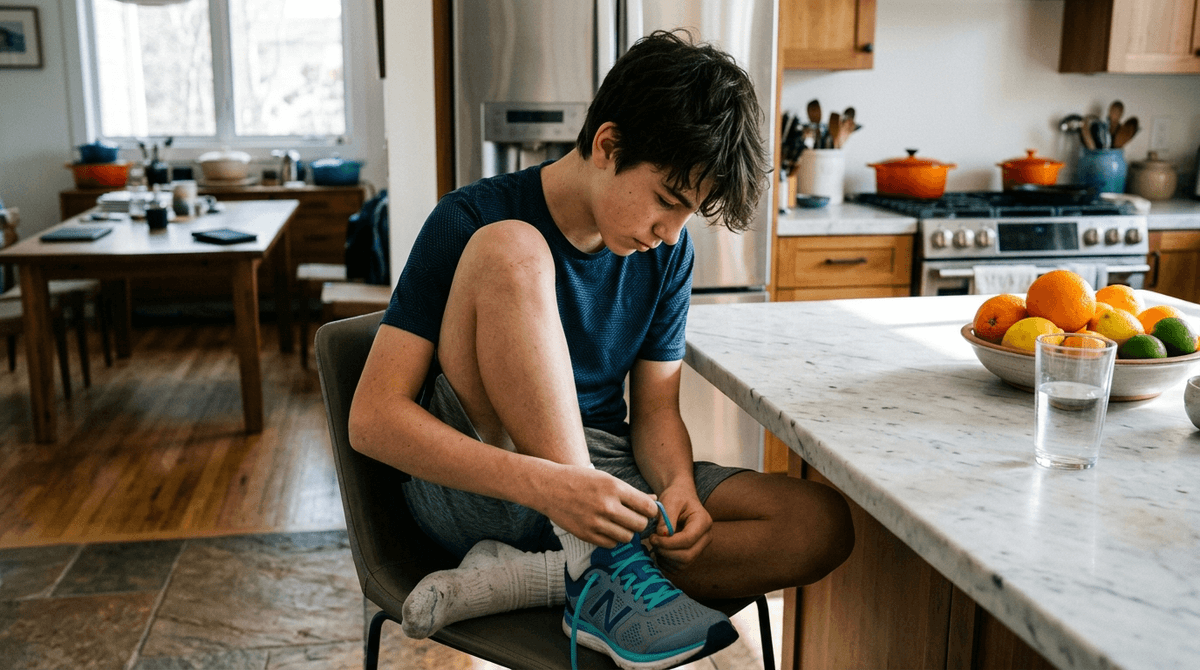

Teenagers who eat a Mediterranean-style diet and stay physically active show lower levels of anxiety, while screen time reliably drives mental distress upward. Improving what goes on their plates works best against anxiety when paired with getting them off the couch.
A healthy diet reduces anxiety symptoms in teenagers primarily when it gets paired with regular exercise, whereas screen time directly increases psychological distress across the board.
Parenting an anxious teenager often leads to isolated interventions—trying a diet change, signing up for a sport, or setting phone limits one by one. Understanding that these habits act as an interconnected ecosystem changes how you target mental distress.
For anxiety specifically, eating well works as a two-step combo: teens who eat better are more likely to move their bodies, and that physical movement is what ultimately eases their anxiety symptoms. Meanwhile, high screen time consistently pushes stress and anxiety higher regardless of other habits.
Adolescent mental health problems have surged globally, forcing researchers to look beyond formal clinical therapy toward daily lifestyle factors. While nutrition and exercise are frequently studied in isolation, researchers wanted to test how diet and physical activity interact alongside screen time to influence teenage depression, stress, and anxiety.
Eating a diet rich in fruits, vegetables, and healthy fats was linked to lower anxiety, stress, and depression across the entire group. However, the mechanism differed depending on the specific mental health condition:
- Exercise bridges diet and anxiety: A healthy diet lowered anxiety specifically because nutritious eating was linked to higher physical activity, which in turn lowered anxiety.
- Diet stands alone for depression and stress: For depression and general stress, a nutritious diet was linked to better mental health regardless of how much the teen exercised.
- Screens consistently drive distress: High screen time was a direct, positive predictor of elevated anxiety, stress, and overall psychological symptoms.
- Teen girls reported higher distress: Female adolescents in the study reported significantly higher baseline levels of anxiety, depression, and stress than boys.
A healthy diet might serve as a gateway habit for anxiety relief rather than a direct cure. Eating better gives teens the baseline energy or motivation needed to exercise, and the exercise itself delivers the neurochemical boost that takes the edge off anxiety. If your teen eats well but remains sedentary, they may miss out on the full anxiety-reducing benefits of their diet.
This study represents a single snapshot in time of 322 15-year-olds from two schools in southern Chile. Because it is observational, it cannot prove cause and effect—it is equally possible that anxious teenagers simply eat worse or spend more time scrolling on screens.
Additionally, all data came from self-reported surveys rather than fitness trackers or food logs, making it vulnerable to misremembering. The researchers also did not track critical variables like sleep duration, family income, or body mass index, which heavily influence adolescent mental health.
- If your teenager struggles primarily with daily anxiety... pair healthy meals with movement opportunities like walking the dog or joining a pickup game, because diet relies on physical activity to lower anxiety.
- If your teen is dealing with low mood or depressive symptoms... focus on upgrading food quality even if they refuse to exercise, since nutritional benefits for depression operate independently of physical activity.
- If you notice a sudden spike in your teen's stress or moodiness... audit their daily screen hours first, as screen exposure was the most consistent predictor of psychological distress across all students.
- If you are raising a teenage daughter... maintain a lower threshold for checking in on mental health, given that female teens in this study reported significantly higher distress levels across every category.
You do not need to overhaul your teenager's entire life at once, but pairing better food choices with daily physical activity provides the strongest defense against teen anxiety while cutting back screen time removes a primary source of stress.
Caamaño-Navarrete F, Hernández-Mosqueira C, Contreras-Diaz G et al. (2026). Physical Activity as a Mediator of the Relationship Between Mediterranean Diet Adherence and Anxiety Symptoms in Chilean Adolescents: A Cross-Sectional Study. Children (Basel, Switzerland). doi:10.3390/children13060825 — pubmed.ncbi.nlm.nih.gov