

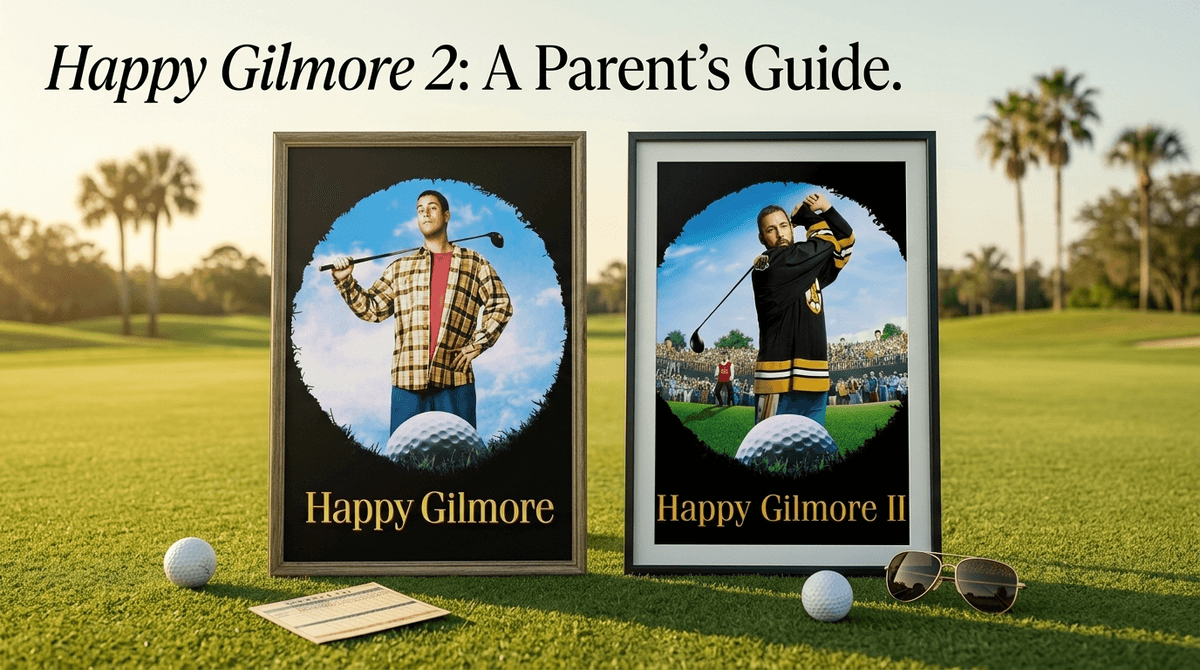
TL;DR: Happy Gilmore 2 is officially out on Netflix, and it’s basically a massive hit of nostalgia for anyone who grew up in the 90s. It’s rated PG-13 for some crude humor and language, but the surprise is a grounded subplot about sobriety. It’s safe for most teens, but you might want to pre-screen for younger kids who aren't ready for Sandler’s signature "aggressive" comedy style.
See if Happy Gilmore 2 is okay for your 10-year-old
Thirty years after the original Happy Gilmore taught us all that "it's all in the hips," Adam Sandler is back on the fairway. This 2025 sequel finds an older Happy grappling with his legacy, a new generation of golfers who are more "influencer" than "athlete," and a personal life that has seen some significant ups and downs.
The movie follows the classic Sandler formula: slapstick violence, a lineup of cameos that will have you pointing at the screen like the Leonardo DiCaprio meme, and a heart-on-its-sleeve underdog story. But since it’s 2026, the movie also acknowledges that time has passed. Happy isn't just a hothead anymore; he’s a guy trying to figure out his place in a world that feels a bit more "Ohio" (weird/cringe) than it did in 1996.
We talk a lot about "brain rot" content—those mindless YouTube loops or sensory-overload TikToks that leave kids (and us) feeling like zombies. Happy Gilmore 2 isn't exactly Citizen Kane, but it sits in that middle ground of "comfort media."
It’s an opportunity for a "bridge watch." Your kids might know Sandler from Hubie Halloween or Leo, while you know him from the VHS tapes you wore out in middle school. Watching this together is a way to share a piece of your childhood culture without it feeling like a history lesson. Plus, it's a great entry point to discuss how humor has changed—and what happens when an "angry" persona has to grow up.
The movie is packed. From Travis Kelce showing up to some deep-cut returns from the original cast (yes, Shooter McGavin is still the man you love to hate), the cameos are a major draw. For kids, seeing modern stars interact with "old school" legends is a fun crossover event. Just be prepared to explain who some of the older golfers are.
The PG-13 Humor
It’s a Sandler movie, so the "fouls" are exactly what you’d expect.
- Language: Expect a healthy dose of S-words and some creative PG-13 insults. It’s not Uncut Gems level, but it’s definitely not Bluey.
- Violence: Mostly "cartoonish" sports violence. Think golf clubs being snapped, people getting hit by balls, and the inevitable chaotic brawl. It’s played for laughs, but if you have a kid who struggles with physical boundaries, the "anger as comedy" trope is worth a chat.
The Sobriety Theme
This is where the movie actually gets some "WISE" points. Unlike the 90s version where beer was basically a secondary character, this sequel deals with themes of sobriety and making better choices as an adult. It’s handled with a mix of humor and sincerity. It’s a refreshing pivot that reflects how our cultural conversation around alcohol has shifted since the original came out.
Check out our guide on talking to teens about sobriety in media
Ages 5-9: Proceed with Caution The slapstick might be funny, but the plot will likely bore them, and the "crude" factor is high. There are better live-action options for this age group that don't involve middle-aged men screaming at each other. Recommendation: The Bad Guys or Matilda.
Ages 10-12: The "Yellow Light" Zone This is the target demographic for the "funny sports movie" vibe. If your kid is used to the humor in Diary of a Wimpy Kid, they can handle Happy. Just be ready for them to repeat some of the more colorful insults.
Ages 13+: Green Light At this point, they’ve seen worse on YouTube. The themes of legacy and personal growth might actually resonate with them as they start thinking about their own futures.
If you decide to do a family movie night, here are a few ways to turn the "brain rot" into a real conversation:
- On Anger: "Happy’s thing used to be his 'rage.' Why do you think that's harder for him to get away with now that he's older?"
- On Influence: "The new golfers in the movie are obsessed with their social media followers. Do you think that makes them better or worse at the actual game?"
- On Second Chances: "The movie talks about Happy making a comeback after some tough years. What do you think it takes to change your reputation?"
Happy Gilmore 2 is exactly what it promises to be: a loud, silly, sentimental victory lap for Adam Sandler. It’s not going to win an Oscar, but it’s a solid choice for a Friday night when you want to turn your brain off (mostly) and laugh with your kids.
It’s "safe" in the sense that it doesn't push into the truly dark or graphic territory of modern TV, but it’s "edgy" enough to keep a 14-year-old from rolling their eyes. Just keep an eye on the "Sandler effect"—you might find your kids trying to putt into a clown's mouth in the backyard tomorrow.
If your kids are suddenly interested in golf after watching, maybe skip the addictive mobile games like Golf Clash (which is a masterclass in predatory microtransactions) and try something more skill-based and contained.
- Check out: Mario Golf: Super Rush for a fun, social gaming experience.
- Read more: Our guide to the best sports movies for families
- Get the data: See what percentage of middle schoolers are watching PG-13 comedies this year
For more detailed breakdowns and to see how your family's media habits compare to your community, head over to Screenwise and take our latest survey!