

Look, I get it. You want your kid to experience the thrill of adventure games—the problem-solving, the quick reflexes, the teamwork—but without the constant spray of bullets. Maybe you're uncomfortable with gun violence in media. Maybe your kid has anxiety and you've noticed shooters amp it up. Or maybe you just want something different than the millionth battle royale.
Gun-free action games deliver all the excitement—dodging, jumping, strategy, boss battles—without firearms as the primary mechanic. We're talking swords, magic, platforming skills, puzzle-solving, and yes, sometimes cartoonish combat, but the focus is on movement, timing, and creative problem-solving rather than aiming and shooting.
And before anyone jumps in with "but what about violence in general?"—we're not here to debate whether all conflict should be removed from games. That's your call. We're specifically talking about games that don't center around guns, because that's a meaningful distinction for many families.
Here's the thing: most popular action games for kids involve guns. Fortnite, Valorant, Call of Duty—they're everywhere, and they're what kids are talking about at school. By middle school, you're looking at 60-70% of boys playing shooter games regularly.
But not every kid gravitates toward that, and not every parent is comfortable with it. The research on violent video games is genuinely mixed (despite what your aunt forwards you on Facebook), but what we DO know is that kids are influenced by what they practice. Games teach mechanics, strategies, and yes, they normalize whatever's in them.
If you're intentionally choosing to limit gun-focused content—whether for developmental reasons, family values, or just preference—you deserve options that are actually good. Not preachy "educational games" that feel like punishment, but genuinely fun games your kid will actually want to play.
Splatoon 3 (Ages 8+)
Okay, technically there are "weapons" here, but they shoot ink. The whole game is about covering territory in paint and turning into squids. It's Nintendo's brilliant answer to shooters—all the competitive team-based action, none of the bullets. The vibe is chaotic, colorful, and genuinely fun. Plus, the fashion customization is weirdly addictive.
Why it works: Teaches teamwork and strategy without any realistic violence. The worst thing that happens is you get splatted and respawn immediately.
Minecraft (Ages 7+)
Yes, there's a bow and arrow. Yes, you can fight mobs. But Minecraft's action is about survival and creativity, not combat. Most kids spend their time building, exploring, and solving problems. The combat is simple and not the point. (Though if your kid gets into PvP servers, that's a different conversation .)
.)
Why it works: Endless creativity, problem-solving, and collaboration. The "action" is more about surviving the night and exploring caves than fighting.
Super Mario Odyssey (Ages 6+)
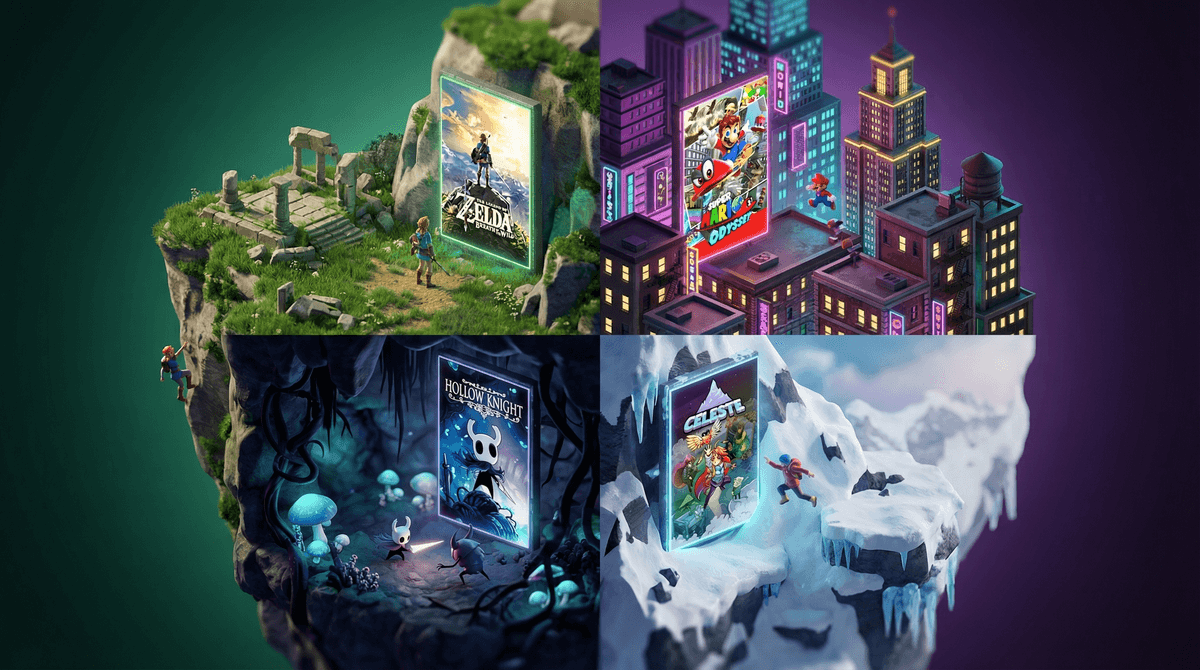
Pure platforming perfection. Mario jumps, throws his hat, possesses objects (stay with me), and solves environmental puzzles. Zero guns, maximum joy. This is the gold standard for action-adventure games that are just fun without any moral hand-wringing.
Why it works: Teaches timing, spatial reasoning, and persistence. Frustration levels are manageable, and the game is designed for all skill levels.
The Legend of Zelda: Breath of the Wild or Tears of the Kingdom (Ages 10+)
Swords, bows, and a lot of creative problem-solving. Link's arsenal is medieval-fantasy, and the games reward experimentation and exploration over combat. Yes, there's fighting, but it's not realistic, and you can often avoid enemies entirely with clever thinking.
Why it works: Massive open world that rewards curiosity. Kids learn to plan, strategize, and think creatively. The bow is there, but it's not a gun, and combat is just one tool among many.
Rocket League (Ages 8+)
Soccer. With cars. That's it. That's the game. Somehow it's incredibly intense, requires teamwork, and has a massive competitive scene. Zero violence, maximum adrenaline.
Why it works: Teaches teamwork, timing, and spatial awareness. Great for kids who want competitive multiplayer without combat.
Celeste (Ages 10+)
A challenging platformer about climbing a mountain—and dealing with anxiety. The difficulty is real, but the game is designed to teach persistence. No combat at all, just pure movement and problem-solving. Bonus: it has genuinely good messages about mental health.
Why it works: Builds resilience and growth mindset. The challenge comes from mastering movement, not defeating enemies.
Hades (Ages 13+)
Okay, hear me out. This is a combat-heavy game, but it's all swords, spears, and Greek mythology. The story is chef's kiss, the gameplay is addictive, and it's a masterclass in game design. If your teen wants something more mature but you want to avoid realistic guns, this is it.
Why it works: Mythology-based combat, incredible storytelling, and it actually explores themes of family and perseverance. The violence is stylized and fantastical.
Fall Guys (Ages 7+)
Chaotic obstacle course races with jellybean-shaped characters. It's like Wipeout the game show, but digital. Kids love it, it's genuinely funny, and the only "violence" is getting knocked off a platform by another player.
Why it works: Low-stakes competition, lots of laughs, and teaches good sportsmanship (losing is part of the fun).
Roblox is its own universe. There are definitely shooter games on Roblox (like Phantom Forces), but there are also thousands of gun-free experiences—obstacle courses (obbys), tycoon games, roleplay worlds, and creative building games. If your kid is on Roblox, you can absolutely steer them toward non-gun experiences. Here's how to navigate Roblox's overwhelming options.
Ages 6-8: Stick with Nintendo. Super Mario Odyssey, Kirby and the Forgotten Land, and Splatoon 3 are perfect. The action is there, but it's colorful, non-threatening, and designed for younger reflexes.
Ages 9-12: This is the sweet spot for Minecraft, Rocket League, and Zelda: Breath of the Wild. They can handle more complex mechanics and longer play sessions. Fall Guys is great for this age too—competitive but not stressful.
Ages 13+: If they want something more intense, Hades and Celeste are excellent. You can also look at games like Hollow Knight (challenging but rewarding) or Ori and the Will of the Wisps (beautiful and emotional).
This doesn't make you overprotective. Choosing gun-free games is a valid parenting decision. You're not sheltering your kid from reality; you're curating their media diet during their formative years. There's plenty of time for them to encounter realistic violence later if they choose.
Your kid might still want to play shooters. And that's okay too. This isn't about banning anything—it's about providing alternatives. If your 10-year-old is begging for Fortnite because "everyone plays it," you can say, "Not yet, but let's find something you'll love just as much." Sometimes that works. Sometimes it doesn't. Here's how to handle the "everyone else is playing it" conversation.
These games teach real skills. Problem-solving, spatial reasoning, teamwork, persistence—these aren't just "video game skills." They translate to real-world resilience and creativity.
You can play together. One of the best parts of these games? They're actually fun for adults too. Rocket League is hilarious in split-screen. Super Mario Odyssey has co-op mode. Gaming together builds connection and gives you insight into what your kid is experiencing.
Gun-free action games aren't a compromise—they're a genre unto themselves. Your kid can have thrilling, challenging, competitive gaming experiences without firearms being the central mechanic. The games listed here are legitimately excellent, not just "acceptable alternatives."
The key is finding what clicks for your specific kid. Some kids will love the creative freedom of Minecraft. Others will thrive on the competitive intensity of Rocket League or Splatoon 3. Some will want the epic adventure of Zelda.
And if they push back? That's part of parenting in the digital age. You're allowed to have boundaries. You're allowed to say "not yet" or "not in our house." But offering genuinely great alternatives makes that conversation a lot easier.
- Try before you buy: Many of these games have free demos or trial periods. Let your kid test them out.
- Check your library: Some public libraries now lend video games (seriously).
- Watch gameplay together: YouTube has tons of gameplay videos. Watch a few minutes together to see if it's a fit.
- Set expectations: Even gun-free games need time limits and boundaries. Here's how to set up healthy gaming habits.
You've got this. And your kid is going to have a blast—no ammunition required.