

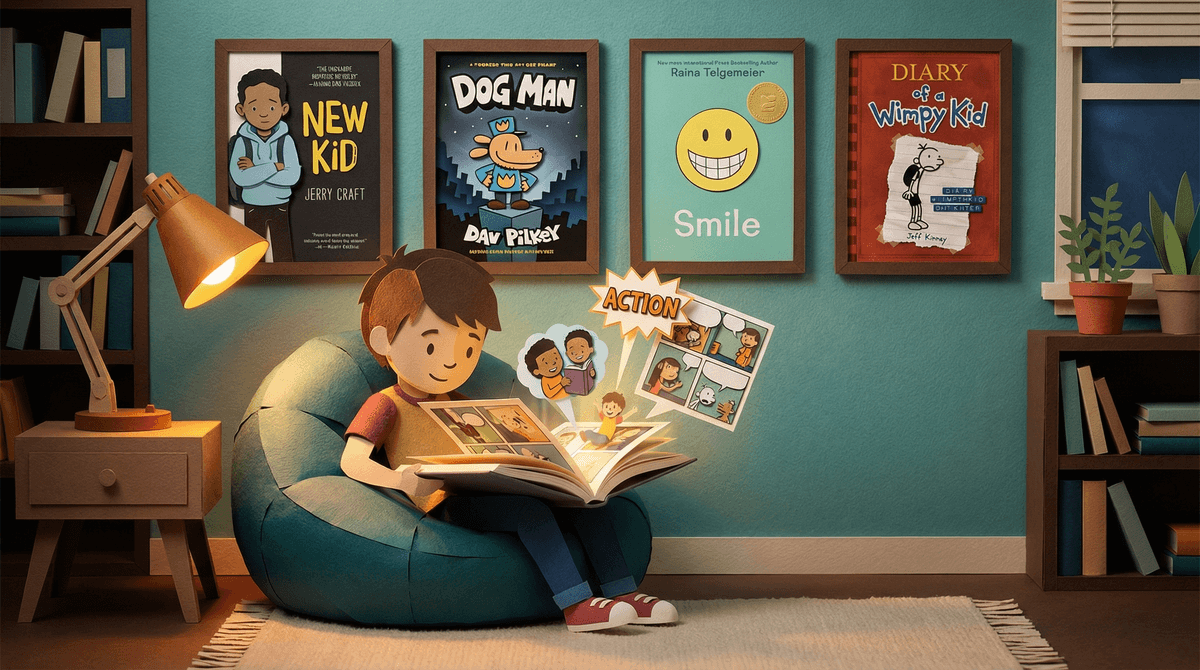
Let's clear something up first: graphic novels and comics aren't "cheating" at reading. They're legitimate literature that combines visual art with text to tell stories. Think of them as a hybrid between traditional books and visual media—words and pictures working together to create meaning.
The difference between comics and graphic novels is mostly about format. Comics are usually serialized (think monthly issues), while graphic novels are complete stories in one book. But honestly? Most kids (and parents) use the terms interchangeably, and that's totally fine.
We're talking about everything from Dog Man and Diary of a Wimpy Kid to more sophisticated works like Smile by Raina Telgemeier and New Kid by Jerry Craft. The range is enormous, which is exactly why they work for so many different readers.
If you've got a kid who suddenly becomes "too tired" every time reading homework appears, graphic novels might be your secret weapon. Here's why they work:
The visual scaffolding helps. When kids can see facial expressions, body language, and setting details in the illustrations, they're getting context clues that make comprehension easier. They're not just decoding words—they're reading images too, which actually engages different parts of the brain simultaneously.
The pacing feels faster. Even though graphic novels require just as much cognitive work as traditional books, the combination of pictures and text creates natural break points. Pages turn quickly. Kids feel like they're making progress, which builds momentum and confidence.
They meet kids where they are. A reluctant reader who loves Minecraft might devour Minecraft graphic novels. A kid obsessed with Avatar: The Last Airbender can explore the expanded universe through comics. Graphic novels bridge the gap between screens and pages.
The stories are genuinely good. This isn't dumbed-down content. Many graphic novels tackle complex themes—friendship struggles, family dynamics, identity, historical events—with nuance and emotional depth. March by John Lewis is a powerful memoir about the Civil Rights Movement. Guts by Raina Telgemeier deals with anxiety in a way that resonates deeply with middle schoolers.
Ages 6-9: This is prime Dog Man and Captain Underpants territory. Yes, the humor is potty-adjacent. Yes, your kid will laugh at butts. But they'll also be reading—voluntarily. Narwhal and Jelly is gentler and sweet. Hilda has gorgeous art and adventure.
Ages 8-12: The sweet spot for graphic novel enthusiasm. Amulet is epic fantasy. Roller Girl and Smile nail the middle school experience. The Baby-Sitters Club graphic novels are modernized versions of the classics. Wings of Fire graphic novels work great if your kid loved the original series.
Ages 12+: Nimona is brilliant and subversive. They Called Us Enemy by George Takei is essential history. Heartstopper (yes, the Netflix show started as a webcomic) beautifully depicts LGBTQ+ teen relationships. The Percy Jackson graphic novels can re-engage kids who loved the series years ago.
Graphic novels "count" as reading. If a teacher or well-meaning relative suggests otherwise, know that literacy research strongly supports graphic novels as legitimate reading material. They build vocabulary, comprehension, visual literacy, and—most importantly—reading identity. A kid who sees themselves as "someone who reads" is more likely to pick up books throughout their life.
They're a bridge, not a destination. Some kids will read graphic novels exclusively for years, and that's okay. Others will use them as a stepping stone back to traditional chapter books. Both paths are valid. The goal is to keep kids engaged with stories and ideas, not to force a particular format.
Cost and access matter. Graphic novels can be pricey ($10-15 per book), and reluctant readers often blow through them quickly. Your local library is your best friend here—most have robust graphic novel sections now. Many libraries also offer digital comics through apps like Hoopla or Libby.
Content varies widely. Just because something has pictures doesn't mean it's for kids. Check age recommendations, read reviews, or flip through before handing it over. Common Sense Media has detailed reviews of most popular graphic novels.
If you're worried that graphic novels are a "lesser" form of reading, I get it. Many of us grew up with the idea that "real" reading meant dense chapter books with tiny print. But here's the thing: a reluctant reader who devours graphic novels is building literacy skills, expanding vocabulary, and developing a love of stories. A reluctant reader who avoids books entirely is doing none of those things.
The best book for your kid is the one they'll actually read. If that book happens to have pictures, that's not a compromise—it's a win.
Start with their interests. What do they already love? Roblox? Sports? Animals? Funny stuff? There's almost certainly a graphic novel series that connects.
Visit the library together. Let them browse the graphic novel section without pressure. The covers alone will help them find what appeals to them.
Read together if they're open to it. Graphic novels work great as read-alouds, even with older kids. You can trade off reading dialogue or just enjoy the story together.
Don't make it homework. The minute you require a book report on their fun reading, you've killed the joy. Let graphic novels be pure pleasure reading.
And if you want to dig deeper into what your kid is reading or get more personalized recommendations, explore Screenwise's resources tailored to your family's needs.