

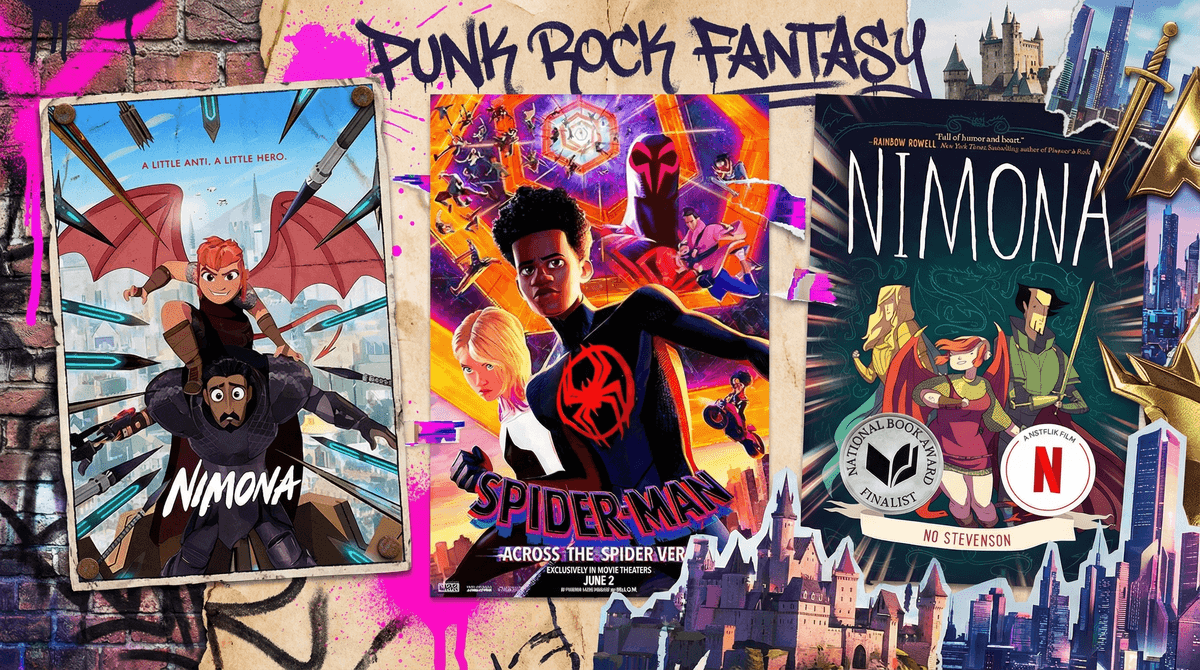
Nimona is a 2023 animated film from Netflix based on the beloved graphic novel by ND Stevenson. It tells the story of Ballister Boldheart, a knight framed for murder, who teams up with Nimona—a shapeshifting teenager with punk rock energy and a mysterious past. Together, they work to clear Ballister's name while challenging the kingdom's rigid power structures.
The film is visually stunning, emotionally complex, and refreshingly queer. It's also not your typical princess-saves-the-day story. This is about outcasts, systemic injustice, and what happens when society decides someone is a monster before getting to know them.
Screenwise Parents
See allThe shapeshifting is genuinely cool. Nimona transforms into everything from a shark to a dragon to a pink cat, and kids are absolutely here for it. The animation style is dynamic and kinetic—think Spider-Verse energy meets medieval fantasy.
Nimona herself is hilarious and chaotic. She's impulsive, irreverent, and doesn't care about rules. For kids who feel constrained by expectations (which is... most kids), she's incredibly appealing. She says what she thinks, does what she wants, and challenges authority at every turn.
The found family vibes hit hard. Ballister and Nimona's relationship evolves from reluctant partnership to genuine care, and kids respond to that emotional arc. There's also Ballister's relationship with Ambrosius, his former boyfriend and fellow knight, which adds layers of betrayal, loyalty, and hope for reconciliation.
Ages 8-10: This might work for mature 10-year-olds, but proceed with caution for younger kids. The themes are heavy—suicide ideation, systemic prejudice, violence (though not graphic). The emotional beats can be intense, and some kids in this age range might not be ready to process Nimona's darker moments.
Ages 11-13: This is the sweet spot. Middle schoolers are navigating identity questions, social hierarchies, and figuring out who they can trust. Nimona's story will resonate deeply, and they're developmentally ready for the film's nuanced themes about being different and misunderstood.
Ages 14+: Teens will appreciate the queerness, the critique of institutional power, and the film's refusal to provide easy answers. It's also worth noting that the original Nimona graphic novel is slightly darker and more mature than the film adaptation.
Content notes: There's fantasy violence (sword fights, explosions), intense emotional scenes (including a suicide metaphor that's heartbreaking), and LGBTQ+ representation (Ballister and Ambrosius are in a romantic relationship, and Nimona's shapeshifting can be read as a trans/non-binary allegory).
The LGBTQ+ Representation Is Central
This isn't subtext—it's text. Ballister and Ambrosius are explicitly romantic partners, and the film doesn't shy away from that. If you're raising kids in a household that celebrates LGBTQ+ identities, this is fantastic representation. If you're navigating more conservative family or community values, you'll want to preview this one and decide if it aligns with your family's approach.
Nimona's shapeshifting is widely interpreted as a metaphor for trans and non-binary identity. She refuses to be defined, changes forms constantly, and pushes back against anyone trying to control or categorize her. ND Stevenson, the creator, is trans and has spoken about how these themes are personal. Learn more about how to talk to kids about gender identity in media .
.
The Themes Are Heavy
This isn't a lighthearted romp. Nimona deals with rejection, self-hatred, and what it means to be labeled a monster by society. There's a climactic scene where Nimona, overwhelmed by centuries of being hunted and hated, considers ending her own life. It's handled with care, but it's devastating.
If your kid has experienced bullying, exclusion, or struggles with self-worth, this film might hit close to home. That could be therapeutic or triggering depending on where they are emotionally. Consider watching together so you can pause and talk through the harder moments.
It's About Challenging Authority
Nimona questions everything—the kingdom's propaganda, the institution of knighthood, the idea that some people are inherently good and others are inherently bad. For kids who are already skeptical of rules and authority (looking at you, tweens), this will feel validating. For parents trying to maintain structure, it might spark some interesting dinner table debates.
Ask open-ended questions: "What did you think about Nimona's relationship with Ballister?" "Why do you think people were so afraid of her?" "Have you ever felt like people judged you before getting to know you?"
Discuss the villain: The Director is a fascinating antagonist because she genuinely believes she's protecting people. Talk about how fear can make people do terrible things, even when they think they're doing the right thing.
Connect it to real life: This is a great springboard for conversations about prejudice, scapegoating, and how marginalized groups are often blamed for society's problems. Depending on your kid's age, you can go shallow or deep here.
Validate their feelings: If they loved Nimona's chaos and rebellion, that's okay. If they were scared during the darker scenes, that's okay too. This film brings up big emotions, and there's no wrong way to feel.
Nimona is one of the most emotionally intelligent animated films in recent years. It's funny, heartbreaking, and unapologetically queer. It asks hard questions about identity, belonging, and who gets to decide who's a monster.
This isn't background noise. It's a film that demands attention and will likely spark conversations. If your family values representation, critical thinking, and stories about outcasts finding each other, this is absolutely worth watching together.
If you're unsure about the heavier themes or the LGBTQ+ content, preview it first. But for many families, especially those with kids who feel different or misunderstood, Nimona might be exactly what they need to see.
- Watch it together and create space for questions afterward
- Check out the Nimona graphic novel if your teen wants more of the story
- Explore other animated films with complex themes like The Mitchells vs. The Machines or Turning Red
- Ask Screenwise about other LGBTQ+ positive media for kids