

Look, we need to talk about the "damsel in distress" thing. For decades, video games cast girls and women as prizes to be won, objectives to be saved, or—if we were lucky—side characters in someone else's story. Princess Peach spent more time kidnapped than doing literally anything else.
But here's the good news: the landscape has completely shifted. Today's games feature female protagonists who are complex, capable, flawed, and genuinely interesting. They're scientists, warriors, leaders, survivors, and adventurers. They drive their own narratives. And kids—all kids, regardless of gender—are growing up with these characters as their heroes.
Games with strong female characters aren't a niche category anymore. They're some of the best-selling, most critically acclaimed games across every platform and genre. From action-adventure epics to puzzle games to sprawling RPGs, female protagonists are everywhere once you know where to look.
Representation isn't just a buzzword—it genuinely shapes how kids see themselves and others. When your daughter plays as Aloy hunting robot dinosaurs or your son sees Samus Aran saving the galaxy, it normalizes the idea that strength, intelligence, and heroism aren't gendered traits.
Research consistently shows that diverse media representation helps kids develop:
- Broader career aspirations (yes, even from video games)
- More complex understanding of gender roles
- Greater empathy for people different from themselves
- Healthier self-image when they see characters who look like them doing cool things
And let's be real: these games are just good. The writing is better, the characters are more interesting, and the stories stick with you. It's not about checking a box—it's about better storytelling.
Here's the thing: I'm not going to recommend games just because they have a female character. These are legitimately excellent games that happen to feature capable, well-written female protagonists.
For Younger Kids (Ages 8-12)
Splatoon 3 — You play as an Inkling (kid squid, long story) in this colorful, chaotic paint-based shooter. Gender is completely fluid and customizable, and the game's most prominent characters—like Marie, Callie, and Marina—are all strong personalities driving the story. It's also one of the few shooters that feels genuinely kid-appropriate.
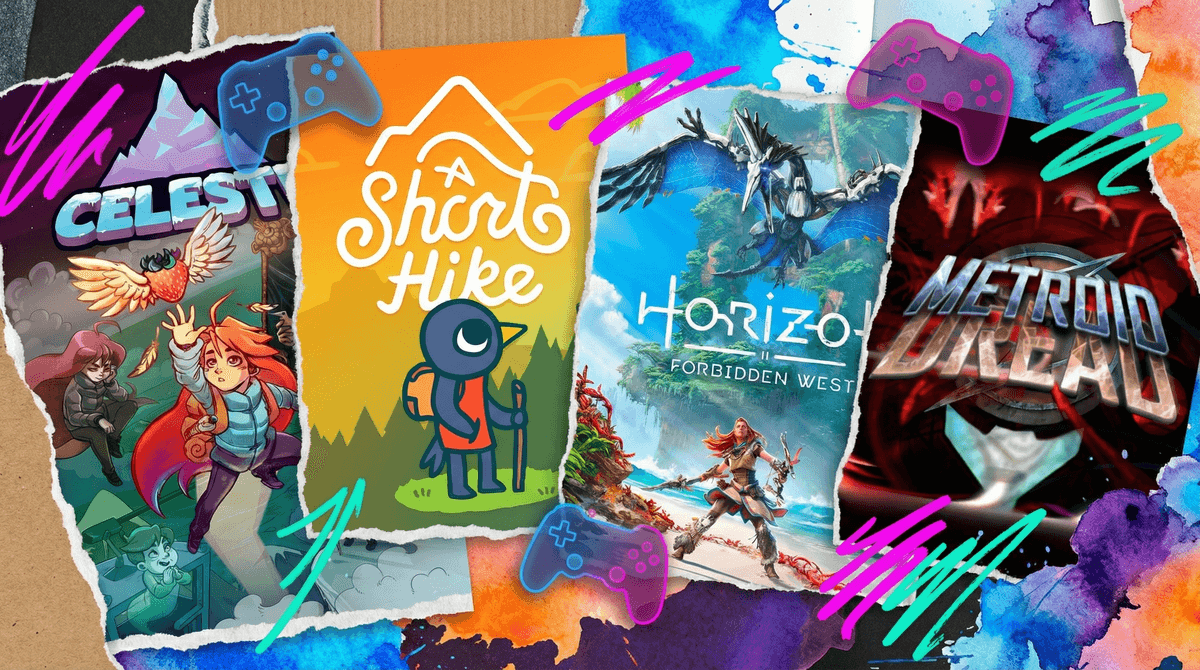
Celeste — This challenging platformer stars Madeline, a young woman climbing a mountain while battling anxiety and self-doubt. It's surprisingly deep for a pixel-art game, and the difficulty settings make it accessible for different skill levels. Ages 10+ can handle the themes.
A Short Hike — You're Claire, a bird on a camping trip who decides to hike to the top of a mountain. It's cozy, gentle, and perfect for younger gamers. The whole game takes about 2-3 hours, making it a great "first indie game" experience.
For Tweens and Teens (Ages 12+)
Horizon Zero Dawn and Horizon Forbidden West — Aloy is arguably the best female protagonist in modern gaming. She's a skilled hunter in a post-apocalyptic world overrun by robot dinosaurs, and she's curious, determined, and incredibly capable. The story explores themes of identity, environmentalism, and what it means to be human. Some violence, but not gratuitous. Ages 13+.
Metroid Dread — Samus Aran has been gaming's OG female badass since 1986, and this latest entry is fantastic. She's a bounty hunter in a powered suit taking on an entire planet of aliens. The game is challenging and atmospheric. Ages 12+.
The Last of Us Part II — This one's for older teens (17+) only. It's violent, emotionally intense, and deals with heavy themes of revenge and trauma. But Ellie is one of the most complex characters in gaming, and the storytelling is genuinely masterful. This is "prestige TV" level narrative.
Life is Strange series — These narrative adventure games star different female protagonists dealing with supernatural powers and very real teenage problems. They tackle serious issues (bullying, identity, family trauma) with genuine care. Ages 14+ depending on the entry.
For the Whole Family
It Takes Two — A co-op game where you play as Cody and May, parents going through a divorce who get turned into dolls. You work together to navigate their relationship. It's creative, funny, and one of the best co-op experiences out there. Ages 10+.
Unpacking — You unpack boxes across different stages of a woman's life. No dialogue, no text—just objects and rooms that tell a story. It's meditative and surprisingly emotional. All ages, honestly.
Let's be clear: "strong" doesn't just mean "can punch things." The best female characters in games are:
- Complex — They have flaws, make mistakes, grow over time
- Agentic — They drive the story rather than reacting to it
- Well-written — They feel like actual people, not stereotypes
- Diverse — Different body types, personalities, backgrounds, and strengths
Aloy's strength is her curiosity and determination. Samus's strength is her resilience and combat skill. Madeline's strength is her vulnerability and persistence. They're all different, and that's the point.
Also worth noting: some games let you create your own character and choose gender, like Elden Ring, Baldur's Gate 3, or Pokémon games. That's its own kind of representation—the ability to see yourself in the game world.
Yeah, we need to address this. Some boys (and let's be honest, some dads) resist games with female protagonists because they've internalized the idea that "girl stuff" is lesser. This is exactly the kind of thinking these games can help challenge.
Here's what actually works:
- Lead with the gameplay: "This game has robot dinosaurs and explosive arrows"
- Play it yourself first: "I tried this and it's actually really fun"
- Don't make it a big deal: Just put the game in rotation like any other
- Point out when they already love female characters: "You love Ahsoka in Star Wars, right?"
Most kids, when they actually play these games, don't care about the protagonist's gender. They care about whether the game is fun. And these games are really fun.
Games with strong female characters aren't some separate category you need to seek out as homework. They're just... good games. Some of the best games of the past decade happen to star women, and that's exactly how it should be.
Your kids deserve to see heroes who look like them and heroes who don't. They deserve complex characters, interesting stories, and games that treat players with intelligence. These games deliver all of that.
Start with one game that matches your kid's age and interests. Play it together if you can—co-op experiences or watching them play creates natural conversation opportunities about characters, choices, and storytelling.
Ask questions like "What do you like about this character?" or "How would you have handled that situation?" rather than making it a lesson about representation.
Check out our guide to age-appropriate adventure games for more recommendations, or explore games that teach empathy if you want to dig deeper into how games shape perspective.
And if you want to understand what your kid is already playing and whether it aligns with your family's values, take our quick survey to get personalized recommendations and insights.
The princess is in another castle? Cool. She's probably off having her own adventure anyway.