

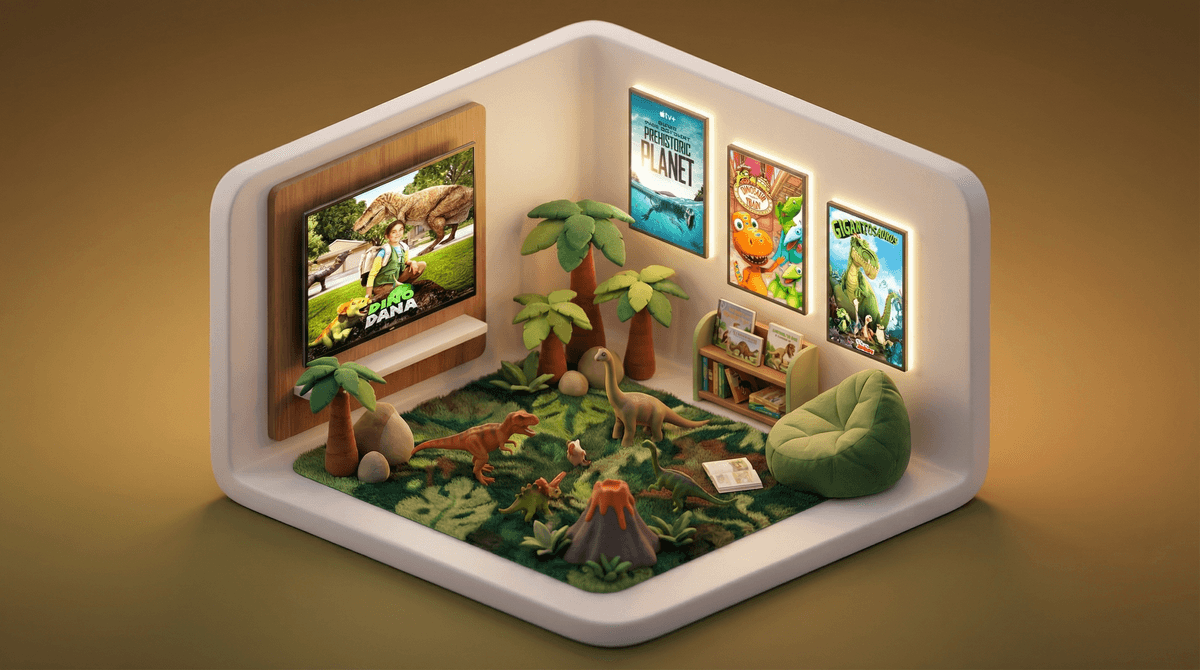
Look, dinosaurs are basically a guaranteed win with kids. Something about giant lizards that ruled the earth millions of years ago just hits different when you're seven. The good news? There's actually a ton of quality dinosaur content out there that ranges from "wow, this is genuinely educational" to "okay, this is just silly fun with a T-Rex who rides a train."
Dinosaur shows for kids fall into a few main categories: educational documentaries that treat prehistoric life seriously (think David Attenborough but kid-friendly), animated adventures where dinosaurs are characters with personalities and problems, and hybrid shows that mix real paleontology with storytelling. The quality varies wildly, from scientifically accurate programming that'll make your kid the smartest one in their class to shows that are basically just loud noises and bright colors with a stegosaurus slapped on.
The dinosaur obsession is real and it's backed by research. Kids are drawn to dinosaurs because they're safe scary — they're massive and powerful and could definitely eat you, but they're also extinct, so there's no actual threat. It's like the training wheels version of engaging with danger.
Plus, dinosaurs let kids feel smart. Learning the difference between a brachiosaurus and a brontosaurus, or being able to pronounce "pachycephalosaurus" — that's power. Kids love having specialized knowledge that adults don't have, and dinosaur facts are perfect for this. Your six-year-old correcting you about feathered raptors is annoying, yes, but it's also them building confidence in their own expertise.
Ages 2-5: Gentle Introductions
Dinosaur Train on PBS Kids is the gold standard here. It's got the PBS educational approach (actual paleontology concepts, scientific thinking) wrapped in a sweet story about a T-Rex adopted by pteranodons. The animation is dated but the content is solid, and the "Dinosaur Big City" segments with real paleontologist Dr. Scott are genuinely informative.
Gigantosaurus on Disney+ is more adventure-focused but still age-appropriate. Four young dinosaur friends explore and learn. It's not as educational as Dinosaur Train but it's engaging and the dinosaurs are accurately proportioned, which matters more than you'd think.
Ages 5-8: Ramping Up
Dino Dana and its predecessor Dino Dan use AR-style effects to show a kid imagining dinosaurs in the real world. It's clever, it's educational, and it actually teaches the scientific method. Dana (the main character) makes hypotheses, tests them, and draws conclusions. This is the show that makes kids want to BE paleontologists.
Camp Cretaceous (Netflix) is set in the Jurassic World universe and is definitely more intense. There's real peril, scary moments, and ongoing plot threads. If your kid can handle moderate suspense and isn't going to have nightmares about dinosaurs chasing them, this is actually really well done. But know your kid — this isn't PBS Kids territory.
Ages 8-12: Documentary Territory
Prehistoric Planet on Apple TV+ is stunning. David Attenborough narrating, cutting-edge CGI that shows dinosaurs with the latest scientific understanding (feathers! complex behaviors!), and production values that rival any nature documentary. This is the show that makes adults stop scrolling their phones. Fair warning: there's predator-prey stuff that's nature-documentary-real, so younger sensitive kids might struggle.
Dinosaurs: The Final Day with David Attenborough is a BBC/PBS doc about the asteroid impact. It's fascinating and scientifically rigorous, but it's also about mass extinction, so... maybe not right before bed.
The Science Keeps Changing
If you grew up with Jurassic Park, you learned dinosaurs wrong. The science has evolved massively. Many dinosaurs had feathers. T-Rex probably couldn't run that fast. Velociraptors were turkey-sized. Good dinosaur content updates with the science; dated content doesn't.
This is actually a great teaching opportunity — shows like Prehistoric Planet demonstrate how science works, how we learn new things from fossils, and how it's okay to update your understanding when you get new information.
Screen Time Quality Matters
Not all dinosaur content is created equal. Dinosaur Train will teach your kid actual paleontology concepts. Some random YouTube dinosaur video with a million views might just be 20 minutes of roaring and stomping. Check out our guide on YouTube vs. YouTube Kids if you're trying to navigate the dinosaur content minefield on that platform.
The Violence Question
Dinosaurs ate each other. That's just facts. Different shows handle this differently. PBS shows keep it very gentle ("some dinosaurs ate plants, some ate meat"). Nature documentaries show hunting behavior but usually cut away before it gets graphic. Camp Cretaceous has dinosaurs actively chasing and threatening kids, which is a whole different vibe.
You know your kid's sensitivity level. Some five-year-olds can handle "the circle of life" predator-prey stuff no problem. Others will cry if a cartoon dinosaur looks sad. Neither is wrong; just match content to kid.
Dinosaur content can be genuinely educational — we're talking real science, critical thinking, and the kind of deep knowledge that builds confidence. But it can also be empty calories, just loud noises and bright colors with a T-Rex thrown in.
The best approach: Start with PBS (Dinosaur Train for younger kids, Dino Dana for elementary age), graduate to nature documentaries when they're ready (Prehistoric Planet is chef's kiss), and be selective about YouTube because dinosaur content there is a total crapshoot.
And hey, if your kid becomes the insufferable dinosaur expert who corrects everyone? That's not a bug, that's a feature. Let them be the expert on something. It's good for them, even if it's occasionally annoying for you.
- Co-watch the first episode of any new dinosaur show to gauge intensity and accuracy
- Use the "tell me three things you learned" rule after educational content to reinforce learning
- Visit a natural history museum to connect screen content to real fossils (this makes the learning stick)
- Explore other educational shows that build on your kid's interests
Want to dig deeper into any specific show or need alternatives? Find age-appropriate dinosaur content for personalized recommendations based on your family's needs.