

You know that moment when your 8-year-old cracks up at the part in A Series of Unfortunate Events where Count Olaf threatens the orphans, and you're sitting there thinking "should I be concerned?" Welcome to the wonderfully weird world of dark humor in children's books.
Dark humor in kids' lit isn't new—it's been around since the Grimm Brothers were traumatizing European children with tales of cannibalistic witches and evil stepmothers. But modern children's authors like Roald Dahl, Lemony Snicket (Daniel Handler), and Neil Gaiman have turned morbid, slightly twisted humor into an art form. We're talking about books where terrible things happen to characters, where adults are incompetent or cruel, where death and danger lurk around every corner—and somehow, it's all presented in a way that makes kids laugh instead of hide under their beds.
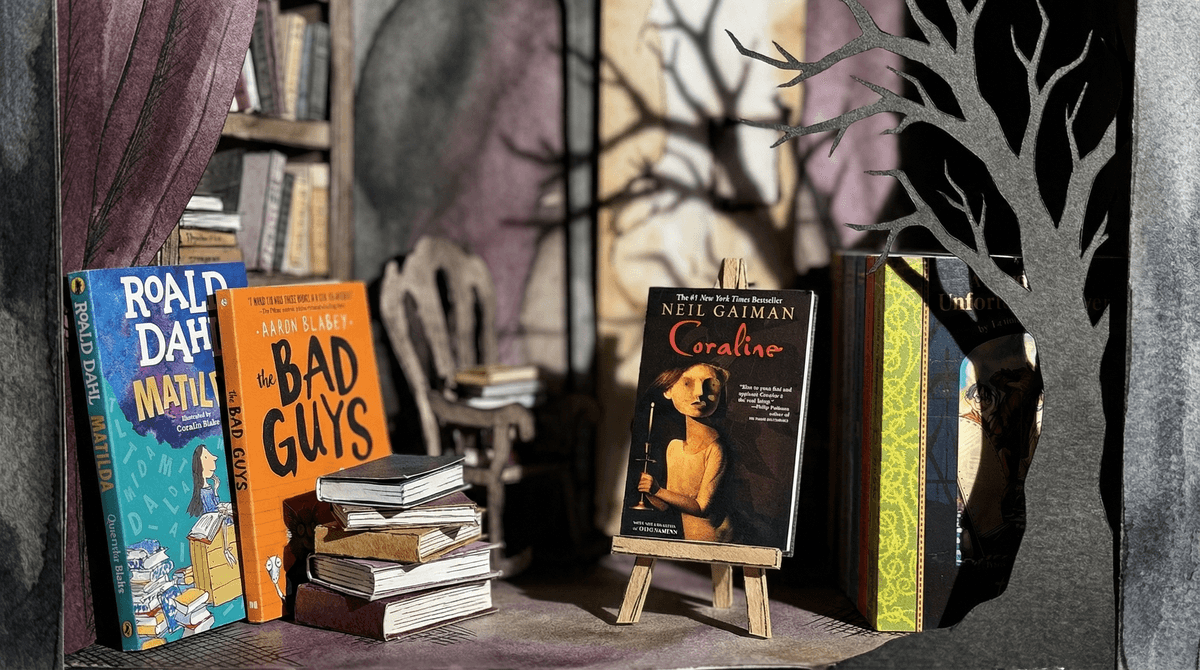
Think Roald Dahl's Matilda, where Miss Trunchbull literally throws children by their pigtails. Or The Bad Guys series, where reformed villains accidentally eat people. Or Lemony Snicket's A Series of Unfortunate Events, which literally warns you in the opening pages that nothing good will happen and you should probably read something else.
Here's the thing: kids are drawn to dark humor for really healthy developmental reasons, even if it makes us squirm a bit.
First, dark humor gives kids a sense of control over scary things. The world can be genuinely frightening—natural disasters, illness, violence on the news. When they read about terrible things happening in a book, but presented with humor and clever wordplay, it creates emotional distance. They get to explore fear in a safe container. It's like a literary version of a roller coaster—the thrill without actual danger.
Second, dark humor validates that the world isn't always fair or nice. Kids aren't stupid. They notice when adults are hypocrites, when rules don't make sense, when bad things happen to good people. Books like The Giver or Coraline acknowledge this darkness while still giving protagonists agency and intelligence. There's something deeply satisfying about reading a book where the kid characters are smarter than the bumbling or cruel adults.
Third, it's just genuinely funny. The absurdity, the wordplay, the over-the-top scenarios—kids have a sophisticated sense of humor that appreciates irony and satire. When Lemony Snicket stops mid-narrative to define a word in the most roundabout way possible while the Baudelaire orphans are in mortal danger, that's comedy gold for a 10-year-old.
So when does darkly funny become just... dark? Here's where it gets nuanced, because every kid is different.
Age and developmental stage matter. A 7-year-old processing humor about death is very different from a 12-year-old. Younger elementary kids (ages 6-8) generally do better with dark humor that's more cartoonish and clearly fantastical—like The Day the Crayons Quit or Diary of a Wimpy Kid, where the "darkness" is really just mild social awkwardness and sibling rivalry dressed up dramatically.
Older elementary (ages 9-11) can usually handle more genuinely dark content—death of parents, systemic injustice, real danger—as long as there's still humor and hope woven through. This is prime Roald Dahl territory.
Middle schoolers (12+) often gravitate toward even darker stuff—dystopian futures, real-world atrocities presented with gallows humor. Books like The Book Thief (narrated by Death himself) or Slaughterhouse-Five can work for mature readers in this age group.
But here's what to watch for: If the dark humor feels mean-spirited rather than absurd, if it's punching down at vulnerable people rather than up at power structures, or if it's graphic violence played for laughs without any deeper meaning—that's when to pump the brakes. There's a difference between Dahl's Miss Trunchbull being comically evil and books that make light of real trauma in ways that could be triggering or desensitizing.
Also pay attention to your specific kid. Some children are more sensitive to scary content even when it's funny. Others have experienced real trauma that makes certain "dark humor" topics genuinely upsetting rather than cathartic. You know your kid best.
Dark humor in literature is not the same as dark content on screens. This is crucial. When a kid reads about something scary or morbid, they're processing it at their own pace, in their own imagination, with their own internal controls. They can close the book, reread a section, skip ahead if it's too much. There's also usually more context, more nuance, more actual literary craft than you get in a random YouTube video or TikTok.
These books often have incredible literary value. We're not talking about trash content here. Authors like Neil Gaiman, Lemony Snicket, and Roald Dahl are masters of language, metaphor, and storytelling. Kids reading these books are building vocabulary, learning about irony and satire, and developing critical thinking skills about narrative perspective. The Graveyard Book isn't just about a kid raised by ghosts—it's a meditation on belonging, family, and growing up.
The humor is often subversive in ways that empower kids. So many of these books feature incompetent or cruel adults, byzantine rules that make no sense, and kid protagonists who have to rely on their own intelligence and resourcefulness. This isn't disrespectful—it's giving kids a framework to think critically about authority and injustice. When Matilda uses her powers to fight back against Miss Trunchbull, or the Baudelaire orphans outsmart Count Olaf yet again, kids are learning that they don't have to accept unfairness passively.
These books can open up great conversations. If your kid is reading something with dark themes, that's actually a perfect opportunity to talk about it. "What did you think about how the author handled that scary part?" "Do you think the humor made it less scary or more interesting?" "What would you do in that situation?" You're building media literacy and emotional intelligence.
Ages 6-8: Dark-ish Humor Lite
- The Bad Seed - A cranky seed with attitude
- The Day the Crayons Quit - Dramatic crayons with grievances
- Diary of a Wimpy Kid - Social disasters played for laughs
Ages 9-11: Classic Dark Humor
- Matilda or really any Roald Dahl
- A Series of Unfortunate Events - The gold standard
- Coraline - Creepy but empowering
- The Bad Guys series - Reformed villains with questionable methods
Ages 12+: Darker Territory
- The Graveyard Book - Kid raised by ghosts
- The Giver - Dystopia with dark undertones
- The Book Thief - WWII narrated by Death (for mature readers)
Dark humor in children's literature isn't something to fear—it's actually a sign of sophisticated storytelling and can be genuinely good for kids' emotional development. It helps them process scary realities, validates their observations about the world's unfairness, and often features some of the best writing in children's literature.
The key is matching the content to your kid's age, sensitivity level, and readiness. Start with the lighter stuff and see how they respond. Read together or talk about what they're reading. And remember: if your kid is laughing at the absurdity of Count Olaf's terrible disguises or the ridiculousness of Aunt Spiker and Aunt Sponge in James and the Giant Peach, that's not concerning—that's them developing a sense of humor, critical thinking, and emotional resilience.
Way better than another hour of YouTube Shorts, I promise.
Not sure if a specific book is right for your kid? Check out our guide to age-appropriate reading by grade level, or See if a specific book is appropriate for your child about a specific title you're considering. We can help you figure out if it's genuinely too dark or just dark enough.