

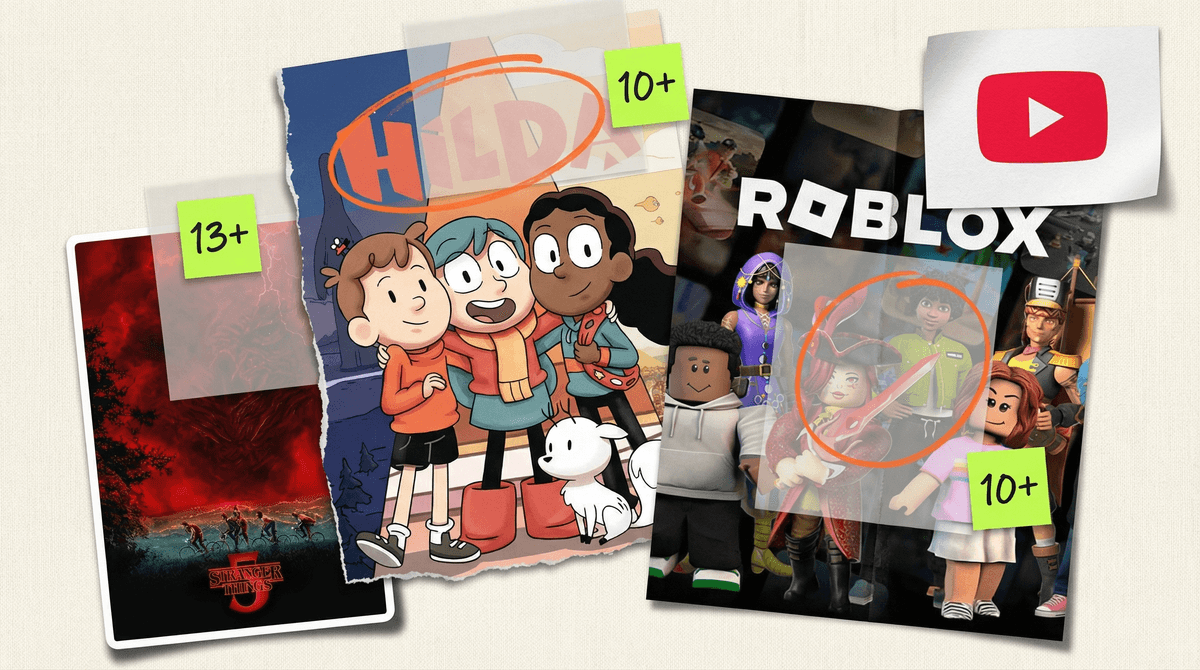
If you've ever Googled "is [insert literally any piece of media] appropriate for kids," you've probably landed on Common Sense Media. It's basically the internet's go-to resource for age ratings and content reviews — think of it as a crowdsourced alternative to the MPAA's movie ratings, but for everything: movies, shows, games, apps, books, podcasts, you name it.
Here's how it works: Common Sense Media assigns age ratings based on their team's reviews, plus input from parents and sometimes kids themselves. You'll see things like "Age 13+" or "Age 10+" plastered at the top of each review, along with detailed breakdowns of violence, language, consumerism, positive messages, and more.
And look, CSM has been a lifesaver for many parents. It's comprehensive, it's free, and it's way more detailed than the vague "PG-13" that tells you almost nothing. But here's the thing: those age ratings are guidelines, not gospel. And understanding when to trust them — and when to adjust — is the real skill.
Let's be real: you can't personally vet every single thing your kid wants to watch, play, or read. According to our community data, about 40% of families use regular Netflix (not just Netflix Kids), and 42% of kids are watching YouTube solo without supervision. That's a LOT of content flowing through your household.
Common Sense Media offers a quick temperature check. You can pull up Roblox or Stranger Things and get an instant read on what you're dealing with. The parent reviews section is especially clutch — you'll see comments like "my 9-year-old handled this fine" or "way too scary for my 12-year-old," which gives you a sense of the range.
But here's where it gets tricky: every kid is different, and every family has different values. CSM's ratings are based on averages and general developmental milestones. Your kid might be totally fine with something rated 13+ at age 10, or they might need to wait until 15 for content rated 12+. And that's completely normal.
Common Sense Media is genuinely excellent at flagging content concerns. Their breakdowns of violence, sex, language, drinking/drugs, and consumerism are thorough and specific. If you want to know whether a show has jump scares, how much profanity is in a game, or if a movie has a sexual assault scene, CSM will tell you.
Where things get murkier is in the age recommendation itself. CSM tends to be pretty conservative, which isn't necessarily bad — but it can lead to some head-scratching moments. For example, they rate The Hunger Games at 13+, which... yeah, fair. But they also rate Minecraft at 8+, even though most kids are playing it way younger without issue.
The ratings also don't always account for context or media literacy. A kid who's been raised on thoughtful conversations about media might be ready for more mature content earlier than a kid who hasn't. A 10-year-old who devours fantasy books with battle scenes might handle The Legend of Zelda: Breath of the Wild just fine, even if CSM says 10+.
And sometimes, CSM just misses the mark entirely. Their ratings for YouTube channels can be all over the place, and they don't always keep up with the latest internet culture or gaming trends. If you're trying to figure out whether a specific YouTube channel is appropriate, our guide can help.
Here's my approach: treat CSM ratings as a starting point, not a finish line.
-
Read the full review, not just the age number. The detailed content breakdown is where the gold is. You might see "Age 12+" and think "nope," but then read the review and realize the main concern is some mild language, which your family might not care about.
-
Check the parent reviews. Scroll down and read what actual parents are saying. You'll often find a range of opinions that reflect the reality: some parents are more permissive, some are stricter, and most are somewhere in between.
-
Consider your kid's specific sensitivities. Does your kid get nightmares easily? Are they unfazed by cartoon violence but freaked out by realistic injuries? Do they ask thoughtful questions about complex themes, or do they tune out? These factors matter way more than a generic age rating.
-
Use it as a conversation starter. Instead of just saying "CSM says you're too young," try "CSM flagged some intense scenes in this — let's watch the trailer together and talk about whether you think you're ready." This builds media literacy and helps your kid learn to self-assess.
-
Adjust for your family's values. If your family is more concerned about consumerism than violence, or vice versa, weight those sections accordingly. CSM gives you the data; you decide what matters most.
Here's the thing: your kid is going to encounter media you haven't pre-screened. It's inevitable. They're going to be at a friend's house, or someone's going to show them something on their phone, or they're going to stumble across it on YouTube (remember, 42% of kids in our community are watching YouTube solo).
The goal isn't to perfectly curate every single thing they see. The goal is to teach them how to think critically about media. And Common Sense Media can actually be a great tool for that.
Try this: let your kid read the CSM review with you. Talk through the content concerns together. Ask them questions like "do you think you're ready for this?" or "what would you do if this scene made you uncomfortable?" This turns the rating into a teaching moment instead of a gate.
You can also explore alternatives together if something feels too mature . If your 8-year-old wants to watch Wednesday (rated 13+), maybe you start with The Worst Witch or Hilda instead.
Common Sense Media is a tool, not a rulebook. Use it to get informed, but don't outsource your parenting judgment to an algorithm or a crowdsourced rating. You know your kid better than any website ever could.
Here's what to do next:
- Bookmark Common Sense Media and use it as your first stop when vetting new content
- Read the full reviews, not just the age ratings
- Have conversations with your kid about why certain content might or might not be appropriate
- Trust your gut — if something feels off, it probably is, regardless of what the rating says
- Remember that "not yet" doesn't mean "never" — kids grow and mature, and what's too much at 9 might be perfect at 11
And if you're ever unsure, get a second opinion. We're here to help you make informed, intentional decisions — not to judge you for the ones you make.