

Coming-of-Age Books by Women of Color: A Parent's Guide
Stories that help young readers navigate identity, belonging, and growing up through diverse perspectives.
Coming-of-age stories are those transformative narratives where characters navigate the messy, beautiful journey from childhood to adulthood—figuring out who they are, where they belong, and what they believe. When these stories are written by women of color, they bring perspectives that have historically been underrepresented in children's and YA literature.
These books tackle universal themes—first love, family conflict, friendship drama, identity questions—but through the lens of specific cultural experiences. They explore what it means to be Korean American in suburban Georgia, or Afro-Latina in Brooklyn, or Indigenous in contemporary America. They're not "issue books" (though some tackle serious issues). They're just... life. Real life, for millions of kids who deserve to see themselves in stories.
The landscape has changed dramatically in the past decade. Authors like Angie Thomas, Elizabeth Acevedo, and Kelly Yang aren't writing niche books for niche audiences—they're writing bestsellers that resonate across demographics because good storytelling is universal, even when the specifics are culturally grounded.
Here's the thing: every kid benefits from reading diverse perspectives, not just kids who share the author's background.
For kids of color, these books offer something powerful—characters who look like them, families that feel familiar, experiences that validate their own. There's real research showing that representation in literature impacts kids' self-esteem and sense of possibility. Seeing yourself in stories matters.
For white kids (and let's be honest, most "classic" coming-of-age lit centers white experiences), these books build empathy and cultural understanding in ways that feel natural and engaging. Your kid isn't reading a textbook about diversity—they're getting invested in whether Starr will find her voice, or if Junie will reconcile her Korean and American identities.
Plus, these books are just really, really good. We're talking National Book Award winners, Newbery honors, books that get passed around middle school like contraband because kids genuinely can't put them down.
Elementary/Middle Grade (Ages 8-12)
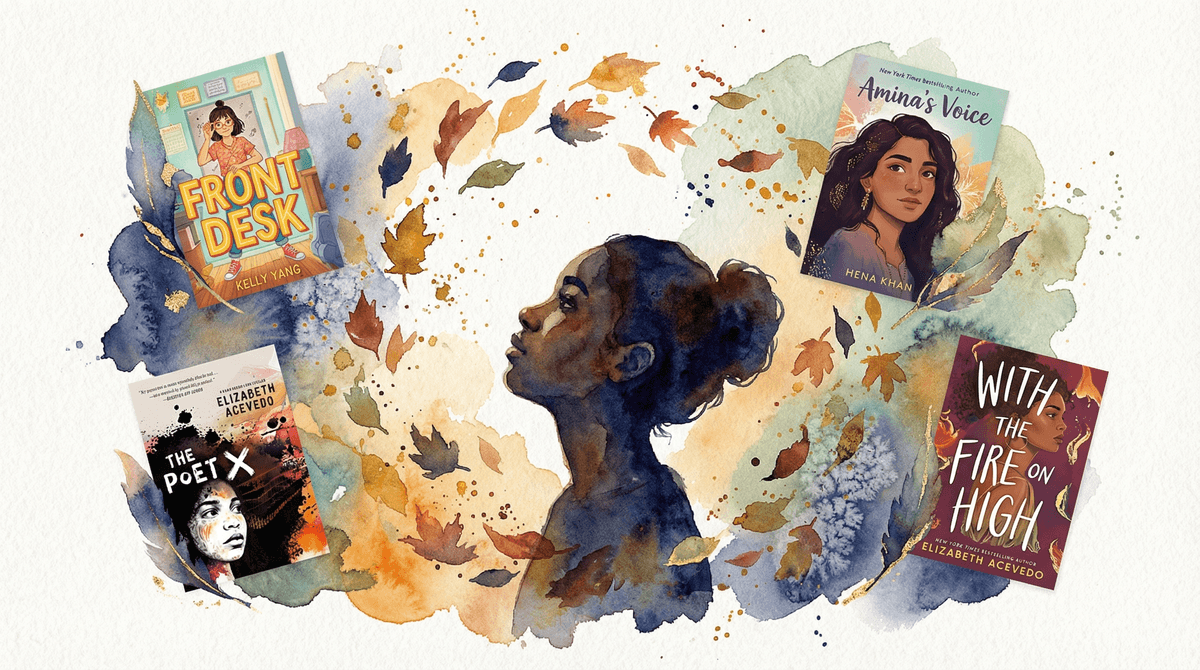
Front Desk by Kelly Yang is basically required reading at this point. Mia Tang manages her family's motel, deals with an awful owner, and dreams of being a writer—all while navigating what it means to be a recent Chinese immigrant in 1990s California. It's funny, heartbreaking, and incredibly empowering. The whole series is worth reading.
The Crossover by Kwame Alexander isn't by a woman (obviously), but Booked and Rebound in the same universe feature strong perspectives. For a female-authored alternative, try Ghost Boys by Jewell Parker Rhodes—though heads up, this one deals directly with police violence and requires some parent prep depending on your kid's maturity.
Amina's Voice by Hena Khan is perfect for the tween years—it's about a Pakistani American girl navigating middle school, changing friendships, and her relationship with her Muslim identity. It's gentle but real.
Young Adult (Ages 12+)
The Hate U Give by Angie Thomas is the big one. Starr witnesses her unarmed friend being killed by police and has to decide whether to speak up. It's intense, but it's also the book that launched a thousand conversations between parents and teens. Ages 13+ for sure, and worth reading yourself first if you want to discuss it together.
The Poet X by Elizabeth Acevedo is written in verse (which somehow makes it more accessible, not less) about a Dominican American teen in Harlem who finds her voice through slam poetry. It deals with strict religious parents, first love, and body image. Ages 14+ due to some mature themes, but it's stunning.
American Born Chinese by Gene Luen Yang is a graphic novel that weaves together three stories about identity and assimilation. It's been around since 2006 but hasn't aged a day. Great for reluctant readers, ages 12+.
With the Fire on High by Elizabeth Acevedo features Emoni, a teen mom with serious culinary talent trying to figure out her future. It's warm and hopeful while being completely honest about the challenges she faces.
For Older Teens (Ages 15+)
I Am Not Your Perfect Mexican Daughter by Erika L. Sánchez is raw and real about grief, family expectations, and mental health in a Mexican American family. Julia is dealing with her sister's death while trying to understand who she was. This one has some mature content but is incredibly powerful.
On the Come Up by Angie Thomas (her follow-up to The Hate U Give) follows Bri, a teen rapper trying to make it while her family faces eviction. It's about art, authenticity, and what you're willing to compromise for success.
These books don't shy away from hard topics. Racism, microaggressions, code-switching, immigration struggles, police violence, poverty—these are real experiences for many kids, and these books reflect that reality. Some parents worry about "exposing" their kids to these topics, but here's the truth: many kids are already living these experiences , and others benefit from understanding them.
Language and content vary widely. Some books (like Amina's Voice) are very accessible for younger readers. Others (like I Am Not Your Perfect Mexican Daughter) include swearing, sexual content, and heavy themes. Check Common Sense Media ratings if you want specifics, or honestly, just skim the book yourself—they're quick reads.
The "own voices" conversation is evolving. There was a big push for authors to only write from their own cultural experience (called "own voices"). That conversation has gotten more nuanced—authenticity matters, but we also don't want to limit who can tell what stories. What matters most is that these books are well-researched, respectfully written, and ring true.
Your kid might have questions. These books often spark conversations about fairness, justice, identity, and belonging. That's a feature, not a bug. Be ready to listen more than you talk.
Coming-of-age books by women of color aren't a separate category of "diverse books" you check off a list—they're just great literature that happens to center experiences beyond the white, middle-class default that dominated children's publishing for decades.
Your kid doesn't need to share an author's background to connect with their story. They just need to be open to it. And honestly? Most kids are way more open than adults give them credit for.
Start with one book that matches your kid's age and interests. Front Desk for the entrepreneur kid who loves business. The Poet X for the creative teen finding their voice. The Hate U Give for the kid ready to engage with social justice.
Then let them lead. If they love it, they'll find the next one. If they don't connect with one book, try another—there's no monolithic "diverse book" experience any more than there's one "white kid book" experience.
The goal isn't to turn reading into a lesson about diversity. The goal is to normalize the reality that great stories come from all kinds of voices, and growing up means learning to see the world through eyes other than your own.
Want more personalized recommendations? Tell Screenwise about your kid's age, interests, and reading level, and get a customized book list that actually fits your family.
Not sure if a specific book is right for your kid? See content warnings and age-appropriateness for any title you're considering.
Want to talk about what your kid is reading? Sometimes the best part of these books is the conversation they spark. Get discussion starter questions that go deeper than "did you like it?"