

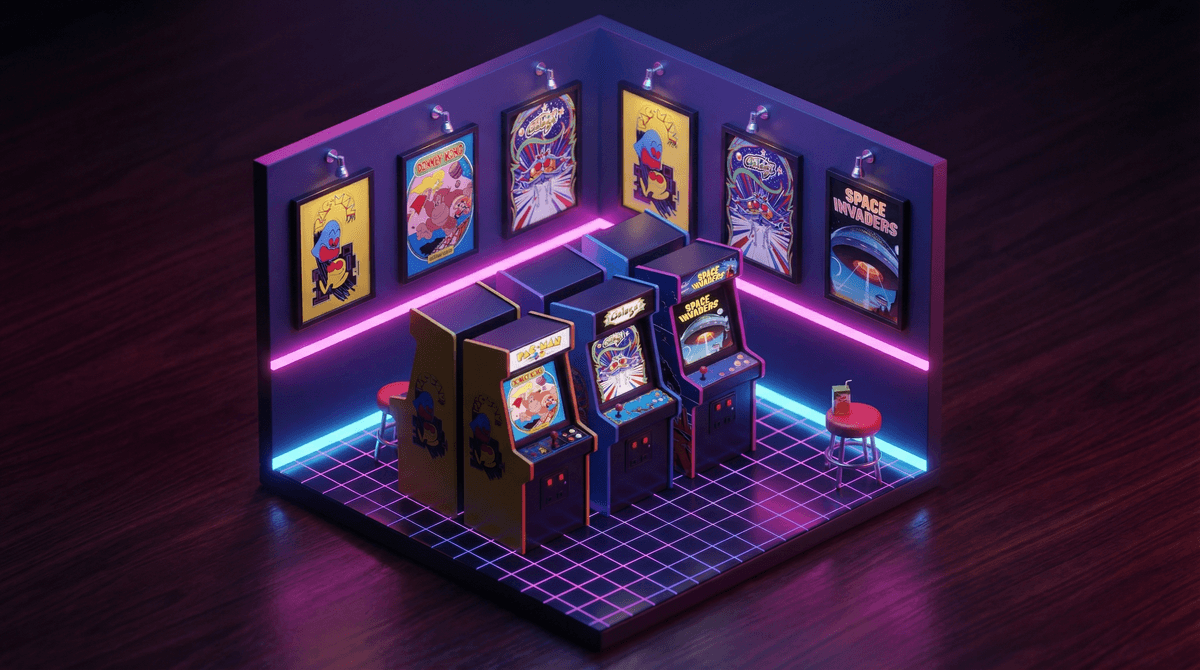
Remember when gaming meant pumping quarters into a cabinet at the pizza place? Classic arcade games—think Pac-Man, Space Invaders, Donkey Kong, and Galaga—are having a serious moment right now. And not just with nostalgic millennials and Gen Xers.
These games from the late '70s through the '90s are showing up everywhere: on Nintendo Switch Online, in Roblox recreations, as mobile apps, in actual arcade bars, and even in movies like Wreck-It Ralph. Your kids are discovering the same games you played, just on different screens.
The retro gaming revival isn't just about nostalgia—it's become a legitimate entry point for kids into gaming culture, and honestly? There are worse ways they could be spending screen time.
Here's the thing: classic arcade games are genuinely good. They had to be. With only a few pixels and simple controls, game designers couldn't rely on photorealistic graphics or elaborate storylines. They had to nail the core gameplay loop—that "just one more try" feeling that makes Flappy Bird or Wordle so addictive.
Kids are drawn to these games for a few reasons:
They're actually challenging. Modern games often hand-hold through tutorials and checkpoints. Arcade games? You get three lives and good luck. There's something satisfying about that difficulty—it's hard but fair, and when you finally beat your high score, you earned it.
They're quick. A round of Pac-Man takes a few minutes. Perfect for the "I have 10 minutes before dinner" window, and way easier to enforce time limits around than open-world games where "I need to get to a save point!" becomes a 45-minute negotiation.
They're social. High scores create natural competition. Kids love showing each other their runs, trading strategies, and trash-talking their friends' attempts. It's the original multiplayer experience.
They're everywhere. You can play these games on basically any device. Phone, tablet, Switch, computer, even some smart TVs. Plus, many are free or dirt cheap.
They're part of gaming history. Just like kids get curious about classic rock or old movies their parents reference, there's something cool about experiencing the games that started it all. It's cultural literacy for gamers.
Let's talk about what you're really getting into here:
The good news: Classic arcade games are about as low-risk as gaming gets. No chat features, no in-game purchases (usually), no online strangers, no graphic violence beyond a pixelated ghost or alien. The content is universally appropriate—we're talking ages 5+ for most titles, even younger for games like Frogger or Dig Dug.
The actual concerns:
Addiction mechanics are real. These games were literally designed to eat quarters. That "one more try" loop is powerful, and some kids will have a harder time stopping than others. The games are short, but the compulsion to keep playing can be strong.
Not all "retro" collections are created equal. Some apps are just ad-delivery systems with a game attached. If you're downloading free arcade game collections, expect interruptions every 30 seconds unless you're paying to remove ads.
Difficulty can be frustrating. These games don't care about your feelings. Some kids thrive on that challenge; others will get genuinely upset. Know your kid's frustration tolerance.
Skip the sketchy app store games with 47 ads. Here are the legit options:
Nintendo Switch Online includes a solid library of NES and SNES games (which are slightly newer than pure arcade, but same vibe). Clean interface, no ads, lots of classics. Worth the subscription if you have a Switch.
Arcade1Up cabinets are miniature versions of classic arcade machines—about 4 feet tall, perfect for kids. They're not cheap ($200-400), but if you have space and budget, they're genuinely cool. No internet connection, no ads, just pure gaming.
Pac-Man Museum+ and similar official collections on Steam, PlayStation, Xbox, and Switch. These are curated, well-made compilations with actual historical context.
Your local arcade or barcade. Yes, they still exist. Real cabinets, real quarters (or tokens), real experience. Great for special occasions.
Antstream Arcade is a streaming service specifically for retro games—think Netflix but for classic gaming. Worth checking out if your kid gets really into this.
Ages 5-7: Start with the simple, colorful ones. Pac-Man, Frogger, Centipede. These have clear goals, simple controls, and aren't too frustrating. Expect to help them understand the mechanics.
Ages 8-11: They can handle the full range. Donkey Kong, Galaga, Street Fighter II (yes, it's a fighting game, but the violence is extremely cartoonish). This is also a great age for them to appreciate the history and evolution of gaming.
Ages 12+: They'll probably discover speedrunning communities, high-score competitions, and the deeper strategy behind these "simple" games. This can actually be a really positive rabbit hole—there's serious skill development in pattern recognition and hand-eye coordination.
Classic arcade games are basically the vegetables of the gaming world—if vegetables were actually fun and your kids wanted to eat them. They're challenging without being overwhelming, engaging without being exploitative, and social without requiring an internet connection.
Are they educational? Not really, unless you count hand-eye coordination and pattern recognition. Are they going to rot their brains? Absolutely not. Are they a reasonable screen time option that won't make you feel like a bad parent? Yes.
The retro gaming revival is one of those rare moments where your nostalgia and your kid's interests can actually align. You might even find yourself playing together, which is worth more than any high score.
Set clear time limits upfront. "You can play for 20 minutes" is way easier to enforce with arcade games than with story-based games. Use a timer.
Try before you buy. Many of these games have free versions or demos. See what your kid gravitates toward before investing in collections or hardware.
Make it social. Keep the screen in a common area, encourage siblings to take turns and compete for high scores, maybe even set up a family leaderboard. The social element is half the fun.
Talk about game design. These games are perfect for conversations about what makes a game fun, fair, and challenging. It's a gateway into understanding how games work, which builds critical thinking about all the other games they'll encounter.
Want to explore what other retro-style games might work for your family? Check out alternatives to classic arcade games or learn more about age-appropriate gaming .
.