The aggressive simplicity of the pump
Most arcade games from the early '80s relied on a single verb: shoot, jump, or eat. Dig Dug is weirder. Your primary interaction is inflation. You aren't just clearing a screen; you’re managing the internal air pressure of underground monsters until they literally burst. It’s a bizarre, slightly morbid mechanic that somehow feels completely innocent because of the bright colors and the catchy, syncopated music that only plays when you’re actually moving.
The strategy here is deeper than it looks. You can’t just spam the fire button; you have to commit to the pump. This leaves you vulnerable to other enemies flanking you through the very tunnels you just dug. It’s a game of chicken. Do you stay and finish off that Pooka, or do you bail because a Fygar is about to breathe fire through a thin dirt wall? That tension is the only reason the game is still playable four decades later.
The Sord M5 of it all
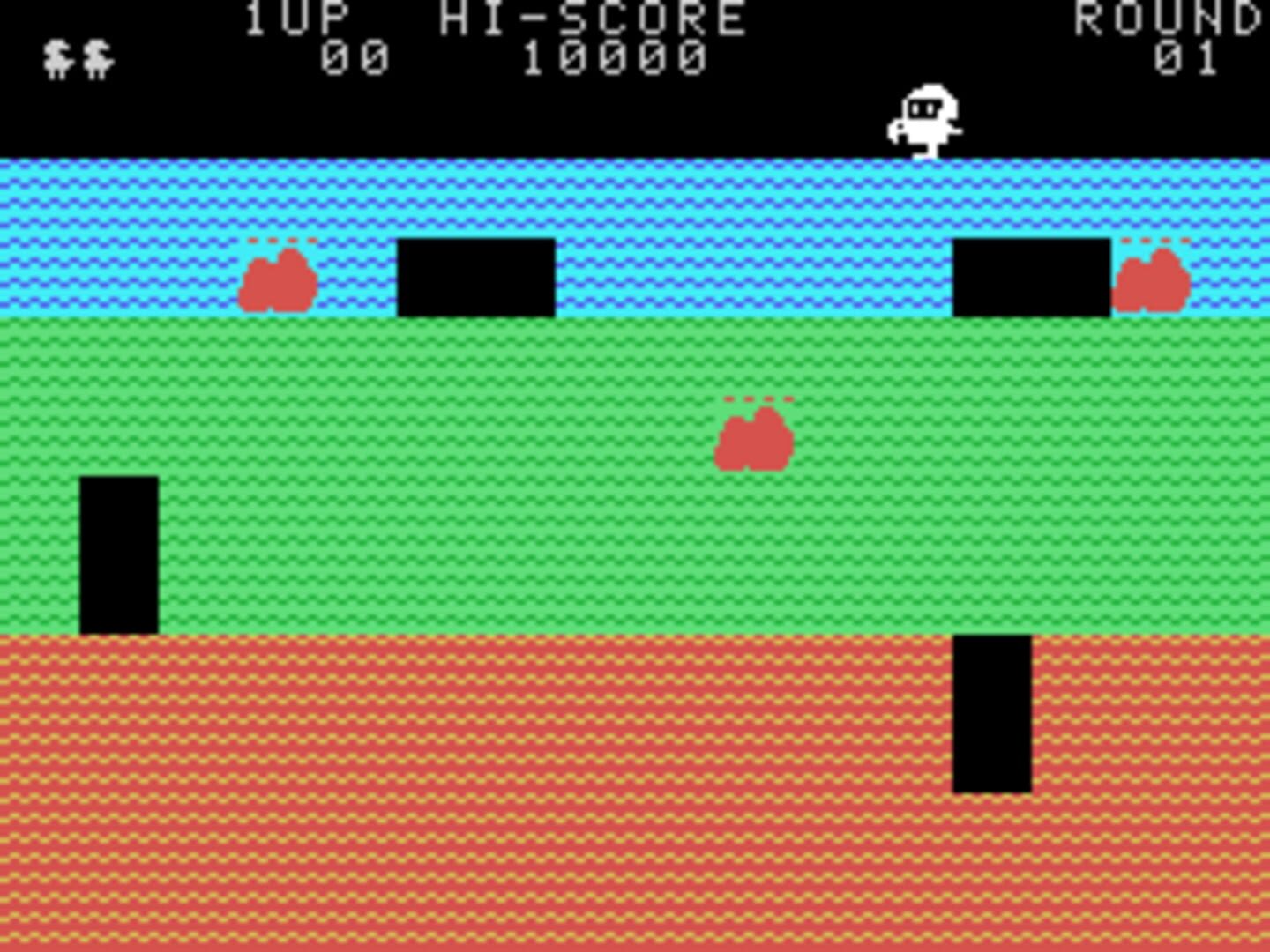
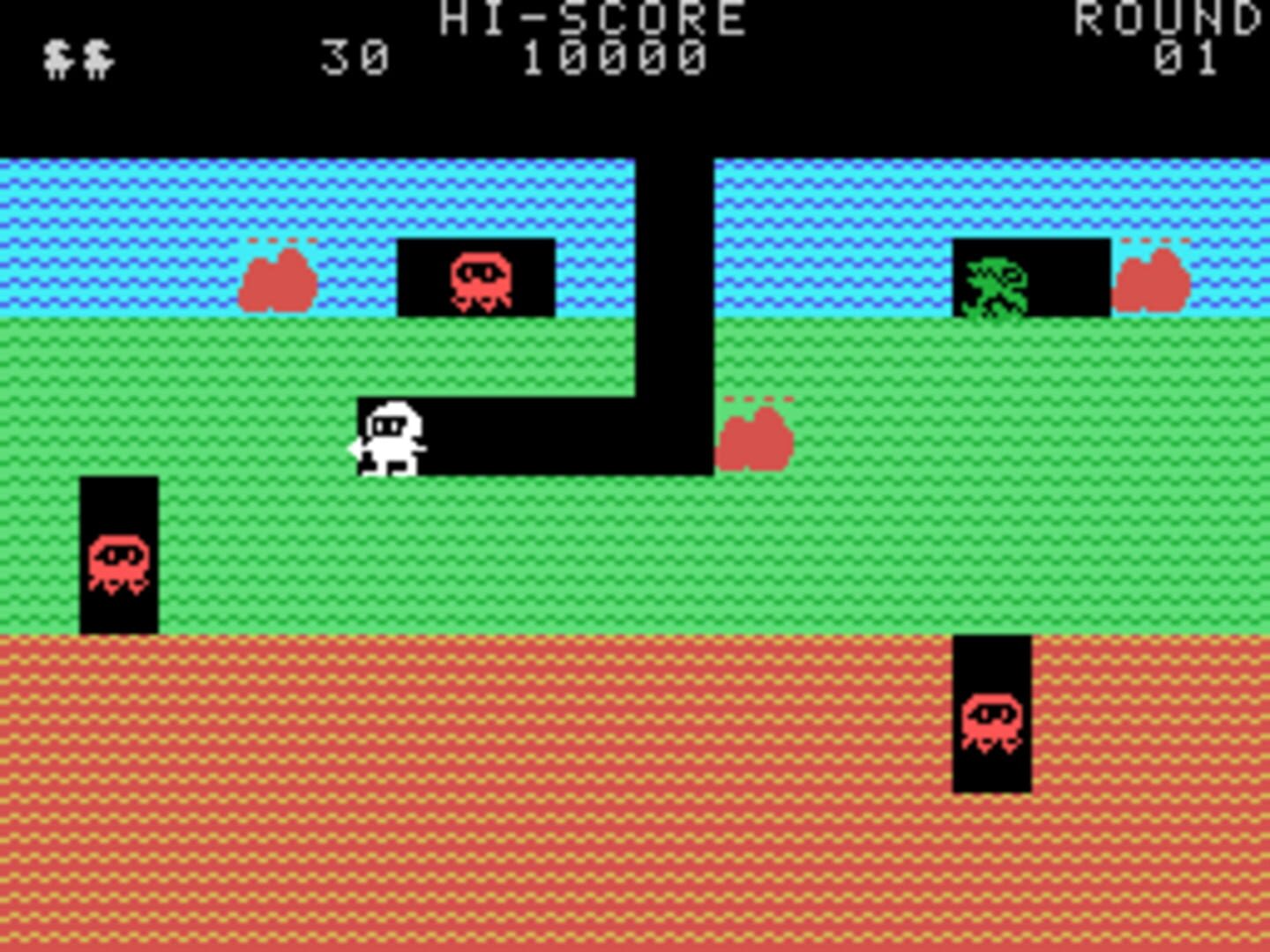
While Dig Dug is a household name, this specific Sord M5 port is a deep cut. If you’re used to the crisp arcade original or even the NES version, the M5 version feels a bit more staccato. The colors are blockier, and the movement has that distinct "home computer" friction.
It’s important to manage expectations: your kid is used to 120 frames per second and 4K textures. Handing them this is like handing a kid who loves Formula 1: Drive to Survive the keys to a 1920s Model T. It’s a fascinating historical artifact, but the novelty usually wears off the moment they realize there are no unlockables, no skins, and no ending. You play for the high score, or you don't play at all.
The "Minecraft" ancestor
If your kid is obsessed with Minecraft or Terraria, you can frame Dig Dug as the "great-great-grandfather" of the digging genre. It was one of the first games to give players agency over the environment. You aren't just navigating a maze; you are drawing the maze as you go.
That "aha!" moment when a kid realizes they can bait three enemies into a vertical tunnel and then drop a rock on all of them for a massive point bonus? That’s the same satisfaction they get from a well-placed TNT block today. If you want to explore why these loops are so addictive, our guide to classic arcade games breaks down why these 8-bit mechanics still underpin the "modern" games your kids are playing now.
How to play it without the boredom
Don't expect a kid to sit down and grind Dig Dug for an hour. It’s not designed for that. It was designed to eat quarters in three-minute increments. The best way to engage with it is a "high score duel." Set a timer for 15 minutes, pass the controller back and forth, and see who can clear the most levels.
The game’s difficulty spikes viciously after the first few rounds. The enemies get faster, and the "ghosting" (where they turn into eyes and float through the dirt) becomes constant. Pointing out these patterns helps kids see the "code" behind the game—turning a repetitive task into a lesson in pattern recognition and tactical retreat. It's a museum piece, sure, but it's one you're allowed to touch.