

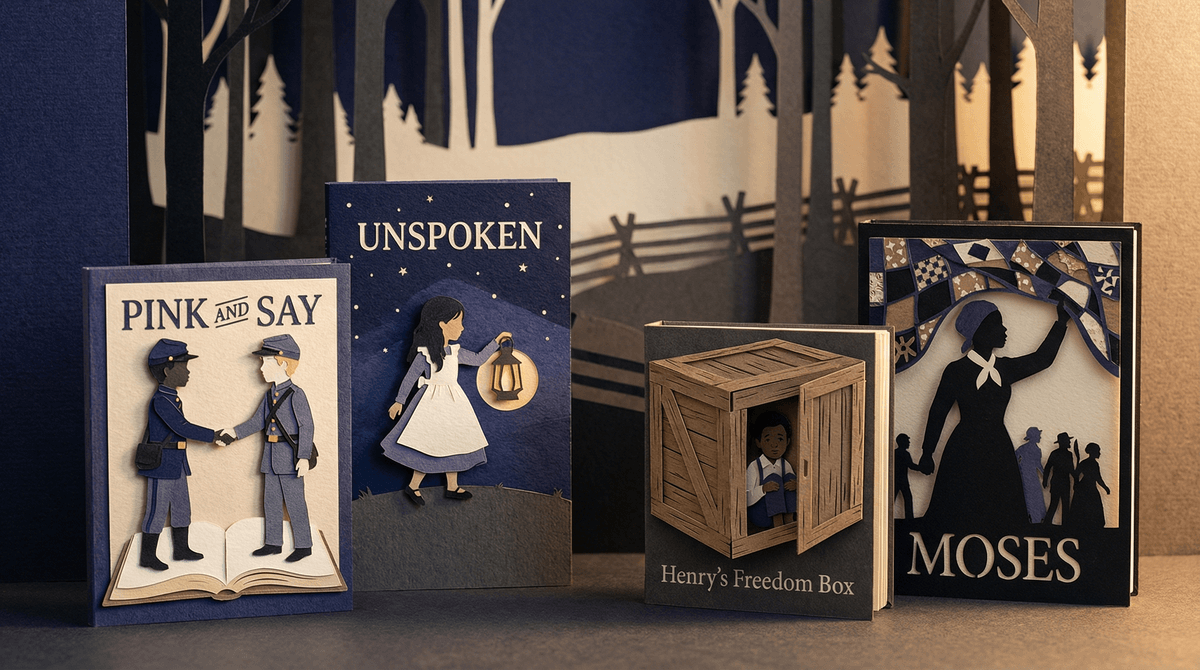
We're talking about historical fiction, biographies, and nonfiction books that tackle one of the most complex, painful, and formative periods in American history—but written for young readers. These books range from picture books about Underground Railroad heroes to middle-grade novels following fictional characters through battles and divided families, to YA accounts that don't shy away from the brutality of slavery and war.
The Civil War isn't just dates and battles. It's about slavery, freedom, racism, courage, and the fact that our country literally tore itself apart. Good Civil War books for kids don't sugarcoat this—they present age-appropriate truth that builds genuine historical understanding.
Here's the thing: if we don't introduce kids to difficult history through thoughtful, well-crafted stories, they'll encounter it anyway—through social media hot takes, oversimplified textbooks, or worse, through silence that leaves them unprepared to understand systemic racism and its ongoing impact.
Civil War books give kids a framework to understand:
- How slavery wasn't just "a thing that happened" but a brutal system that people fought to preserve
- That real people made choices—some heroic, some horrifying
- How the past connects directly to present-day racial inequity
- That history is complicated and messy, not a simple good-guys-vs-bad-guys story
Plus, honestly? Many of these books are just really good stories. Kids don't need to be tricked into caring about history when you give them characters they root for, stakes they understand, and writing that respects their intelligence.
Ages 5-8: Picture Books and Simple Biographies
At this age, focus on individual heroes and concrete actions rather than the war itself.
Henry's Freedom Box by Ellen Levine tells the true story of Henry "Box" Brown, who mailed himself to freedom. It's intense but empowering—kids understand the injustice and the courage without graphic violence.
Unspoken by Henry Cole is a wordless picture book about a girl who discovers a runaway slave in her family's barn. The illustrations do all the emotional work, and it sparks great conversations.
Moses: When Harriet Tubman Led Her People to Freedom by Carole Boston Weatherford pairs powerful illustrations with Tubman's spiritual strength. It's reverent without being preachy.
What to know: Picture books at this level focus on freedom and bravery. They acknowledge slavery's cruelty but don't dwell on violence. Read these together and be ready for questions like "Why would people own other people?" (Spoiler: there's no good answer, and that's okay to say.)
Ages 8-12: Middle Grade Fiction and Narrative Nonfiction
This is the sweet spot for Civil War literature. Kids can handle moral complexity, multiple perspectives, and more detailed historical context.
Elijah of Buxton by Christopher Paul Curtis follows the first child born free in a Canadian settlement of formerly enslaved people. It's funny, heartbreaking, and doesn't sugarcoat the trauma of slavery while still being appropriate for this age.
Chains by Laurie Halse Anderson (and its sequels) follows Isabel, an enslaved girl in Revolutionary War-era New York, but connects directly to Civil War themes. Anderson writes with unflinching honesty about slavery while crafting a page-turner.
Pink and Say by Patricia Polacco is a picture book, but honestly better for upper elementary. It's about two Union soldiers—one Black, one white—and their different fates. It's devastating and necessary.
Who Was Harriet Tubman? and similar biography series books are solid for kids who want facts without fiction. They're not literary masterpieces, but they're accessible and informative.
What to know: At this age, kids can handle books that show slavery's violence and the war's brutality without graphic detail. Look for books that center Black characters' experiences and agency, not white savior narratives. And yes, these books might make your kid sad or angry—that's appropriate. History should make us feel something.
Ages 12+: Young Adult and Crossover Titles
Older kids can handle (and need) the full complexity: the economics of slavery, the politics of secession, the ongoing legacy of racism.
March trilogy by John Lewis is technically about the Civil Rights Movement, but Lewis explicitly connects it to the Civil War and Reconstruction. The graphic novel format makes it accessible while the content is unflinching.
The Astonishing Life of Octavian Nothing, Traitor to the Nation by M.T. Anderson is set during the Revolutionary War but deals with slavery and freedom in ways that directly inform Civil War understanding. It's challenging reading but brilliant.
Copper Sun by Sharon Draper starts with the Middle Passage and follows an enslaved girl through brutal circumstances. It's not specifically Civil War, but essential for understanding what was at stake.
What to know: These books don't pull punches. They include violence, sexual assault, and systemic dehumanization. That's the point. Read them yourself first if you're unsure, but trust that teenagers can handle difficult truths—especially when they're encountering Holocaust literature and dystopian fiction that's often more gratuitously violent.
Watch Out for Lost Cause Mythology
Some older Civil War books (and honestly, some newer ones) still peddle "Lost Cause" nonsense—the idea that the war was about "states' rights" rather than slavery, that enslaved people were content, that Confederate generals were just honorable men defending their homeland.
This is historical revisionism, and it's garbage. The Confederacy's own documents make clear they were fighting to preserve slavery. Don't give your kids books that romanticize the antebellum South or treat slavery as a sidebar.
Center Black Voices and Experiences
Prioritize books written by Black authors and books that center Black characters' perspectives and agency. This isn't about being "woke"—it's about historical accuracy. The Civil War was fundamentally about Black freedom, and books that center white characters' feelings about slavery are missing the point.
Be Ready for Hard Conversations
Your kid will have questions. "Why didn't they just make slavery illegal sooner?" "Why did it take a war?" "Are people still racist now?"
Don't deflect. Don't oversimplify. Learn how to talk about racism and history with kids in age-appropriate ways. It's okay to say "That's a really good question, and the answer is complicated. Let's think about it together."
Not All "Classics" Hold Up
Books like Across Five Aprils or even The Red Badge of Courage were groundbreaking in their time, but they center white experiences and often gloss over slavery. They're not bad books, but they're incomplete. Pair them with books that tell the fuller story.
Civil War books aren't just history lessons—they're tools for building empathy, critical thinking, and an understanding of how the past shapes the present. The best ones are gripping stories that happen to be educational, not educational texts disguised as stories.
Start where your kid is. If they're into adventure, try Elijah of Buxton. If they love graphic novels, go for March. If they're biography kids, there are dozens of excellent books about Harriet Tubman, Frederick Douglass, and lesser-known heroes.
And remember: the goal isn't to make kids feel guilty about being white or proud about being Black—it's to help them understand what happened, why it matters, and how we're all still living with the consequences. That's not political. That's just history.
Read together when possible, especially for younger kids. Your presence helps them process difficult emotions and signals that these conversations are important.
Follow up with other media. Pair books with age-appropriate documentaries, museum visits, or even historical fiction shows that tackle similar themes.
Connect past to present. When your kid asks "Why are people still protesting about racism?" you'll have a foundation to build on: "Remember how we talked about slavery and the Civil War? Well, here's what happened after..."
And if you're looking for more recommendations on how to build historical literacy through reading, or wondering about other difficult history topics for kids, Screenwise can help you find the right resources for your family.