

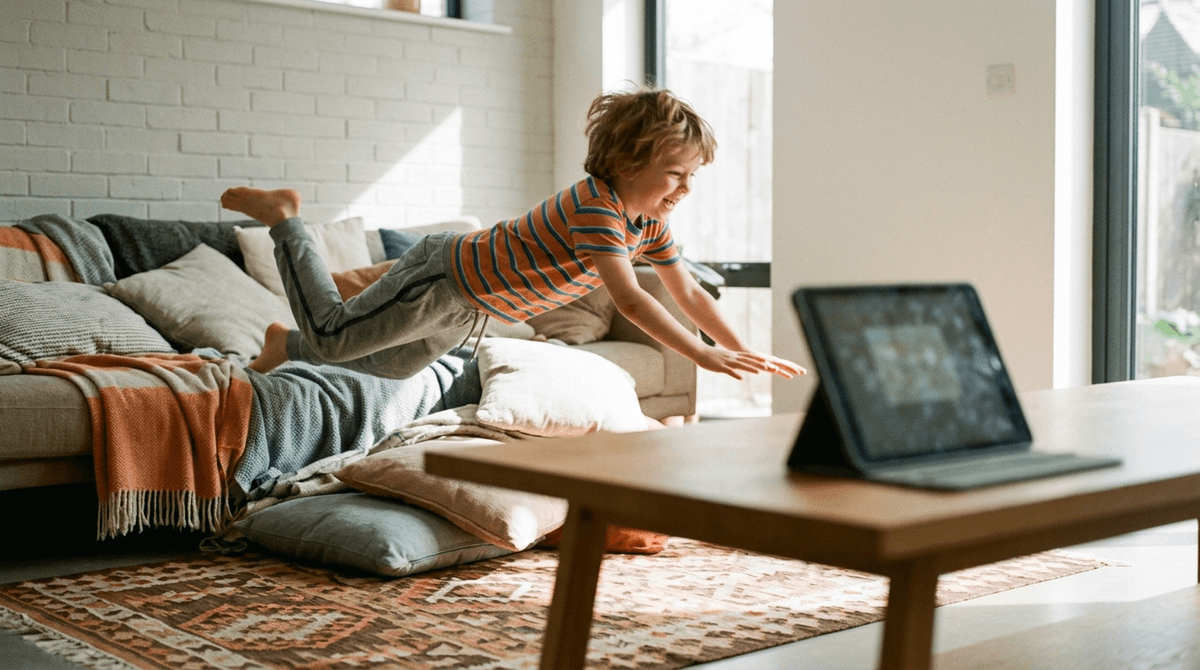

Your child's innate temperament—especially impulsivity—has a far bigger impact on their daily behavior and social skills than their weekend iPad hours. Screens might calm a wired kid down in the moment, but they act more like a digital sedative than a tool for building emotional control.
A child’s natural personality drives their behavior far more than screen exposure, though heavy weekend screen time links to weaker social skills and less helpful behavior.
When an impulsive six-year-old throws a meltdown after playing video games on Saturday, it is tempting to blame the device. But innate personality traits predict behavioral issues and social struggles much better than total screen hours.
Understanding this distinction prevents misdiagnosing the root problem. Cutting off screens might reduce immediate conflicts, but supporting a child's underlying emotional regulation is what actually improves long-term behavior.
Parents often turn to media on weekends for a needed break, using devices as an informal digital babysitter for high-energy children. Researchers wanted to see whether screen exposure actively shapes a preschooler's psychological adjustment, or if a child's baseline temperament drives their behavior all along.
Impulsivity proved to be the single strongest predictor of behavioral struggles and social difficulties in early childhood.
- Screens act as a sedative. Longer weekend screen sessions weakened the link between high-energy temperaments and explosive outbursts, suggesting screens function as a temporary behavioral damper.
- Social skills drop. Higher weekend screen exposure correlated with more externalizing behaviors—like acting out—and noticeably fewer prosocial habits, such as sharing or cooperating.
- Personal ownership remains rare. While every home had mobile phones and nearly all had televisions, only about 14% of these six- to eight-year-olds owned a personal mobile device.
The apparent "buffering" effect of weekend screen time isn't a developmental win—it's a digital pause button. Passive media consumption calms a restless child because it demands zero self-control or emotional labor, effectively freezing outbursts rather than teaching kids how to manage big energy.
This study examined just 106 mothers in Zagreb, Croatia, 85% of whom held university degrees. The data relies entirely on maternal self-reports, which are prone to memory slips and bias, and the correlational design means screen time cannot be proven to cause behavioral shifts directly.
- If your child is naturally impulsive… focus on structured physical play and co-regulation strategies rather than relying on screens to soothe intense feelings.
- If you rely on weekend screen time for household breaks… swap passive video streaming for interactive games that require turn-taking and active cooperation.
- If your child acts out after long screen sessions… track whether the device masked underlying fatigue or sensory overload that needs addressing directly.
Stop blaming screens for every behavioral struggle, but don't treat devices as a cure for high energy either. Focus on helping your child manage their natural impulsivity through real-world interaction, and keep weekend media balanced with active social play.
Jelić B, Vučenović D, Flego J (2026). The Relationship Between Temperament, Screen Exposure, and Psychological Adjustment in Preschool Children. Children (Basel, Switzerland). doi:10.3390/children13060721 — pubmed.ncbi.nlm.nih.gov